Portuguese
  Spanish



The Study Is From The Energy Research Company (EPE) That Provides Services To The Ministry Of Mines And Energy, And The New Routes Would Move Between 30 Million And 45 Million M3 Per Day Of Natural Gas.
Eyeing The Increase In Natural Gas Production In The Brazilian Pre-Salt, the government has already commissioned a study from the Energy Research Company (EPE).
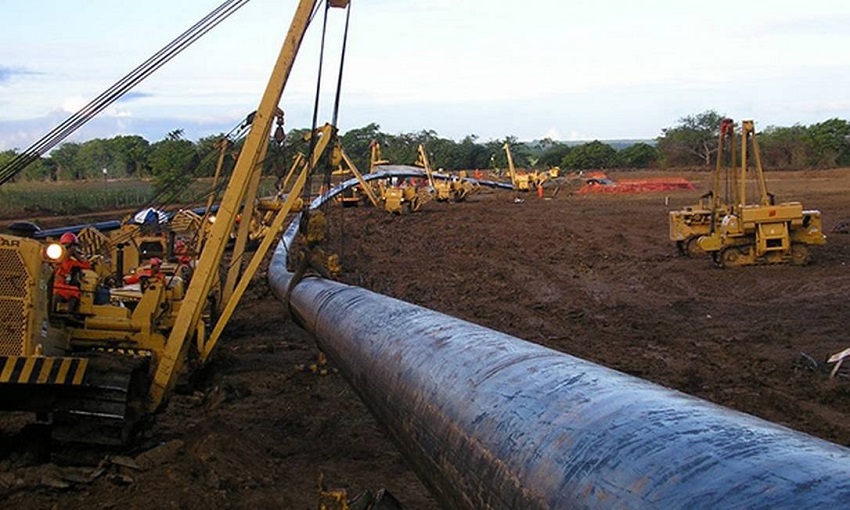
EPE is studying six new routes for the offshore transportation of natural gas from the pre-salt in the country that would expand current natural gas transportation capacity by something between 30 million m3 per day and 45 million m3 per day.
The routes to be created will be alternative routes to the expansion of routes 4, 5, and 6 that were already under study at Petrobras, as we published here on our portal on May 9th of this year.
-
Brazil to Introduce B16 Diesel with Increased Soybean Oil Content for Trucks by 2026
-
Over 2,000 Tons of Discarded Fishing Nets Since 2020 Repurposed into Durable Caps, Fins, and Parts

-
Seals and Sea Lions Lose Habitat and Food as Climate Change Advances, Impacting Ice, Prey, and Coastal Communities

-
Brazilian Innovator Uses 3D-Printed Device to Cool Two Rooms with One Air Conditioner


For example, two alternatives to route 4 (Routes 4a and 4b) are being studied, which will connect the pre-salt from Santos to São Paulo and another to the Port of Itaguaí.
There are also four other routes departing from the Santos basin that are under study by EPE, two linking the Port of Açu and another two linking the Central Port and the Port of Itaguaí (Route 5, Route 5b, Route 6, and Route 6b).
Indicative Plan For Transport Pipelines
The study by the EPE of new routes for the transportation of offshore natural gas production from the country is part of the Indicative Plan For Transport Pipelines and will be presented in Rio de Janeiro during the Rio Pipeline 2019 edition, which will take place from September 3 to 5.
Another focus of the EPE study is the pipeline network connection with LNG terminals, with the first case being studied being the LNG Terminal of Barra dos Coqueiros, in Sergipe, with the local pipeline network.
Another case is that of ExxonMobil, which wants to connect the Brazil-Bolivia Gas Pipeline (Gasbol) to the regasification terminal Gas Sul, in the city of São Francisco do Sul, in Santa Catarina, which is being developed by Golar Power.
In addition to the pipelines, the EPE study also includes the implementation of units for liquefying natural gas at sea, as the costs are quite high for constructing an FLNG vessel with a capacity of 5.6 million m3 of natural gas per day, which would cost around US$ 1.1 billion.
Another interesting study by the agency is the implementation of small regasification units on the Brazilian coast, which could receive part of the offshore natural gas in a decentralized manner and supply LNG ships or bring it to the coast for use in transportation.