Portuguese
  Spanish


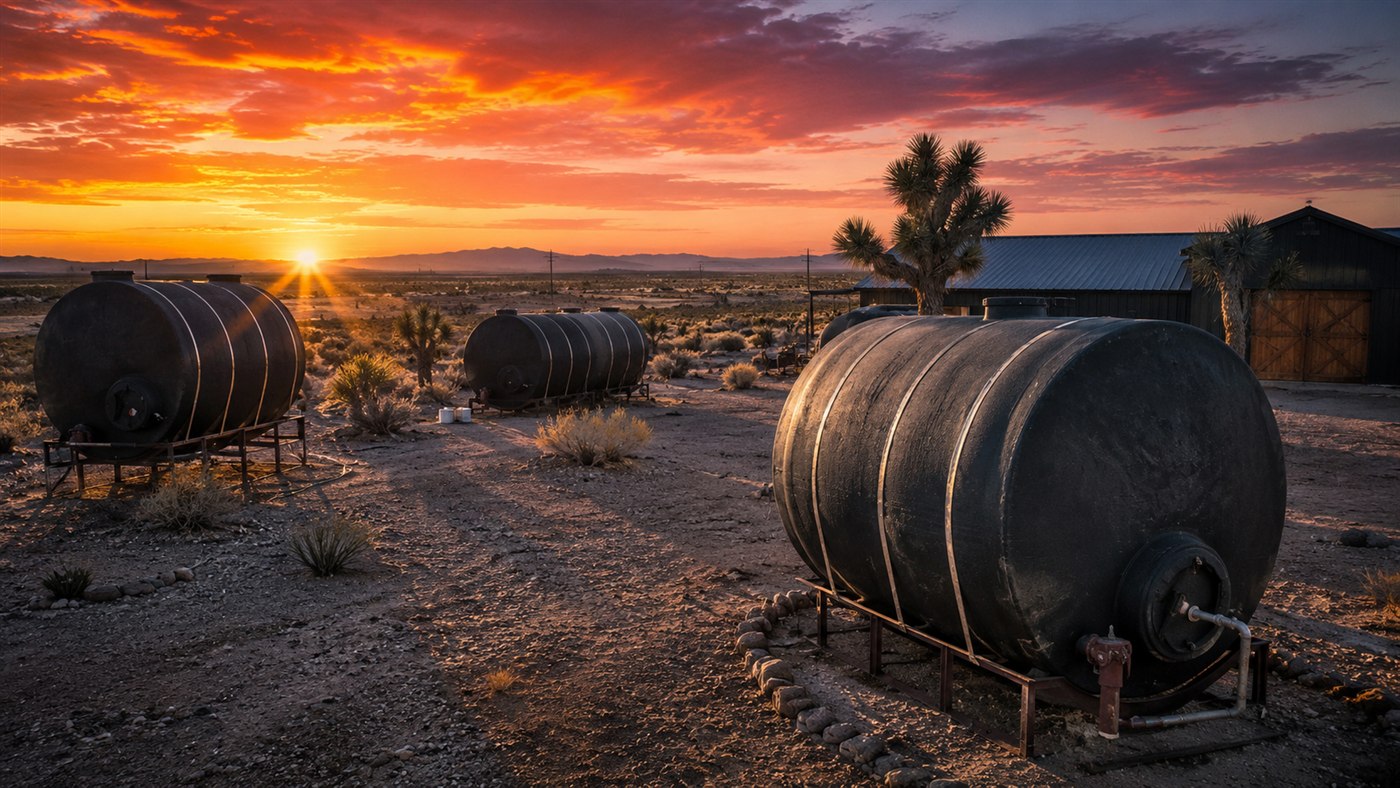

Simply Simona’s record in the Arizona desert shows the installation of the off-grid system, the level tube to read the water, the valve that prevents burning the pump, and the cheaper alternative than drilling the ground
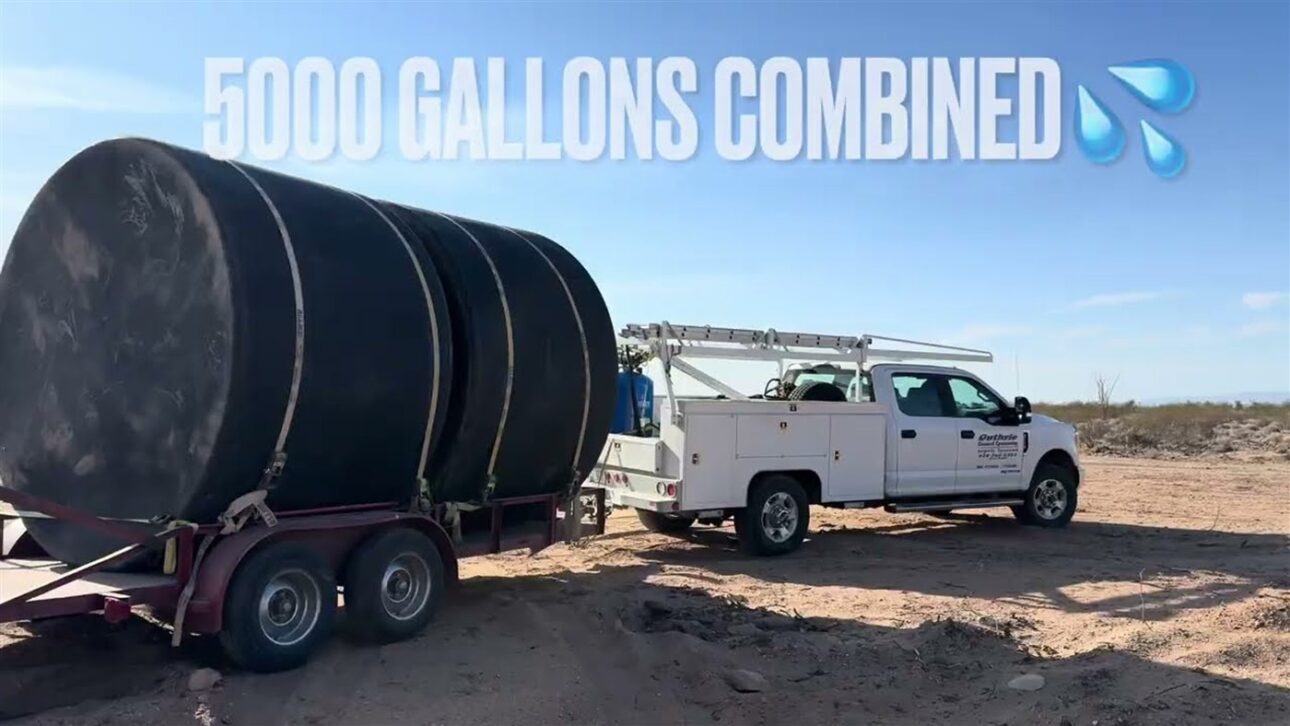
Not every rural land comes with a well, and drilling is expensive. According to the channel Simply Simona, in a record published in April 2025 on an off-grid property in the Arizona desert, the solution was to set up a water tank in two modules of 2,500 gallons each, about 5,000 gallons in total, supplied by truck instead of an artesian well.
The logic is for those starting from scratch. Instead of spending on the uncertain drilling of a well, the family set up a water storage system with two connected tanks, a pressure pump, and a water truck that fills the reservoirs, as Simply Simona shows. It is the possible supply for those building a house in the middle of nowhere before having a public network or well.
Why a water tank and not a well
The calculation that opens the video is financial before technical. According to Simply Simona, drilling a well in a desert area is expensive, time-consuming, and without guarantee of finding water at the expected depth, while buying a water tank in two modules and filling them by truck solves the immediate supply with predictable cost.
-
U.S. Rotates 11,000-Ton Building 90 Degrees Over 31 Days While Keeping 600 Employees Inside With Uninterrupted Utilities

-
67-Year-Old Brazilian Woman Fulfills Lifelong Dream of Wearing Lipstick After Cleft Lip Surgery, Showcased in Emotional Exhibition

-
Father Lives with 3 Children on a 15-Meter Off-Grid Houseboat, Reduces Living Costs to £500 a Month, and Filters Canal Water with a £300 System He Built

-
In 1961, Hollywood held a unique audition with 152 black cats to cast the perfect feline for the horror film The Black Cat.



The sizing has a smart margin. Each tank holds 2,500 gallons, but the installer recommends not emptying to the bottom: keeping about 1,000 gallons in reserve, the set works with a margin and prevents the pump from sucking air, as Simply Simona reports in the conversation with the technician. The two reservoirs are interconnected by a valve, so that the water circulates between them and the total volume is available for the house.
The pressure pump and the scare of air in the line
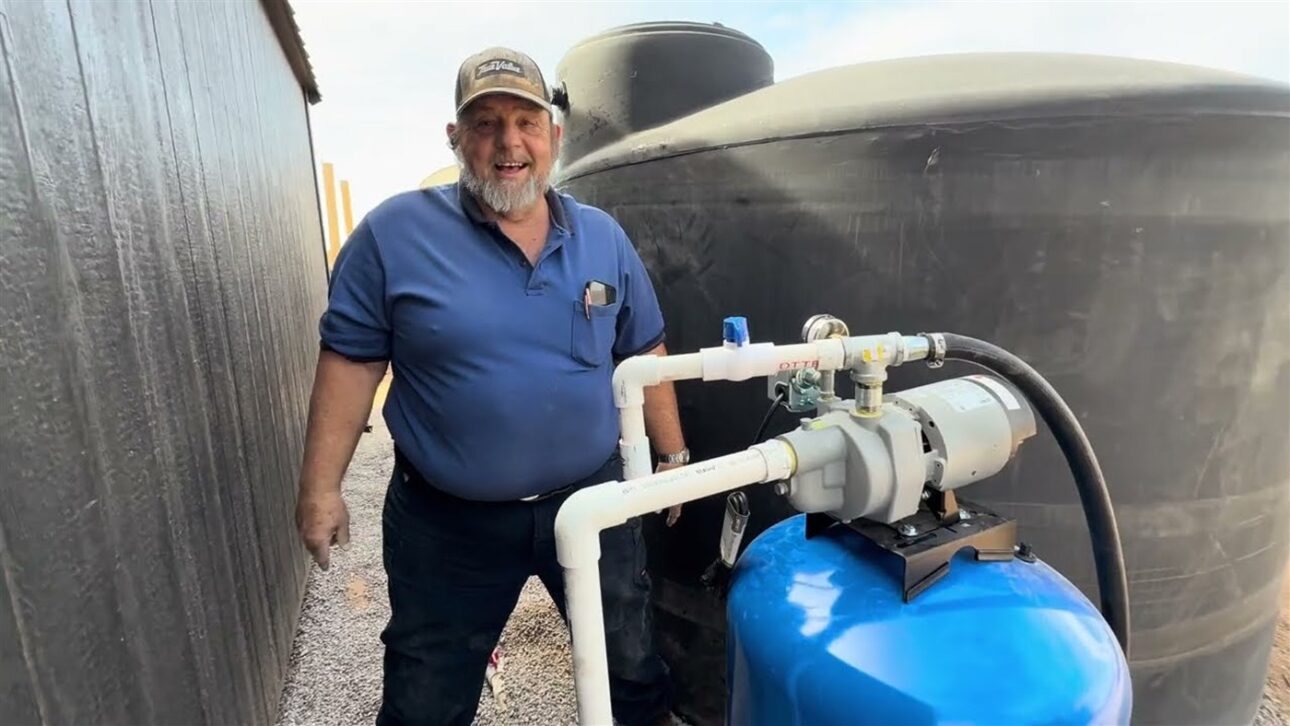
The heart of the system is the pump, and it requires care. According to Simply Simona, the booster pump is located between the tanks and the house, with shut-off valves that isolate each section, allowing you to turn off the water from a tank, the garden hose, or the entire line without emptying the rest.
The detail that saves the equipment is electrical. A low-pressure switch automatically turns off the pump when the system drops to 30 PSI, preventing it from running dry and burning out if a pipe breaks, as Simply Simona explains. Without a permanent power connection, the activation is manual: a lever is pulled until the gauge reaches 30 PSI and released for the system to take over, an extra step that those living off-grid learn to do every day.
The trick of the transparent tube to read the level
The simplest technology in the system is also the most ingenious. According to Simply Simona, a transparent tube installed on the side of the tank functions as a level gauge: the water rises in the tube to the same height as the reservoir, and you just have to look to know how many gallons are left.
Even the gauge has a detail for those who understand the subject. The pressure gauge is filled with glycerin, not air, so that the needle does not oscillate with each pump pulse and shows a stable reading, as detailed by the Simply Simona channel on YouTube. These are inexpensive solutions that replace expensive electronic sensors, in the philosophy of those who set up the supply with their own hands.
Buried lines and protection against the desert sun
In the desert, the silent enemy is the temperature. According to Simply Simona, the water lines were buried and stabilized with stone, both to protect them from heat and exposure and to anchor the piping in the sandy terrain.
The finish also aims for durability. The area around the tanks will be filled with stones to stabilize the set and improve the appearance, and the plumbing was assembled with threaded connections that allow parts to be replaced without cutting the piping, as Simply Simona shows. The installer, presented as a specialist in septic systems, earthworks, and water systems for about 30 years, describes the set as simple to operate once ready.
What does Brazil have to do with this
The scene from Arizona echoes a well-known Brazilian reality. In the northeastern semi-arid region, millions of people live with the same equation of scarce water and expensive wells, and the historical response has been the cistern, the reservoir that stores rainwater or water brought by tanker trucks, exactly the logic of the tank system shown in the video.
The difference lies more in scale than in concept. The semi-arid cistern program has already installed over a million reservoirs in rural homes, proving that storing water in tanks is a consolidated solution, not an improvisation, a notable parallel with the off-grid supply in the video. For the Brazilian rural producer who builds far from the grid, the 5,000-gallon system with a pressurized pump is the same domestic engineering that sustains life in the hinterland.
The checklist for those who will set up a water system


The video serves as a beginner’s manual. Before filling the first water tank, it’s worth sizing the volume by the household’s daily consumption, anticipating a minimum reserve to avoid drawing air, choosing a pump with a protective pressure switch, and planning the access for the truck that will resupply.
Daily operation requires discipline. Without permanent electric power to the pump, the user needs to manually reactivate the system up to 30 PSI whenever the pressure drops, and a simple level tube prevents the surprise of turning on the tap and having no water, a precaution that separates smooth supply from disruption. Setting up the water tank is quick; keeping it supplied is the routine that defines life off the grid.
The video shows the positioning of the tanks, the assembly of the pump, the valves, the level tube, and the installer’s explanations about the operation.
The 5,000-gallon system in Arizona proves that it’s possible to solve off-grid supply without drilling a well, with a tank, pump, and ingenuity. Tell us in the comments: would you trust a water system supplied by a truck instead of a well?