Portuguese
  Spanish


Historic case resurfaced for showing how engineers managed to relocate an entire telephone exchange in Indianapolis, keeping employees on duty and basic services active during a planned operation in 1930.
Some engineering stories resurface from time to time not because of the novelty of the event, but due to the technical details that still capture the public’s attention.
One of them appeared again in recent publications about historical curiosities: the operation that rotated an entire building in downtown Indianapolis, United States, without interrupting the work inside it.
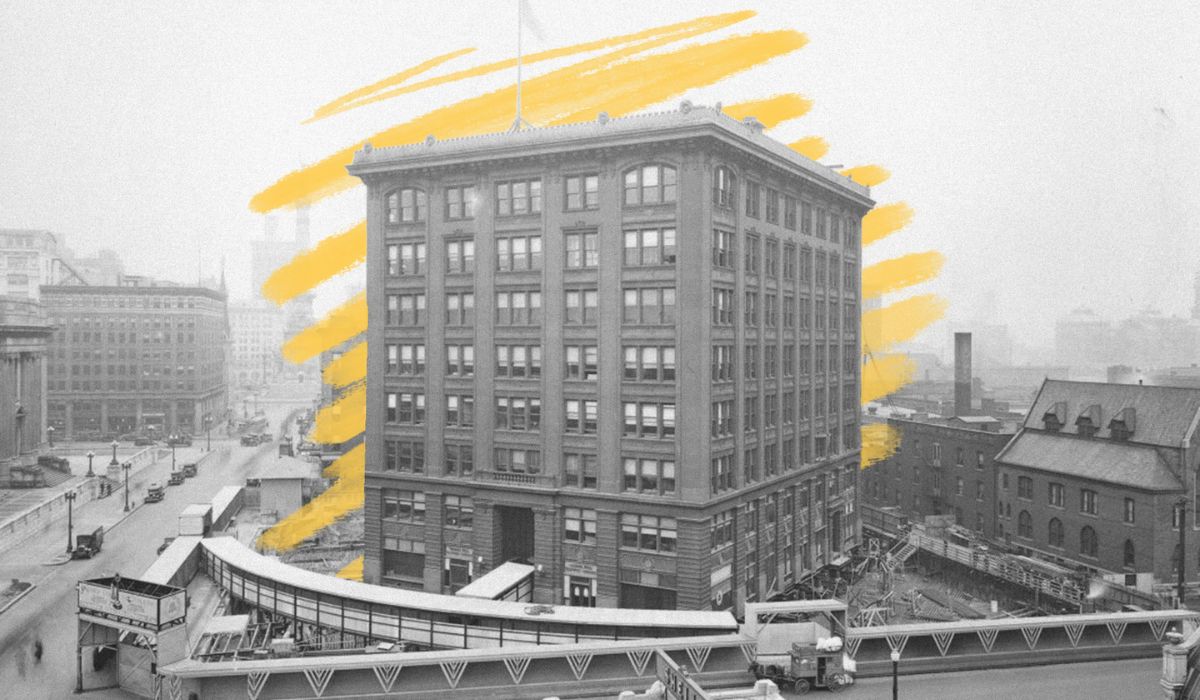
The case involved the old Indiana Bell Building, a building of about 11 thousand tons connected to the city’s telephone service.
-
Nokia 3210 Revived with Modern Features by Enthusiast, Retains Classic Design After 25 Years

-
Off-Grid Family in Brazil Solves Water Supply with 5,000-Gallon Tank and Automated Pump System

-
67-Year-Old Brazilian Woman Fulfills Lifelong Dream of Wearing Lipstick After Cleft Lip Surgery, Showcased in Emotional Exhibition
-
Father Lives with 3 Children on a 15-Meter Off-Grid Houseboat, Reduces Living Costs to £500 a Month, and Filters Canal Water with a £300 System He Built




Between October and November of 1930, the construction was relocated, rotated 90 degrees, and repositioned using rollers, beams, and hydraulic jacks.
Meanwhile, hundreds of employees continued working inside the building, with water, gas, electricity, telephone, and other services in operation.
The episode was revisited by the Indiana Historical Society in a publication on November 21, 2024, which recalled how architects and engineers moved the building without halting the telephone company’s activities.
The story also appeared in August 2024 on the HistoryFacts portal, in an article about the operation that kept people working inside the building while the structure changed location.
Although it occurred in 1930, the case remains present in publications about history, architecture, and engineering because it helps to explain how a structure of this size could be moved in a fully urban area, with employees coming and going, active telephone cables, and basic services preserved.
The answer lies in planning, adapting internal networks, and a speed so slow that many occupants hardly noticed the movement.
Indiana Bell Building was relocated to make room
The original building had been constructed in 1907, at the intersection of Meridian and New York streets, in Indianapolis.
When Indiana Bell began planning a larger headquarters, one of the alternatives considered was to demolish the existing structure and erect a new building on the site.
The project took another path after the involvement of the firm Vonnegut, Bohn & Mueller.
According to the Indiana Historical Society, the architects concluded that the building could be rotated 90 degrees and moved about 100 feet to the west, equivalent to just over 30 meters.
HistoryFacts reports that the proposal to move the building, instead of demolishing it, was associated with the architect Kurt Vonnegut Sr., father of the writer Kurt Vonnegut Jr.
The plan was to relocate the structure within the lot to make space for the company’s expansion, preserving the operation that was already functioning on site.
The rotation began on Tuesday, October 14, 1930, and ended on Saturday, November 15 of the same year, according to records cited by the Indiana Historical Society.
Over 31 days, the structure was moved with rollers and 75-ton hydraulic jacks, monitored by 18 men.
How engineers moved 11 thousand tons
The relocation needed to occur slowly and in a coordinated manner to preserve the alignment of the building.
If different support points advanced at incompatible rates, the stability of the construction could be compromised.
The Indiana Historical Society reports that the hydraulic jacks moved the building at about 15 inches per hour, equivalent to approximately 38 centimeters per hour.
This pace allowed for controlled advancement and reduced the perceptible effects of the relocation within the structure.
According to HistoryFacts, the support columns were removed from their cast iron bases and placed on temporary steel supports.
The portal reports that 18 manually operated jacks pushed the construction over a sequence of rollers, advancing three-eighths of an inch at a time.
The coordination depended on signals from the work supervisor, who indicated when the workers should activate the equipment.
Engineers monitored the building’s plumb and corrected the position of the rollers whenever necessary, according to the description published by HistoryFacts.
In the rotation stage, the team needed to lift the structure momentarily to reposition the rollers.
HistoryFacts reports that steam machines connected to cables assisted the final movement until the building was placed in the new position.
ArchDaily, in a report published on January 19, 2022, also described the operation as the relocation of an 11 thousand-ton telephone exchange without suspending internal activities.
The publication recorded the use of hydraulic jacks, rollers, and a movable walkway to maintain access to the building during the movement.


Employees worked inside the building during the move
One of the most cited points in publications about the case is the presence of workers in the building during the move.
HistoryFacts and ArchDaily report that about 600 employees continued using the building while the structure was being moved.
To maintain the flow of people, a bridge or movable walkway was installed between the sidewalk and the building’s entrance.
The solution allowed employees to enter and exit the property even while it was changing position within the site.
The internal networks also needed to be adapted.
According to the Indiana Historical Society, heavily protected telephone cables were spliced with enough slack to accommodate the movement.
During the process, more than 500 long-distance telephone circuits remained in use.
The supply of water, gas, electricity, and telephone was also preserved, according to reports gathered by ArchDaily and HistoryFacts.
The connections followed the movement of the structure, which allowed activities to continue without interruption of the basic services reported by the sources.
HistoryFacts also states that the workers did not notice the movement while they were inside the building.
The explanation presented in the sources is the low speed of the operation, which made the structure advance at a gradual pace.
Operation paved the way for a new headquarters of the telephone company
The operation allowed the area to be cleared for the construction of a new headquarters for the telephone company.
The Indiana Historical Society reports that after the rotation, a seven-story building was constructed in the space left by the moved structure, completed in 1932.
The consulted sources differ in details about the total duration and the final precision of the maneuver.
The Indiana Historical Society records 31 days of operation and states that the building was 1/64 of an inch from the point calculated in the plans of Vonnegut, Bohn & Mueller.
HistoryFacts describes the process as a movement lasting about a month and reports a margin of 1/16 of an inch in relation to the intended destination.
The difference does not alter the main fact: the building was moved and rotated without the internal operation being halted, according to the three publications consulted.
As the available records appear in secondary and historical sources, the exact margin was maintained in the text with attribution to the respective sources.
Indiana Bell continued to expand its facilities in the following decades.
The original 1907 building, which had been moved in 1930, is not the structure currently preserved at the address associated with the complex.
According to HistoryFacts and ArchDaily, the original building was demolished in 1963 to make way for new facilities.
The case remains cited in publications on history, architecture, and engineering for combining structural movement, operational continuity, and temporary preservation of a functioning telephone exchange.