






 Portuguese
  Spanish


Seals: Climate changes are already altering ice, food routes, and breeding areas in different species, with effects ranging from the Arctic to the Pacific, threatening pups, entire colonies, and communities that depend on these animals.
The advance of climate change is already squeezing the survival of seals and sea lions in different parts of the world. The alert comes from NOAA Fisheries, which points to ice loss, changes in food routes, and destruction of breeding areas as some of the most immediate effects on these species.
In practice, the problem is not just for the animals. In various regions, ocean warming disrupts the food chain, threatens pups, and pressures coastal communities and traditional peoples who also depend on this environment. The agency itself says these changes are already affecting the distribution and health of many marine species.
Among the most vulnerable groups are ice-associated seals, which need the frozen platform to rest, reproduce, nurse, and escape predators. When the ice breaks up earlier or becomes less reliable, pups may be forced to enter the water before they are ready to survive on their own.
-
Brazilian Innovator Uses 3D-Printed Device to Cool Two Rooms with One Air Conditioner
-
China Uses 432 Robots to Move a 7,500-Ton Historic Building in Shanghai, Preserving Architecture While Creating Space for Underground Center
-
Dutch Initiative Swaps Cigarette Butts for Food to Clean Streets, Combat Pollution, and Turn Waste into Recycled Furniture

-
Kenyan Company Recycles Over 10 Million Flip-Flops from Indian Ocean Beaches into Elephant and Giraffe Sculptures Sold for Up to $1,200

The Arctic ice is shrinking and changing the routine of seals
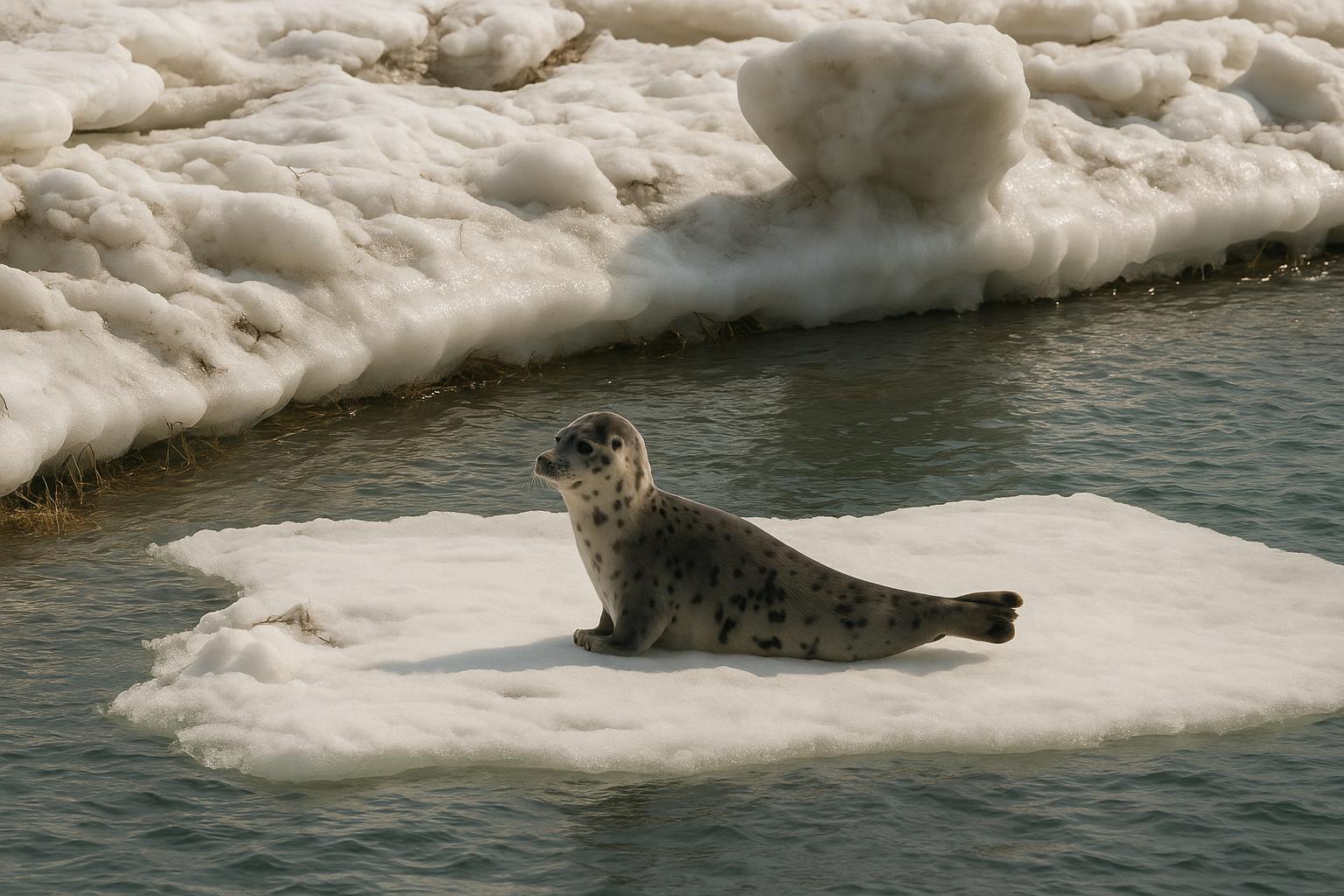
Ice-associated seals depend on these conditions for much of the year. It is on the sea ice that they rest, raise their pups, molt, and find shelter from predators. With rising temperatures, this base begins to fail.
NOAA Fisheries highlights that, in the Bering Sea, sea ice decreased by an average of 47,000 square kilometers per year between 2007 and 2018. During this period, scientists also observed a decline in the body condition of ribbon seal and spotted seal pups, possibly due to the feeding difficulties of mothers during pregnancy and nursing.
When the ice disappears too soon, the risk increases for the pups. Without enough strength to face open water, they may drown or become prey for marine predators, such as orcas and sharks.
More Strandings and Species Out of Their Usual Route
Another sign of climate pressure appears in rescues. In years with little ice, the Marine Mammal Stranding Network records more strandings of ice seals, mainly young animals, in areas further south than expected for these species.
This indicates that the shift is not just geographic. It shows a changing environment, where animals start to appear where they were not common before, often in fragile condition and far from their ideal habitat.
For indigenous communities in Alaska, the impact is also direct. Ice seals are part of the Arctic ecosystem and provide important resources, such as food and materials for crafts, supporting a traditional way of life that depends on the stability of these environments.
Sea Lions and Pacific Seals Also Feel the Pressure
It’s not just the northern ice that’s at risk. In Hawaii, the Hawaiian monk seal, one of the most endangered in the world, suffers from the loss of terrestrial habitat caused by rising sea levels, erosion, and stronger storms. NOAA says that important beaches for pup births in French Frigate Shoals, in the Papahānaumokuākea Marine National Monument, have already been largely or completely lost.
The agency also warns that other atolls in the region may face similar impacts in the next 30 to 50 years. For a species that depends on small low-lying islands to give birth and protect pups from predators, the climate bill comes quickly and heavily.
On the coast of California and Mexico, the Guadalupe fur seal faces another problem: changes in prey. Warmer waters, ocean acidification, and harmful algal blooms are becoming more frequent, while marine heatwaves alter the distribution and abundance of food, especially squid.
Food Shortage Has Already Led to More Deaths and Malnutrition
According to NOAA Fisheries, the Guadalupe fur seal may struggle to adapt its diet to what it finds in the changing ocean. When food disappears or becomes more dispersed, the effect shows in the animals’ bodies, in the pups, and in the very survival of the species.
In recent years, the agency cites the unusual mortality event between 2015 and 2021, which involved more than 700 seals, mostly young, with signs of malnutrition and weakened immune systems. It’s a harsh snapshot of a problem that is not future: it is already underway.
The central message of the alert is clear. Climate change doesn’t just threaten ice or sea temperature. It’s reshaping habitat, squeezing food supplies, and leaving seals and sea lions more exposed on multiple fronts. If this pace continues, the impact is expected to grow in the coming decades. If you follow this type of environmental alert, it’s worth sharing the article and leaving your view in the comments.


