Portuguese
  Spanish


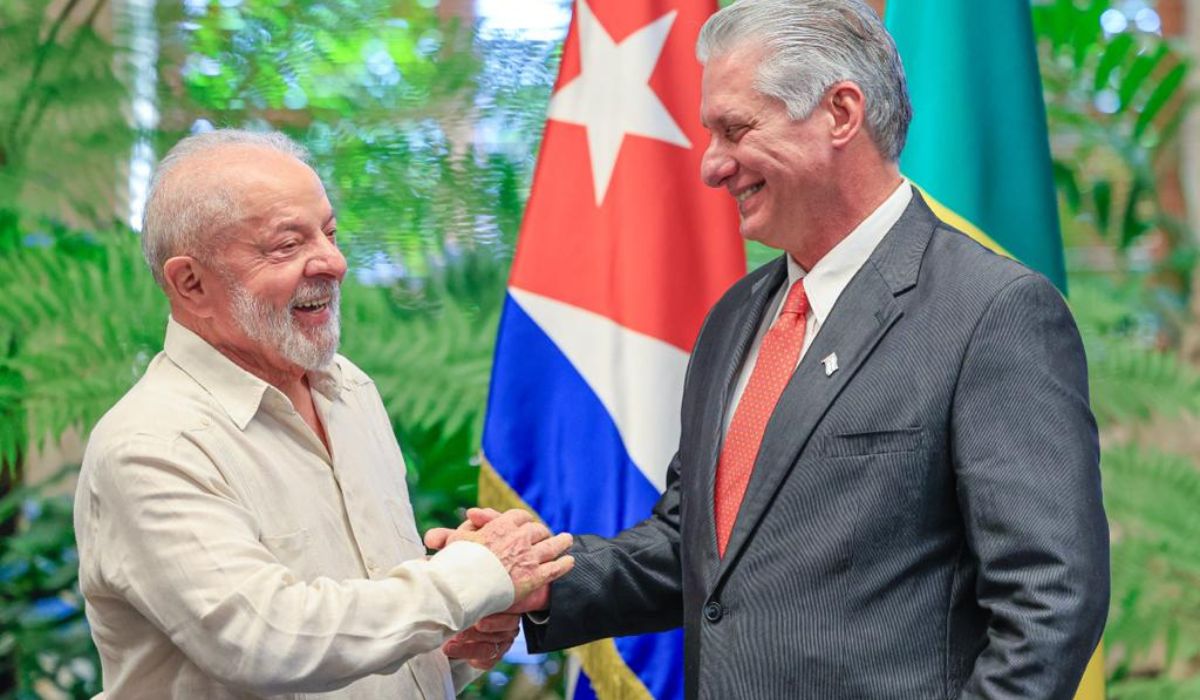


Among Humanitarian Aid Plans And Internal Negotiations, The Lula Government Evaluates Sending Food To Cuba And Discussing Support For Local Agricultural Production. The Initiative Involves Public Programs, Possible International Agreements And Coordination Between Ministries, Amid The Crisis In The Country.
The government of President Luiz Inácio Lula da Silva (PT) is evaluating sending food to Cuba and is looking at ways to support local agricultural production amid the worsening humanitarian crisis in the country.
According to sources interviewed by EXAME, one of the alternatives under consideration is the purchase of products from Brazilian family farming to donate to the Caribbean country as humanitarian aid.
According to one person familiar with the discussions, the topic has been under consideration “for some time” within the government.
-
European Parliament Approves Digital Euro, Aiming to Challenge Visa and Mastercard’s Dominance and Transform Payments Across Europe by 2029

-
Israel finds Hezbollah militarized tunnel over 200 meters long under village, with 4 missile launch shafts, 12 chambers, anti-tank missiles, drones, and weapons depots at a depth of 25 meters.

-
Ukraine launches largest drone attack on Moscow since 2022, Russia claims to have intercepted nearly 200 aircraft near the capital, Kapotnya refinery targeted again, and offensive reignites alert about war reaching the Russian energy heart just a few kilometers from the Kremlin.

-
Truck drivers, freight, and fines from 2022 take center stage in politics: Chamber approves MP with amnesty, mandatory tracking by CIOT, million-dollar penalties, and new minimum wage for those who spend more than 24 hours on the road.


The proposal, still under evaluation, includes the initial sending of beans and may incorporate other items that are still being defined.
In addition to the donation, the Planalto is also discussing mechanisms to facilitate the purchase by Cuba of inputs and agricultural equipment produced in Brazil.
The idea, according to reports, is to increase local production capacity while simultaneously reducing the cost of these acquisitions for the Cuban government.
In addition to the Ministry of Agrarian Development (MDA), the discussions include the Ministry of Agriculture and Livestock (Mapa), the Ministry of Finance, and the Ministry of Health.
As reported to EXAME, the agenda also includes the possibility of sending medications.
Conab Model And Food Acquisition Program (PAA)
Among the formats considered, participants in the discussions point to the possibility of following a model similar to that used by the National Supply Company (Conab) through the Food Acquisition Program (PAA).
Created in 2003, the PAA is a federal policy that allows the purchase of food produced by family farming without the need for bidding, for later donation to people facing food insecurity.
In its operations, the Conab makes purchases from associations and cooperatives.
The program is used as a reference because it combines public purchasing and social distribution, which, in the view of interlocutors, could facilitate the design of a humanitarian shipment.
In this context, beans appear as a priority item in the initial phase.
According to people involved in the discussions reported by EXAME, the product is seen as strategic due to its everyday presence in Cuban cuisine, in traditional dishes served with rice.
There has been no official announcement regarding the shipping schedule.
EXAME reported, based on sources, that the shipment could occur in the short term, although the date has not been publicly confirmed.
Agreements With The FAO And International Coordination
Another option mentioned in the discussions involves agreements made with the Food and Agriculture Organization (FAO).
Through this route, Brazil could allocate resources and rely on the technical coordination of the entity to support the execution of the actions.
According to what was reported to EXAME, this arrangement is considered to allow for technical monitoring and logistical organization, especially when there is a need for international coordination for transport and delivery.
Even with the alternatives on the table, the government has yet to detail which mechanisms would be activated, nor which products aside from beans could make up the package.
The definitions depend on technical and institutional closure, according to reports.
Agricultural Machinery, Fertilizers And Seeds In Negotiation
In parallel to the food donation, the Brazilian government is evaluating structural support for Cuban agricultural production.
According to EXAME, the discussion includes the acquisition in Brazil of inputs such as fertilizers and seeds.
In the case of agricultural machinery, the proposal mentioned in the report suggests selling with lower interest rates.
Interlocutors cited stated that the intention would be to increase local production capacity by making the investment in equipment more financially viable.
So far, there is no official information regarding values, financing conditions, deadlines, or which types of machinery and inputs would be included in this plan.
No specific instruments for operationalizing the measures have been announced, should they be adopted.
According to EXAME, the budgetary issue would be “equated,” without hindrances, according to people knowledgeable about the negotiations.
Nonetheless, the government has not publicly disclosed what the operation’s cost would be or how the execution would take place.
Crisis In Cuba, Blackouts And Aviation Fuel
The Brazilian discussions are taking place amid the worsening crisis in Cuba.
This year, the country is facing daily blackouts, extreme food insecurity, and fuel shortages, according to the original text.
On Monday, the 9th, the Cuban government announced the suspension of the supply of aviation kerosene, at least until March, at all international airports on the island, according to the report.
In addition to fuel restrictions, the scarcity of basic items has been pointed out as one of the central factors in the deterioration of the humanitarian situation in the country.
The original text also links the recent worsening to energy difficulties and the impact on services.
US Sanctions And Lula’s Declaration About Cuba
Part of the recent worsening, according to the report, is related to the sanctions imposed by the United States.
The text states that the White House began imposing tariffs on countries that supply oil to Cuba.
EXAME also noted that this measure would have been adopted “in the wake” of an episode in Venezuela, described in the text as a military action that culminated in the capture of Nicolás Maduro, traditionally cited as an ally of the Cuban government.
In Brazil, Lula criticized the measures taken by the United States against Cuba during an event of the PT, as reported in the original article.
“Our country is in solidarity with the Cuban people, who are victims of a massacre of speculation by the United States against them. And we must find, as a party, a way to help,” the president stated.
The declaration was presented as part of the political context surrounding the internal discussions on how to offer support to the Caribbean country, especially in light of the supply and energy crisis described in the text.
Mexico And China Announce Aid To Cuba
In recent days, Mexico announced the sending of over 800 tons of food and hygiene items to Cuba, according to the report.
Mexican ships docked in Havana on Thursday, the 12th.
In addition to Mexico, China has also expressed its willingness to assist the country in facing the energy crisis caused by fuel shortages, according to the original text.
With the possible Brazilian initiative, the debate now involves two fronts: the emergency response with the sending of food and the attempt to strengthen local agricultural production through inputs and equipment.
If the measure advances, the government will need to detail criteria, execution, and transparency of the process to enable the operation amid the crisis in Cuba.