Portuguese
  Spanish


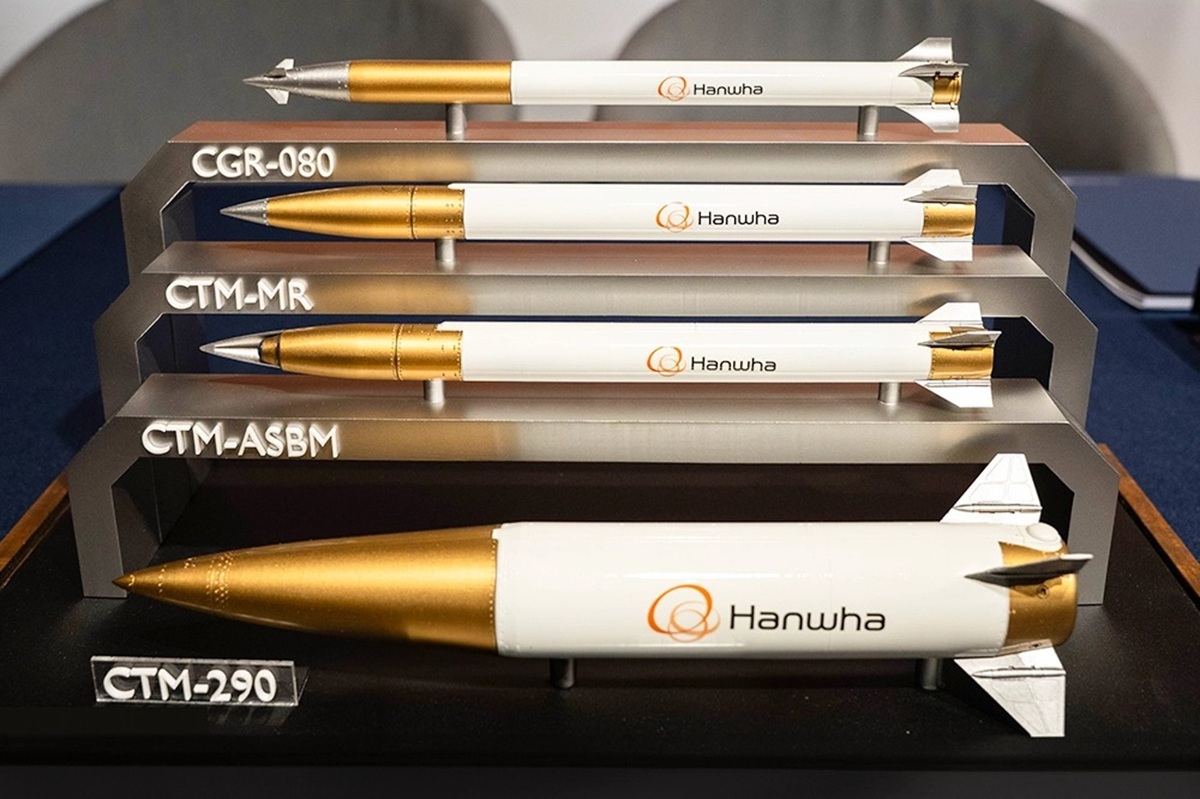


Partnership Between Hanwha Aerospace And BAE Systems Integrates GPS Jammer In Deep Strike Missiles, Ensuring Precision, Reliability And Interoperability Required By NATO.
The partnership between South Korean Hanwha Aerospace and British BAE Systems promises to enhance the electronic resistance of precision-guided weapons. With the integration of the anti-jammer GPS technology from BAE into Hanwha’s Deep Strike Capability system, the companies claim that the new guidance system will maintain precision and reliability even in highly contested electronic environments.
The cooperation also aims to strengthen interoperability with European countries and allies, expanding the commercial reach of the product.
Advanced Technology For Electronic Warfare Protection
The two companies have joined forces to develop a next-generation anti-jam Global Positioning System designed for precision-guided weapons.
-
Australia deploys poisoned sausages and uses traps, shooting, and fences in a battle against invasive cats that kill over 1.5 billion native animals annually, threatening more than 200 species.

-
NASA Rover Captures “Tired Face” on Mars, Highlighting Human Brain’s Tendency to See Faces in Rock Formations

-
Ancient Stone City in the Desert, Once Home to 30,000, Puzzles Scientists with Nabateans’ Water Mastery 2,000 Years Ago

-
Ancient Creature Thought Extinct Since Dinosaur Era Reappears, Baffling Scientists




The anti-jammer technology from BAE Systems will be integrated into Hanwha Aerospace’s Deep Strike Capability systems with the explicit purpose of countering sophisticated electronic warfare threats.
Billy Boo-hwan Lee, head of Hanwha Aerospace’s PGM Business Group, stated that the goal of the cooperation is to “ensure advanced technology for electronic warfare protection to safeguard our guided weapon systems” and that, with this technological advantage, the company will strengthen its position in the global market.
Deep Strike System Capabilities And Interoperability Goal
Hanwha’s Deep Strike Capability system provides a flexible, multi-caliber, multi-range rocket launch capability, adaptable to various missions—from suppression of enemy fire to neutralization of targets in complex environments.
Its dual-launcher configuration allows for the deployment of a wide range of guided rockets from a single platform, which, according to a press release, provides superior firepower and operational flexibility.
The companies state that the initiative was strategically designed to meet NATO interoperability requirements, significantly enhancing the system’s marketability to European and allied nations.
Luke Bishop, Director of Navigation Systems And Sensors at BAE Systems, stated that the collaboration “will help give operators greater versatility in the field when they need it most” and that this versatility, combined with highly reliable military GPS products, offers “a dependable product that will work in the most challenging environments.
The Deep Strike weapon, therefore, emerges as a precision attack solution designed for the demands of modern warfare, now complemented by anti-jammer capability.
IGAS Receiver: Performance And Applications
BAE Systems detailed that the IGAS receiver uses all-in-view dual-frequency navigation with 24 channels, offering high-performance GPS for tightly coupled GPS/INS integrations.
The IGAS builds on the 12-channel NavStrike receivers and Joint Direct Attack Munitions (JDAM), systems that the company describes as field-proven.
BAE also characterizes the IGAS as a small, low-cost, and highly reliable system specifically designed to meet mission requirements in missile and munitions applications.
Together, the improvements in the guidance system, the flexibility of the Deep Strike, and the IGAS receiver comprise the technical proposal of this cooperation, which aims for both operational superiority and product expansion in allied markets demanding interoperability with NATO standards.