Portuguese
  Spanish


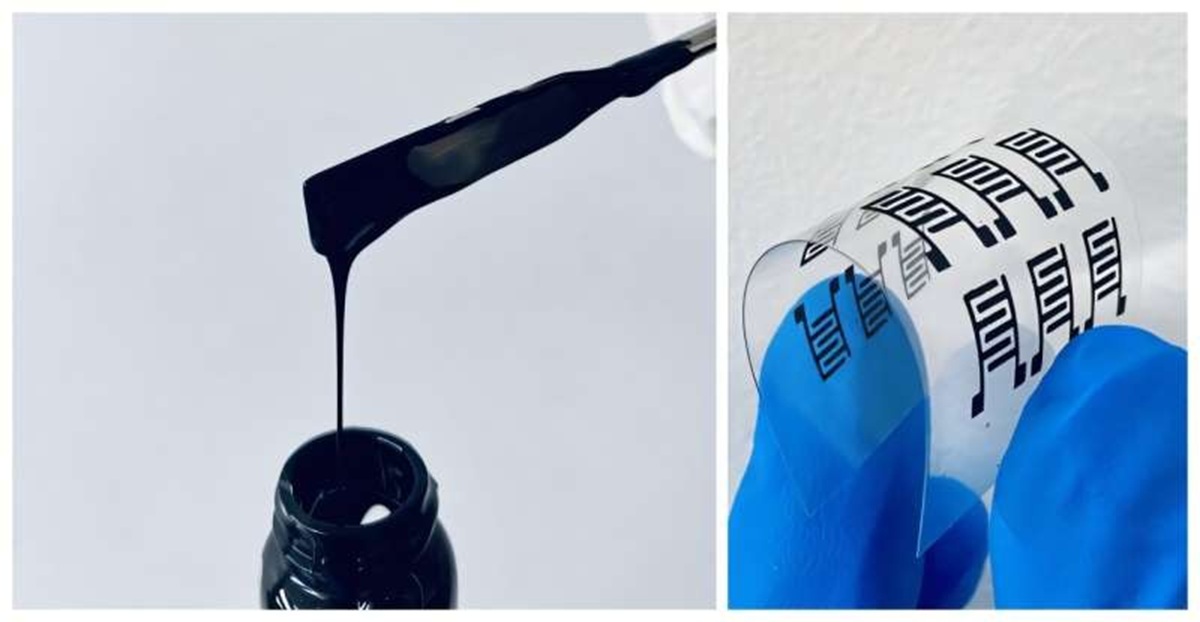


Monash University Research Describes a Graphene-Derived Material That Alters the Morphology of Particles, Reduces Viscosity and Prevents Re-Stacking, Enabling High-Resolution Printing, Lower Solvent Consumption and Greater Production Efficiency in Printed Electronic Devices
A team of researchers from Monash University presented a graphene-derived material that enables highly concentrated inks, above 200 milligrams per milliliter, without additives, overcoming historical limitations of viscosity and stability and paving the way for high-resolution and industrial-scale printed electronics.
Graphene and the Historical Challenge of Printable Inks
Graphene is widely recognized for its exceptional mechanical and electrical properties, as well as its thickness of just one atom. These characteristics sustain expectations for applications in flexible electronics, printed sensors, wearable devices, and lightweight functional films.
Despite this potential, transforming graphene into liquid inks suitable for industrial processes remains a central obstacle. For practical applications, the material needs to be processed into liquid dispersions capable of flowing in a controlled manner during printing or coating.
-
The Trap of Modern Technology: How Screen Overload and Digital Connections Can Impact Your Mental Health and Well-being

-
Wyoming Couple Grows Tropical Fruits Year-Round in -40°C Using Geothermal Greenhouse, Demonstrating Earth’s Heat Can Produce Oranges and Lemons in Snow Without Traditional Heating

-
Ship Returns from Brazilian Coast with Thirty Newly Discovered Life Forms
-
Nigerian Professor Invents Electricity-Free Refrigerator Using Clay Pots and Wet Sand, Extending Shelf Life of Vegetables to 27 Days; 7,000 Units Distributed in Energy-Deprived Villages



At the nanoscale, graphene does not behave like conventional solid particles. It consists of ultra-thin and flexible sheets, with a large width relative to thickness, resulting in an extremely high surface area compared to total volume.
This geometry causes the sheets to experience strong natural attractions to each other. As concentration increases, the sheets tend to come closer, re-stack, and form clusters, negatively impacting the stability of the ink and the uniformity of the deposited material.
Viscosity, Excluded Volume, and Network Formation
The extreme fineness of graphene also causes a rapid increase in the viscosity of dispersions. Even containing little solid material, each sheet occupies a significant space when moving in a liquid, a phenomenon known as excluded volume effect.
This behavior can be compared to the movement of large, flat sheets in a container, which quickly overlap and block each other, hindering flow. In the case of graphene, this leads to the formation of entangled networks that resist flow.
As more material is added, these networks connect, turning the dispersion into a continuous structure resembling a soft gel. This process occurs at relatively low concentrations, making graphene difficult to process by traditional methods.
As a consequence, most available graphene inks use highly diluted formulations, often with less than a few milligrams per milliliter, an insufficient amount for efficient, fast, and high-yield industrial manufacturing.
Limitations of Traditional Additives
To circumvent these problems, many formulations rely on polymeric binders or surfactants. These additives help keep the sheets separated and the ink printable, preventing premature agglomeration.
However, this strategy has significant drawbacks. Additives dilute the active material, reduce the functional fraction of graphene, and can compromise the electrical and thermal performance of the final devices.
Furthermore, the presence of inactive components requires additional processing steps, such as removal or curing, increasing costs, energy consumption, and production complexity, which limits commercial feasibility on a large scale.
Alter the Form, Not the Chemistry of Graphene
Instead of introducing new ingredients, the research group adopted a different approach, focused on the structural modification of the material. The result was the development of dense block reduced graphite oxide, known as DB-rGtO.
Unlike conventional flat sheets, DB-rGtO forms three-dimensional blocks composed of layers similar to graphene, loosely compacted. This architecture decisively alters the behavior of the material in liquid suspension.
Parts of these layers remain exposed to the solvent, allowing controlled interactions with the liquid medium. This configuration reduces the tendency for irreversible re-stacking and the formation of dense agglomerates.
The 3D structure also limits the sharp increase in viscosity observed in dispersions of flat sheets. As a result, the material maintains smooth flow even at significantly higher concentrations, something previously impractical with traditional graphene.
Unprecedented Concentrations and Printing Stability
Tests conducted with widely used printing solvents demonstrated that DB-rGtO dispersions remain stable and printable at concentrations exceeding 100 milligrams per milliliter, reaching up to 200 milligrams per milliliter without the need for binders.
This performance represents a substantial shift from existing formulations, which require large volumes of solvent to avoid excessive thickening. The new approach drastically reduces this requirement.
The stability of flow at high concentrations allows for greater material deposition per printing pass, reducing repeated steps and improving the uniformity of films produced, even in high-resolution applications.
According to the researchers, this improvement stems directly from the morphology of DB-rGtO, which controls particle interactions without compromising the intrinsic conductivity of graphene, something rarely achieved in conventional formulations.
From Bench to Functional Devices
Using the concentrated ink without binders, the team demonstrated screen printing of high-resolution patterns on flexible substrates. The interdigitated designs obtained exhibited sharp contours and dimensional fidelity.
The dimensions of the patterns were on the order of hundreds of micrometers, compatible with printed electronic components such as conductive traces, sensors , and functional elements integrated into plastic films or other flexible substrates.
The printed films were also evaluated as electrothermal heaters. With the application of a voltage, the material heated efficiently and uniformly, demonstrating stable behavior and predictable response.
These tests indicate direct potential for applications in flexible heaters, wearable devices, lightweight thermal control systems, and other uses where low weight and conformability are essential, reinforcing the material’s relevance.
Brazil and the Production of Graphene at Industrial and Scientific Scale
Brazil occupies a strategic position in the graphene supply chain by concentrating large reserves of natural graphite, the main raw material for the material, and housing industrial and academic initiatives aimed at national production. Research projects and pilot plants seek to transform this geological advantage into productive capacity by connecting mining, materials science, and industrial applications.
Among the highlights is UCSGraphene, a unit installed at the University of Caxias do Sul, considered the largest graphene factory in Latin America, with production at kilogram scale. Meanwhile, universities and research centers are developing synthesis, characterization, and application methods for graphene in inks, composites, cement, and functional devices, consolidating an emerging ecosystem with potential for industrial and technological expansion in the country.
Productive and Environmental Impact of Concentrated Inks
High-concentration inks are considered essential for practical printing and coating technologies. They reduce the volume of solvent used, decreasing the time and energy required for drying.
A higher load of active material per print also reduces the number of passes required to achieve the desired thickness, speeding up the production process and reducing wear on industrial equipment.
These combined factors make manufacturing more efficient from both economic and environmental perspectives, with lower resource consumption, lower waste generation, and a smaller energy footprint associated with production.
By eliminating inactive binders, the method also simplifies the production chain and preserves the electrical and thermal properties of graphene, increasing the reliability of final devices in real applications.
A New Route for Scalable Graphene
The study, published in the journal Advanced Materials Technologies, demonstrates that the printability of graphene can be improved through morphological engineering, rather than just by chemical adjustments or external additives.
This approach represents a new path for the development of scalable and high-performance graphene inks by directly addressing the physical causes of instability and premature thickening.
According to the authors, the strategy helps reduce the gap between the extraordinary properties observed in the lab and the effective commercial application of graphene in real-world products.
With the combination of high concentration, good flow, and absence of binders, DB-rGtO emerges as a promising solution to enable the next generation of printed electronics, bringing the material closer to broad and consistent industrial use.