






 Portuguese
  Spanish




The High Demand For Hybrid SUVs And Pickups In The Automotive Market Has Sparked GWM’s Interest In Investing In The Expansion Of This Segment In Brazil
Great Wall Motors (GWM), which is currently one of the largest manufacturers of cars and light commercial vehicles in China, announced this week that new hybrid SUVs capable of achieving up to 208 km/l will soon be launched and produced in Brazil. GWM will invest around R$ 10 billion in Brazil to produce both hybrid and electric SUVs and pickups directly at the Iracemápolis factory in São Paulo, which was recently purchased by GWM.
Also Read
Expected Start Of Production Activities For The SUVs
The production of the new SUVs is expected to begin in 2023. Great Wall Motors announced this week how its investment will be distributed, divided into two investment cycles: from 2022 to 2025, about R$ 4 billion will be allocated to local operations, while from 2026 onwards, an additional R$ 6 billion will be invested.
-
Chevrolet’s Parent Company to Invest Billions in Brazil to Modernize Factories, Update Cars, and Accelerate Hybrid Launch by 2028

-
Practical Driving Tests in Brazil Surge by 23.5%, Exceeding 2.2 Million by 2026, as New Rules Make the Process Cheaper and Simpler
-
Brazil’s Lula Government Allocates $463 Million Quota for Electric Car Parts, Waives Import Tax Until December, Sparking Competition Among BYD, Automakers, and Unions as Consumers Question Impact on Prices and Local Industry

-
Chinese Giant Invests $1.3 Billion in Brazil to Produce 50,000 Cars Annually, Create Jobs, Develop Local Suppliers, and Manufacture Electric, Hybrid, and Combustion Models by 2027


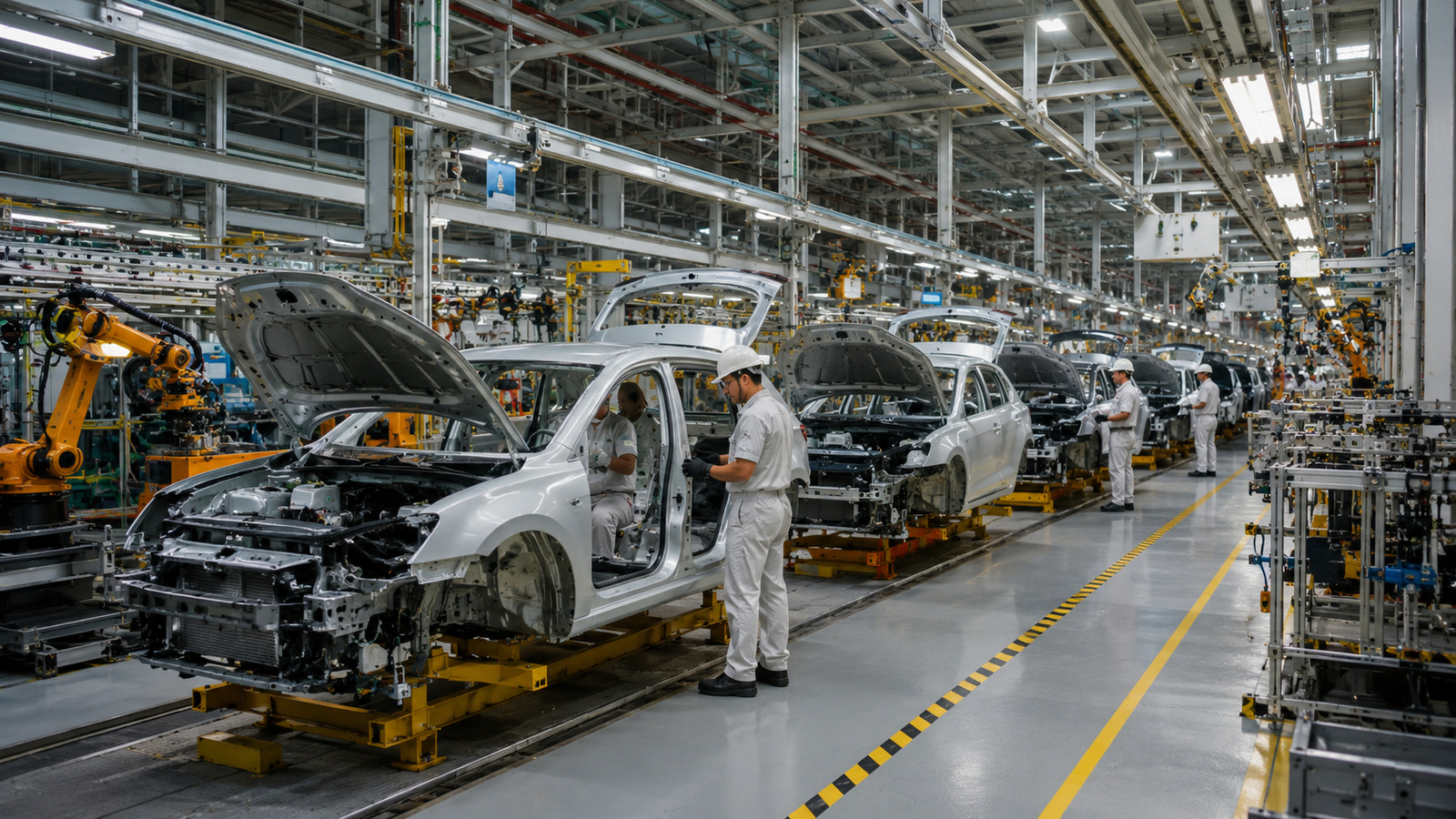
GWM expects to create approximately 2,000 direct jobs by 2025, which will be the year of the first investment cycle and the launch of 10 vehicles in Brazil.
It is still unclear which will be the first model entering Brazil, but it is known that it will arrive in the fourth quarter of this year, while the launch of the first Brazilian hybrid car will occur in the second half of 2023. According to Great Wall Motors, all launches in Brazil will be next-generation SUVs being developed by the manufacturer, meaning only new models will operate in Brazilian territory.
Chinese GWM Promises To Offer Options For Hybrid, Plug-In Hybrid, And Electric SUVs
The hybrid versions will come with power levels ranging from 230 hp to 430 hp and with a maximum torque between 41.8 kgfm and 77.7 kgfm. In terms of acceleration, the models will go from 0 to 100 km/h in just 4.8 seconds.
The most striking aspect is its range, which can vary between 75 km/l to up to 208 km/l, showcasing extremely high efficiency as the plug-in hybrid offer has the world’s largest range, reaching up to 200 km. Currently, hybrid and plug-in SUVs average 40 and 50 km of purely electric range, respectively.
It is estimated that Great Wall Motors will have three distinct brands in Brazil, including Haval, for urban SUVs, TTank, offering luxury off-road SUVs, and finally, Poer, a line of pickups. The models produced at the Iracemápolis factory will feature advanced connectivity capabilities and compatibility with the new 5G, in addition to level 2 semi-autonomous systems as standard.
Get To Know GWM
Great Wall Motors is a Brazilian factory that will soon become an export hub for other Latin American markets, as well as “nourishing” the domestic market.
GWM aims to modernize the factory to accommodate a new and comprehensive production system for hybrid and electric vehicles, with a capacity to produce up to 100,000 vehicles per year. As there has been an increase in the sale of SUVs and pickups in recent years, GWM decided to choose this segment, as during a visit in 2021, the demand for SUVs and pickups increased by 26%.


