Portuguese
  Spanish


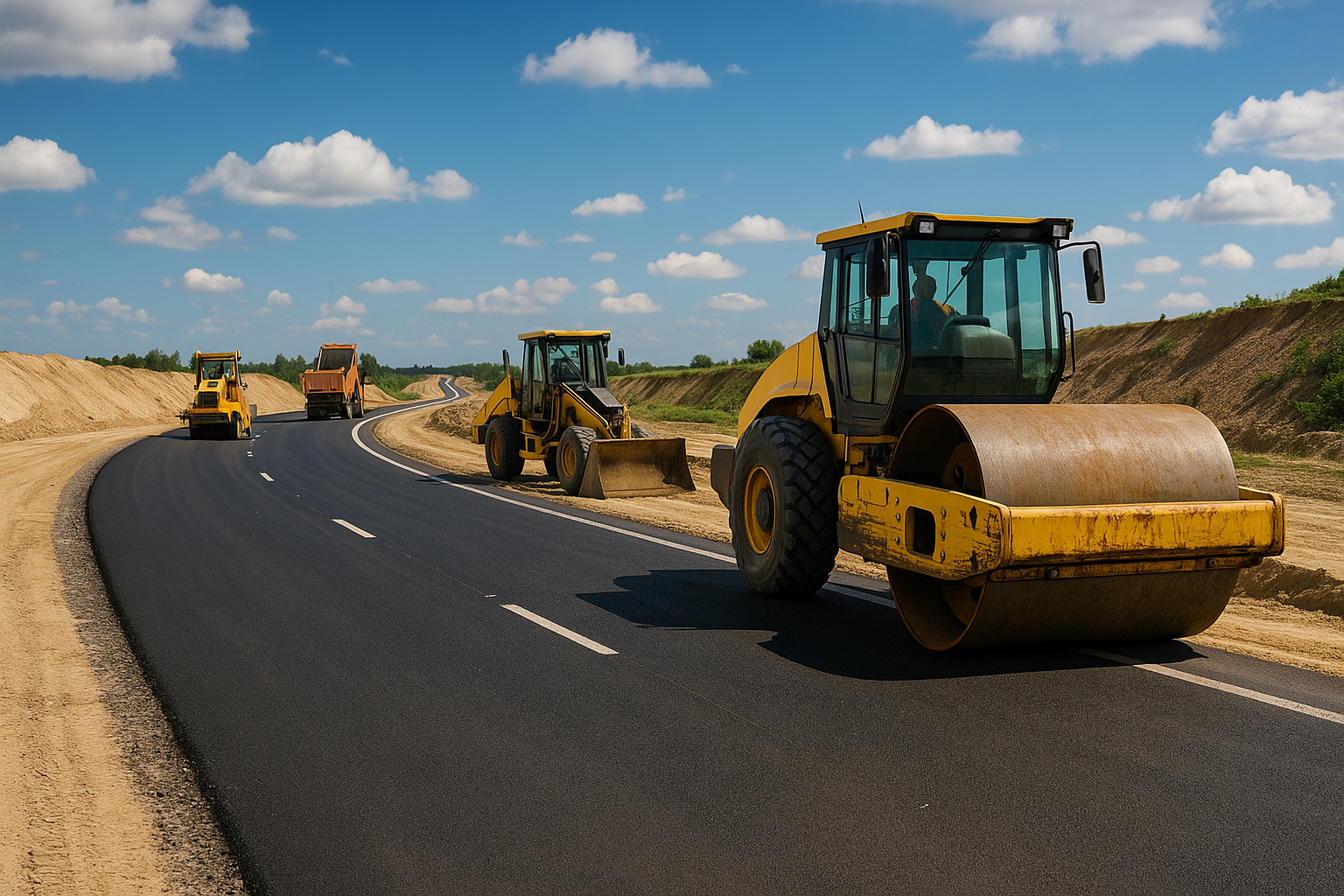

Understand Everything About Highway Construction, From Its Historical Origins to the Modern Stages of the Process, With Clear Explanations for Students and Professionals.
The construction of highways plays a fundamental role in the development of any country.
Moreover, they connect cities and regions, drive economic growth, facilitate the transport of goods, and promote access to essential services.
From antiquity to the present day, roads have profoundly influenced the evolution of societies.
-
Giant Robots Build Entire Neighborhood of 100 3D-Printed Homes in the U.S., Showcasing Technology’s Impact on Construction Industry

-
Helsinki Residents Receive Water That Travels 120 Kilometers Through a Hidden Rock Tunnel from a Lake Before Treatment

-
Brazil’s Sertão Region Nears Completion of Latin America’s Longest Artificial River, Transforming Water Access in Drought-Prone Ceará
-
Pre-mixed stabilized mortar set to revolutionize construction in 2026: extends usability to 36 or 72 hours, boosts productivity, and minimizes waste in building projects.



Therefore, this guide presents, in a clear and timeless manner, the main fundamentals of highway construction, aimed at both beginners and professionals in the field.
According to the National Department of Transport Infrastructure (DNIT), the concept of modern highways began to take shape in the 19th century.
The Industrial Revolution spurred the need for efficient routes to transport goods and people, paving the way for the development of the first paved roads.
Historically, the Roman Empire, between the 3rd century BC and the 4th century AD, built an extensive network of paved roads that connected the vast Roman territory.
These roads, made with layers of carefully placed stones, withstood the elements and allowed for the fast movement of troops and supplies.
As highlighted by the Brazilian Institute of Geography and Statistics (IBGE), this model of roadway engineering directly influenced later constructions in various parts of the world.
As the centuries passed, other civilizations also invested in transport routes.
However, as pointed out by the IBGE, in Brazil, the planning of paved highways only gained traction from the 19th century, aligned with the process of urbanization and the need to integrate distant regions.
At the beginning of the 20th century, the growth of cities and the popularization of automobiles further increased the demand for wide and safe roads.
Thus, the DNIT emphasizes that asphalt and concrete paving, along with the planning of road layouts, became pillars of modern highway development.
Furthermore, according to the Brazilian Association of Technical Standards (ABNT), the evolution of paving materials – from the use of natural stones to synthetic materials and reinforcement techniques – has increased the resistance of road surfaces to heavy loads and climate variations, ensuring greater durability.
Initial Stages: Studies and Earthworks

Before starting any project, engineers conduct detailed topographic and geotechnical surveys of the area.
These analyses help to understand the characteristics of the soil, slopes, and potential natural obstacles.
With this information, designers outline the most efficient path, seeking to balance safety, costs, and environmental impacts.
According to the DNIT, this detailed planning is essential to avoid future problems and ensure the longevity of the highway.
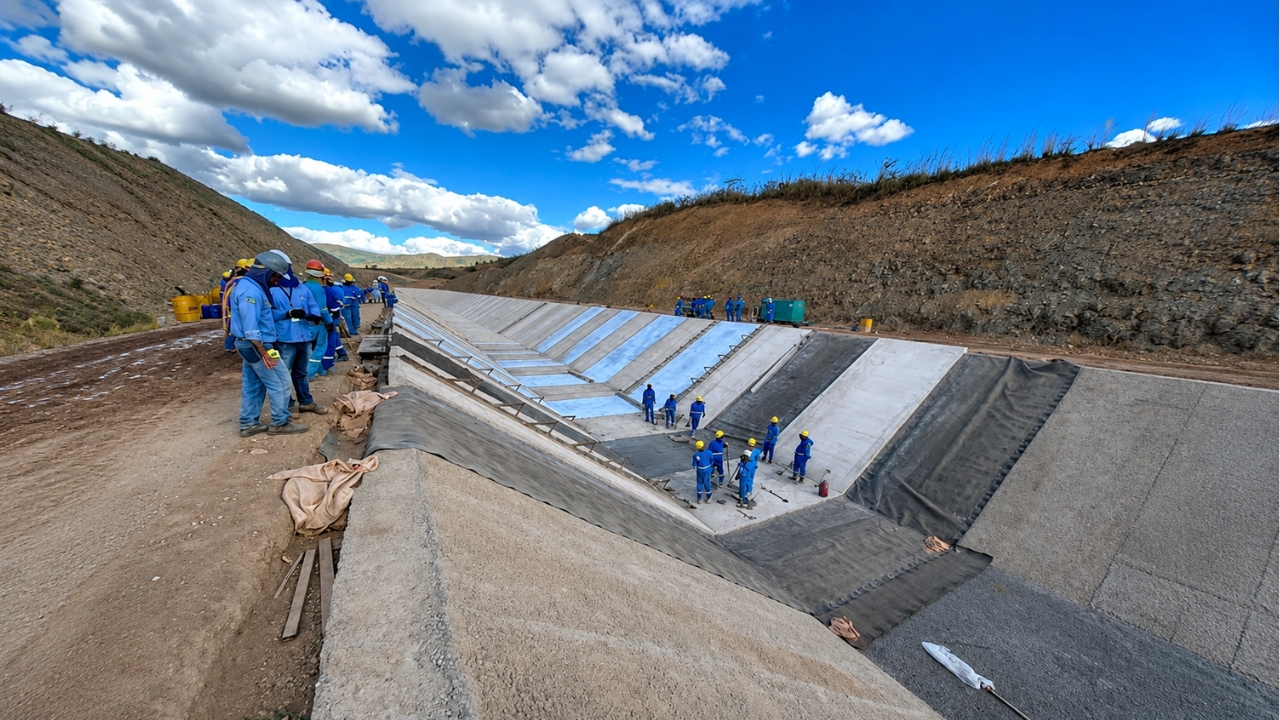
Earthwork, a crucial and visible stage of the work, involves moving and leveling the terrain. Machines such as excavators, graders, and compactors are essential to prepare the road’s base.
In areas with rugged terrain, special containment and drainage techniques protect against erosion, according to guidelines from the Ministry of the Environment (MMA).
After earthworks, paving begins, with the type chosen depending on expected traffic and local conditions.
The DNIT states that asphalt concrete is preferred on high-traffic roads due to its durability and flexibility, while plain concrete or soil-stone may suffice for rural or less busy areas.
According to data from the DNIT, paving accounts for about 40% of the total construction costs, highlighting its importance for project success.
Drainage, Signaling, and Special Works
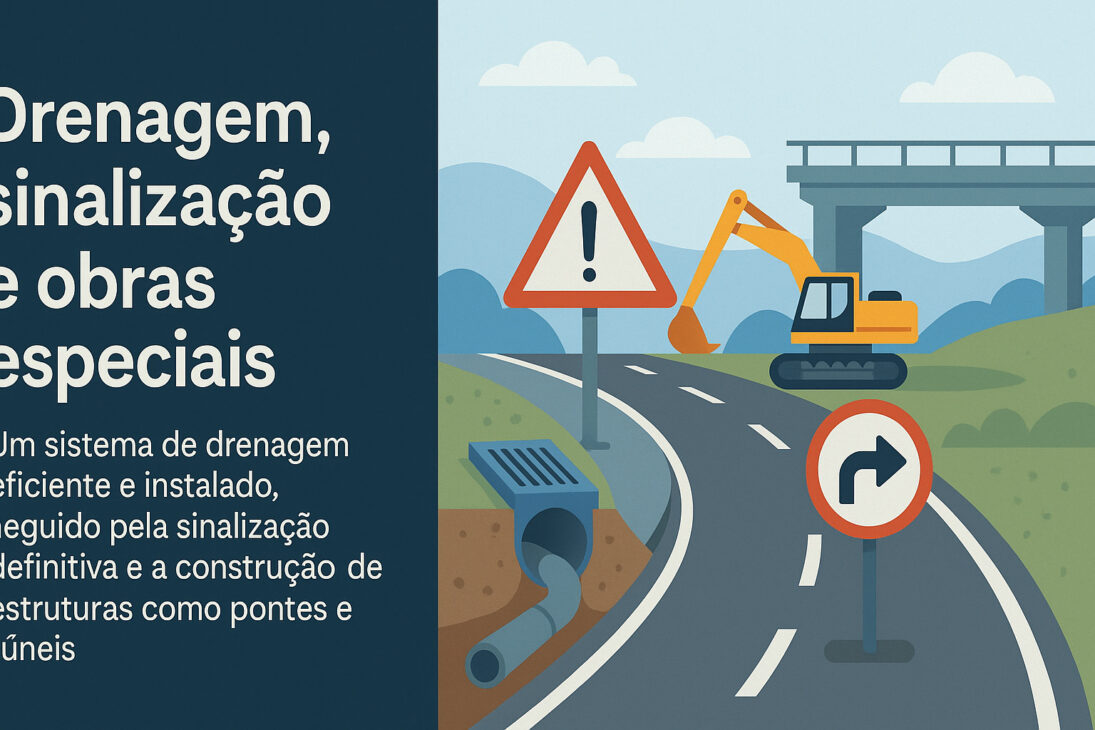
An efficient drainage system is essential to preserve the integrity of the highway. Channels, culverts, and ditches drain rainwater, preventing accumulation that can cause erosion and accidents.
The MMA emphasizes that proper drainage extends the lifespan of the pavement and protects the environment.
During construction, temporary signs and banners guide drivers. After completion, permanent signaling, in accordance with ABNT standards, ensures safety and regulates vehicle flow.
This signaling is crucial at curves, intersections, and high-risk areas, contributing to the reduction of accidents.
Additionally, many highways require special works such as bridges, overpasses, and tunnels, to overcome natural or urban obstacles.
The DNIT stresses that these structures require advanced engineering and rigorous maintenance to avoid failures that could compromise traffic and safety.
Highway Construction: Economic, Environmental Impact, and Technological Advances
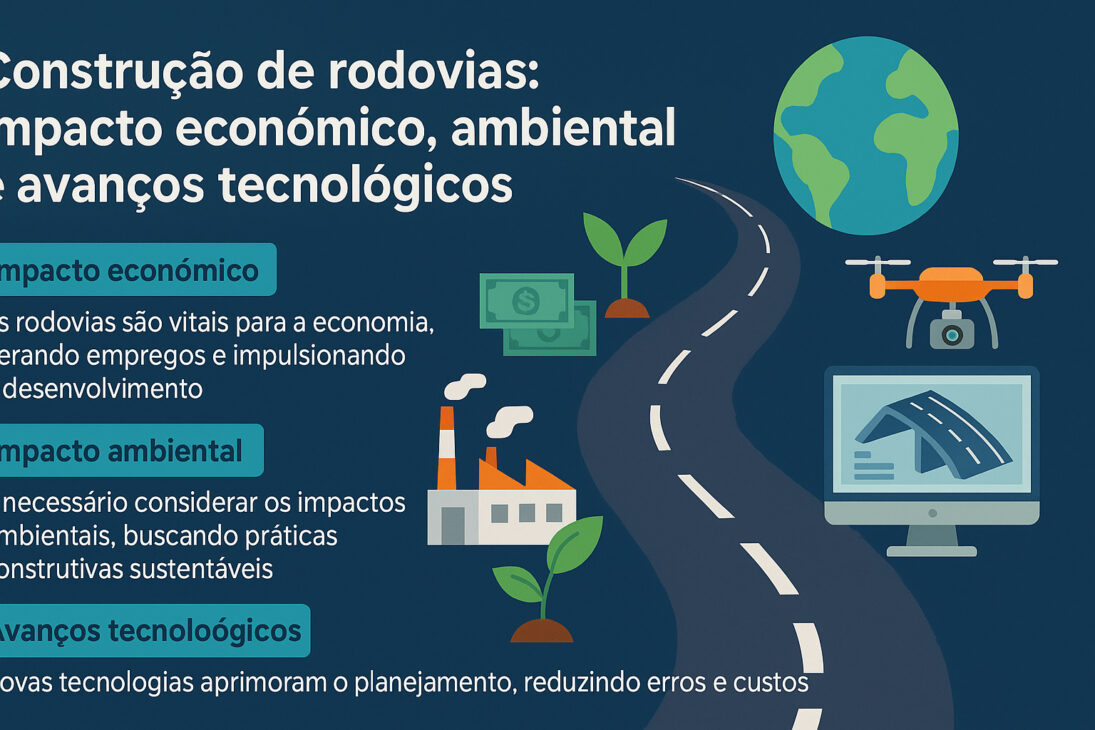
According to the IBGE, the construction of highways stimulates various sectors of the economy, generates jobs, and improves national logistics.
However, planning must always consider environmental impacts, according to MMA guidelines.
Thus, the environmental licensing and environmental impact studies are mandatory steps to mitigate damages.
Wildlife crossings, deforestation control, and the preservation of springs are examples of measures that promote sustainability, even if they raise initial costs.
In the current era, technology transforms highway construction. 3D software, drones, sensors, and artificial intelligence increase precision, reduce errors, and optimize costs and timelines, according to the DNIT.
Additionally, sustainable techniques such as permeable pavements and the use of recycled materials reduce greenhouse gas emissions and promote greater environmental responsibility.
Finally, there is a growing inclusion of modalities such as bike lanes and pedestrian shoulders, recognizing that mobility involves more than just cars and encouraging more accessible cities.
In summary, building highways requires knowledge that spans civil engineering to environmental and economic planning.
The sector is advancing rapidly, and constant updating of professionals is essential, as emphasized by the DNIT.
Highways are more than paved roads: they connect people, cultures, and opportunities. Building them with technical skill, responsibility, and a vision for the future represents one of the greatest legacies of modern engineering.