Portuguese
  Spanish


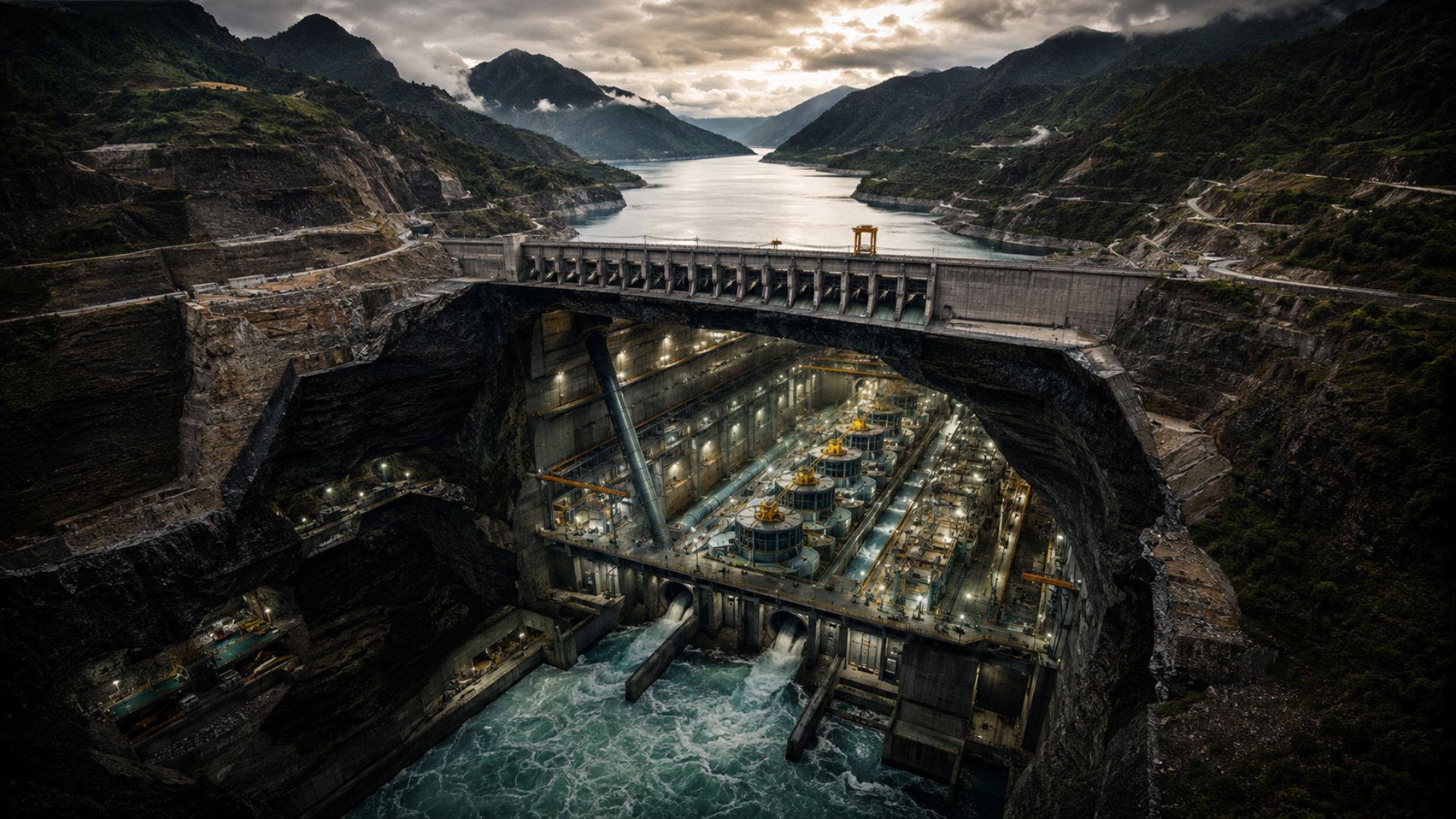


In 2018, the project was just weeks away from completion when a tunnel clogged and the dam nearly broke. Engineers had to deliberately flood the powerhouse to prevent the worst, and tens of thousands of people were hurriedly evacuated downstream. Today, the plant operates at half of the planned capacity.
With an underground cavern the size of a 17-story building and a reservoir of 78 kilometers, the Hidroituango plant became Colombia’s largest hydroelectric plant, capable of generating about 17% of the country’s total electricity. The engineering feat, however, was only possible after the project overcame a severe crisis in 2018, which almost turned it into a humanitarian catastrophe, posing a risk to more than 120,000 people.
Located on the Cauca River, in the Cauca Canyon, in the north of the Antioquia department, about 171 kilometers from Medellín, the Ituango Hydroelectric Plant is operated by EPM, Empresas Públicas de Medellín. The project began construction in 2010 and, despite already generating commercial energy since 2022, it is still not fully completed, with completion expected by 2027. It is one of the largest and most ambitious infrastructure projects in South America.
The impressive scale of the project

The numbers of the plant help to understand why it is considered a monumental project. The dam is about 225 meters high, and the reservoir formed by it extends for 78 kilometers, storing approximately 2.8 billion cubic meters of water from the Cauca River, the second largest in Colombia. All this in a narrow V-shaped canyon, with steep slopes that made the engineering especially challenging.
-
Giant Robots Build Entire Neighborhood of 100 3D-Printed Homes in the U.S., Showcasing Technology’s Impact on Construction Industry

-
Helsinki Residents Receive Water That Travels 120 Kilometers Through a Hidden Rock Tunnel from a Lake Before Treatment

-
Brazil’s Sertão Region Nears Completion of Latin America’s Longest Artificial River, Transforming Water Access in Drought-Prone Ceará
-
Pre-mixed stabilized mortar set to revolutionize construction in 2026: extends usability to 36 or 72 hours, boosts productivity, and minimizes waste in building projects.


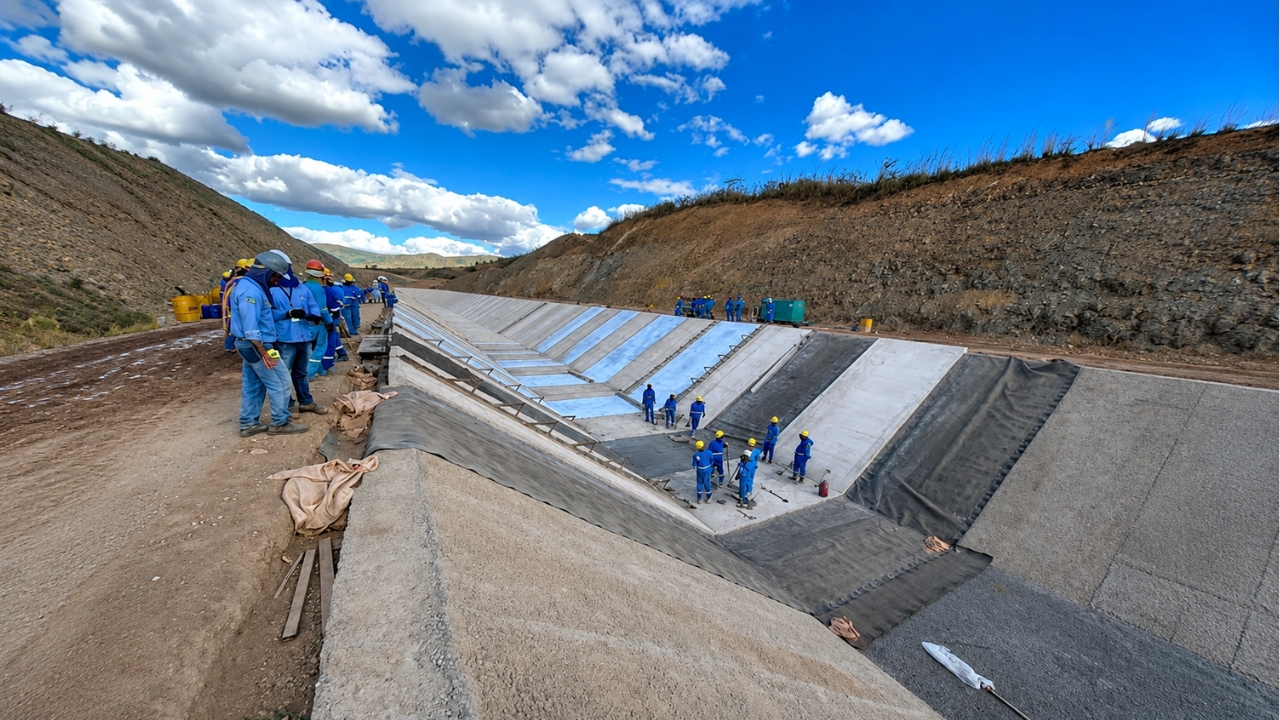

The heart of the plant is an underground machine cavern 240 meters long, 23 meters wide, and 49 meters high, equivalent to a building about 17 stories high carved inside the mountain. The spillway, responsible for safely draining excess water, has the capacity to evacuate up to about 25,300 cubic meters per second, a number that gives the dimension of the force the structure needs to contain.
2,400 megawatts and almost one-fifth of the country’s energy

In the final configuration, the plant will operate with eight Francis turbines of 300 megawatts each, totaling 2,400 megawatts of installed capacity, equivalent to about 17% of the entire electricity demand of Colombia. For now, however, only four of these turbines are in operation, which means the plant currently operates at about half of its total capacity, or approximately 1,200 megawatts.
The remaining four turbines are still in the installation phase, under a contract that, since 2023, has been handled by a consortium that includes the Chinese company Yellow River. Full completion is expected by 2027, when the plant should reach its maximum potential. Between January and April 2026, even operating partially, the plant generated more than 3,160 gigawatt-hours and accounted for about 11% of the national demand, according to the operator.
The 2018 crisis that almost turned into tragedy
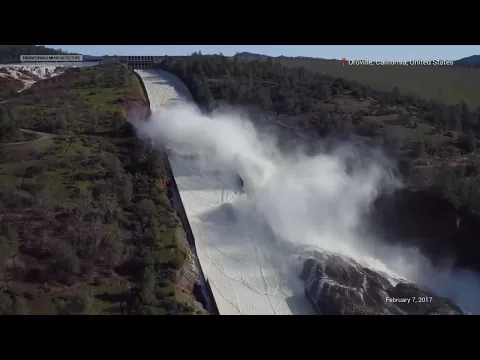

Here is the chapter that cannot be forgotten when telling the story of this plant. In April and May 2018, when the work was just weeks from completion, one of the river diversion tunnels was blocked, causing the water level to rise dangerously within the still unfinished structure. The risk of a total collapse of the dam, which would threaten more than 120,000 people downstream, became real and imminent.
In a desperate decision, the engineers chose to deliberately flood the nearly completed powerhouse, sacrificing equipment to relieve pressure and prevent a rupture. On May 12, 2018, the main tunnel abruptly cleared, releasing a massive amount of water that flooded areas downstream and devastated the village of Puerto Valdivia. Tens of thousands of people were hastily evacuated in the region’s municipalities, and many could only return home more than a year later.
The damages that propaganda usually hides
The crisis had ramifications that go far beyond the delay in the project. EPM became the target of investigations for alleged corruption and environmental damage related to the project, and the episode generated estimated losses of hundreds of millions of dollars, in addition to years of delay. For many critics, political and financial haste would have overridden geological and safety precautions that a project of this magnitude required.
There was also severe environmental impact. In 2019, the closing of gates drastically reduced the flow of the Cauca River, killing a large number of fish and creating what authorities classified as an environmental emergency, affecting communities that depend on the river for subsistence. Therefore, presenting Hidroituango only as an engineering triumph, without mentioning these human and environmental costs, would be telling only half the story.
Energy, El Niño, and water security
Despite all the controversy, the plant plays a relevant role in the Colombian electrical system today. By operating in a regime of alternating floods and droughts, Hidroituango functions as a strategic asset during intense drought periods caused by the El Niño phenomenon, helping to stabilize supply and contain sharp variations in energy tariffs during the driest months.
Colombian legislation also mandates the allocation of resources from the electricity sector for water supply and sanitation works in affected municipalities, and the managing company claims to have invested hundreds of billions of pesos in local infrastructure, benefiting more than 300,000 inhabitants in twelve municipalities of Antioquia. These are attempts to compensate, at least in part, for the impacts suffered by the population during the crisis.
The parallel with Brazil
For the Brazilian reader who follows energy, the story of Hidroituango brings familiar lessons. Brazil, which has hydropower as the basis of its matrix, is well aware of both the grandeur of these projects, such as Itaipu and Belo Monte, and the risks associated with large dams, especially after tragedies like Mariana and Brumadinho, related to mining, but which sparked the national debate on the safety of containment structures.
The Colombian case reinforces that mega energy projects require not only technical capability and investment but also geological rigor, transparency, and solid risk management and community protection plans. At a time when the world is seeking cleaner energy sources, hydroelectric plants remain strategic, but the human and environmental cost needs to be considered from the first project, not just after a crisis occurs.
The Hidroituango plant is both a symbol of Colombia’s engineering capability and a warning about the risks of large infrastructure projects. After nearly becoming a catastrophe in 2018, it has been rebuilt and today provides a significant portion of the country’s energy, even though it operates at half capacity and under the shadow of investigations and environmental impacts. It is a story of resilience, but also of hard lessons about the price of underestimating the dangers of taming a large river. The final outcome will only be known when the project is completed and its effects are fully assessed.
And you, what do you think about mega projects like the Hidroituango plant, which deliver a lot of energy but carry enormous risks for nearby populations? Do you believe it’s worth it, or are the dangers too great? Leave your comment, share your opinion on the future of large hydroelectric plants, and share the article with those interested in energy, engineering, and the environment.