






 Portuguese
  Spanish


Mark Left 43 Thousand Years Ago by a Neandertal in Spain May Be the Oldest Known Complete Human Fingerprint and One of the Earliest Known Artistic Expressions.
A possible fingerprint left approximately 43,000 years ago by a Neandertal may be the oldest record of this kind ever identified.
A discovery in San Lázaro, Central Spain, may change what we know about prehistoric art. In 2022, archaeologists found a small stone with a mark made about 43,000 years ago.
A Neandertal is believed to have dipped a finger in ochre and pressed the center of the stone, possibly leaving the oldest known complete human fingerprint.
-
China Develops Custom 140-Ton Electric Mining Truck with 770 kWh Swappable Battery, Deploys 290 Units in Xinjiang’s Largest Zinc Mine

-
Meta to Launch Arena, a New Prediction App Targeting 3.56 Billion Users, Competing with Polymarket and Kalshi

-
Scientist Challenges Famous Human Evolution Theory, Argues Homo Sapiens Evolved Gradually Over Thousands of Years
-
15-Year-Old American Builds Ocean Generator with PVC Pipe and 3D-Printed Propeller for $12, Wins National Prize, Presents at White House, and Makes Forbes 30 Under 30 List




More Than a Fingerprint
In addition to the mark, the stone features a set of traits that suggest something even more impressive: it may be one of the oldest artistic representations of a human face.
The red fingerprint appears right at the center, just below two marks and above another, creating what resembles a nose among eyes and a mouth.
The team led by David Álvarez-Alonso from the Complutense University of Madrid was responsible for the discovery. For the researchers, the choice of the stone was not random.
It is believed to have been collected from a nearby river and brought to the shelter of San Lázaro. The peculiar shape of the stone may have inspired the author to paint it, even without any known practical function.
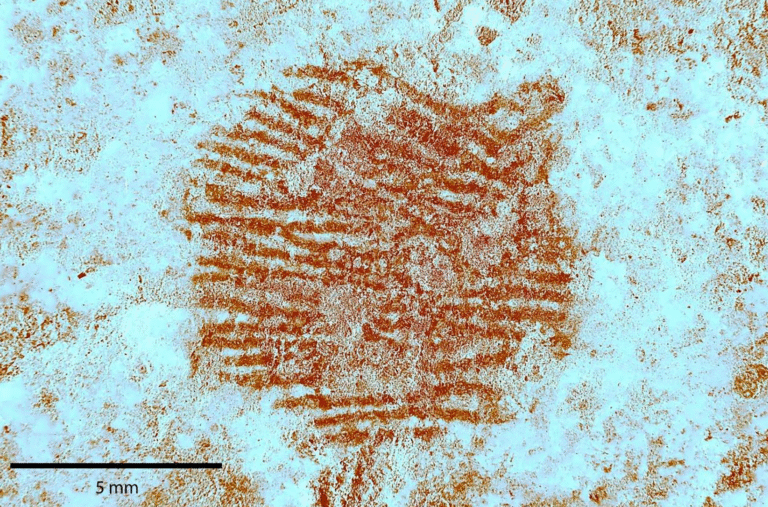
Archaeol Antropol Sci, 2025)
Acts of Imagination and Symbolic Art
Scientists emphasize that the ochre mark does not appear to be a simple accidental stain. “It contains a fingerprint that indicates the pigment was applied with the tip of a finger soaked in pigment,” explain the authors of the study published in the journal Archaeological and Anthropological Sciences.
While there is a possibility that the mark was made accidentally, Álvarez-Alonso and his team advocate the theory that it is an intentional act of artistic expression. According to him, “if it were a stone with a red dot made 5,000 years ago by Homo sapiens, no one would hesitate to call it portable art.”
The discovery rekindles the debate about the symbolic capacity of Neandertals, often underestimated compared to modern humans.







Como não tem função prática? É o RG dele.
Sem comentários! Essa **** não se comenta.