






 Portuguese
  Spanish
  3 min of reading
  0 comments


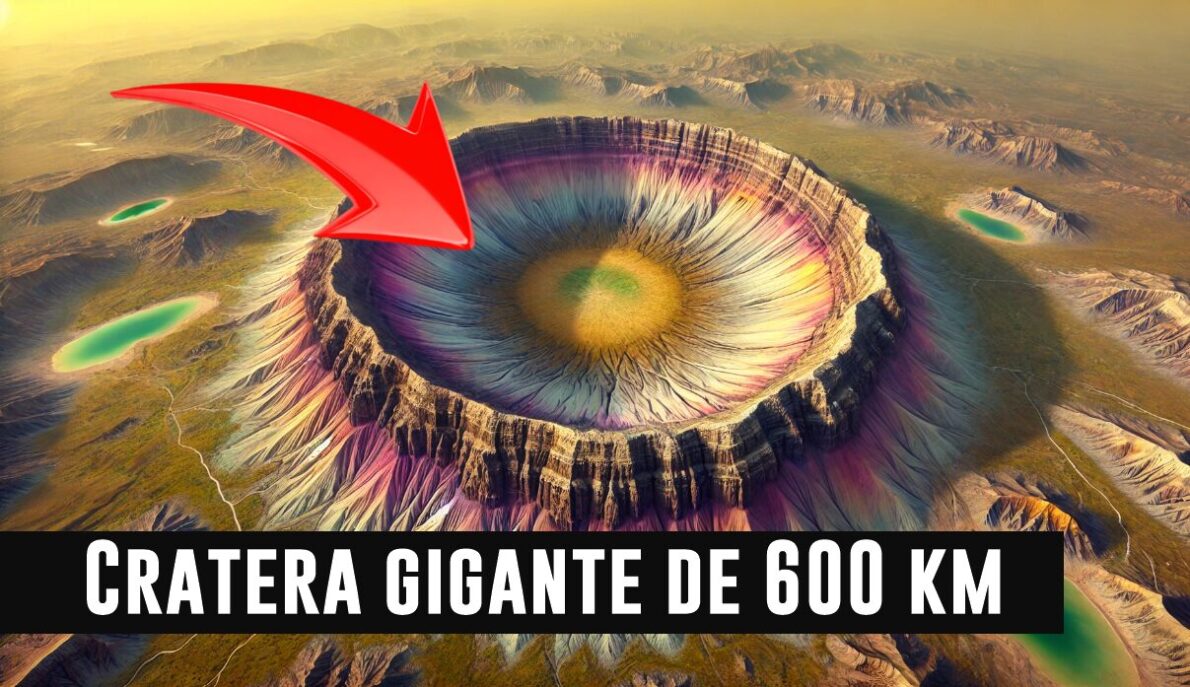
The discovery of a massive impact crater in Australia, possibly the largest ever identified, could profoundly transform our understanding of the Earth’s geological history. The crater, named MAPCIS (Massive Australian Precambrian-Cambrian Impact Structure), stretches over 600 kilometers and is located in the heart of Australia.
It was found by Daniel Connelly and Arif Sikder, researchers from Virginia Commonwealth University, and it may reshape our understanding of the geological and biological forces that have shaped the planet.
The discovery was based on geological evidence, such as pseudotachylite breccia deposits, or melted rock, found near the center of the crater.
-
Machine revolution failed and robot seen begging on the street: humanoid kneeling with bowl, backpack, and QR code goes viral in 11-second video as narration says there was no money to recharge the battery.

-
A 12-year-old boy from Alfenas obtained a license from Anatel to operate amateur radio, has already made contacts in Paraguay, and proves that one of the world’s oldest technologies still attracts thousands of new users.
-
A supercomputer predicts who will win the World Cup and which player will take the Golden Boot, but the projection leaves Brazil far from the expected prominence.

-
GM’s electric cars could become “giant batteries” to ease the power grid as AI data centers increase consumption; the plan involves 250,000 bidirectional vehicles, reused batteries, and new sodium chemistry for industrial storage.




Shocked minerals were also identified, such as lonsdaleite, a rare type of diamond formed by impacts, along with significant amounts of iridium, a chemical element common in cosmic collisions.
The impact that formed the crater occurred at the end of the Ediacaran period, in the Neoproterozoic Era, approximately 538 million years ago.
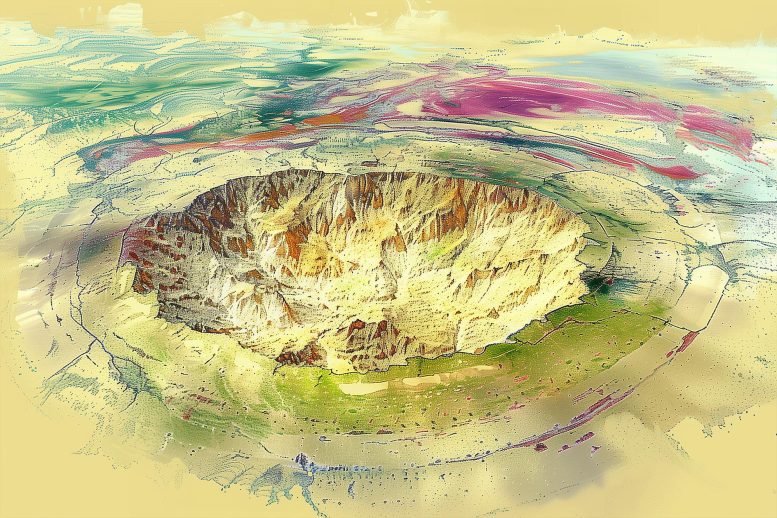
This era is significant as it marks the emergence of complex life forms on Earth, and the collision may have played a significant role in the geological and biological evolution of the planet.
Connelly and Sikder believe that this crater is not only twice the size of the largest known crater to date, but it may also provide new insights into impact events on Earth and their consequences. “The discovery of MAPCIS is proof of the power of collaborative research“, emphasized Connelly, excited about the developments of this new phase of study.
A New Record May Be Broken
Currently, the largest craters cataloged on the planet include:
- Vredefort Crater (South Africa): With a diameter of 300 km, it is the largest confirmed impact crater on Earth. Formed about 2 billion years ago, it is believed that the meteorite responsible for its formation was between 10 and 15 km in diameter.
- Chicxulub Crater (Mexico): Located on the Yucatán Peninsula, this crater is about 180 km in diameter and is associated with the extinction of the dinosaurs 66 million years ago. The impact was so violent that it caused global climate changes, contributing to the end of the Mesozoic Era.
- Sudbury Crater (Canada): With a diameter of 130 km, it is one of the best-preserved craters. Formed 1.85 billion years ago, it is believed to have been caused by one of the largest meteorites to ever strike the Earth.
- Popigai Crater (Russia): Created about 35 million years ago, this crater is 100 km in diameter and is famous for the diamonds formed by the impact.
- Manicouagan Crater (Canada): With approximately 100 km in diameter, this crater is 215 million years old and is visible today as a large annular lake.
These structures are the remnants left by cosmic events that drastically altered the course of Earth’s geological history.
The impact of the Chicxulub crater, for example, was directly responsible for the extinction of the dinosaurs, while the event that formed the Vredefort crater may have shaped the terrestrial surface on a global scale.
The possible discovery of MAPCIS may not only redefine the geographic boundaries of impact craters on Earth but also provide new data on the effects of these events on life’s development. Sikder, an associate professor at the Center for Environmental Studies at VCU Life Sciences, shares his colleague’s excitement: “The data we collected offers a unique glimpse into the forces that shaped our planet, and I am excited about the future research that this discovery will inspire“.
This discovery is yet another example of how science continues to unveil secrets of Earth’s past, bringing to light cataclysmic events that, millions of years ago, shaped the fate of our planet.




Be the first to react!