






 Portuguese
  Spanish


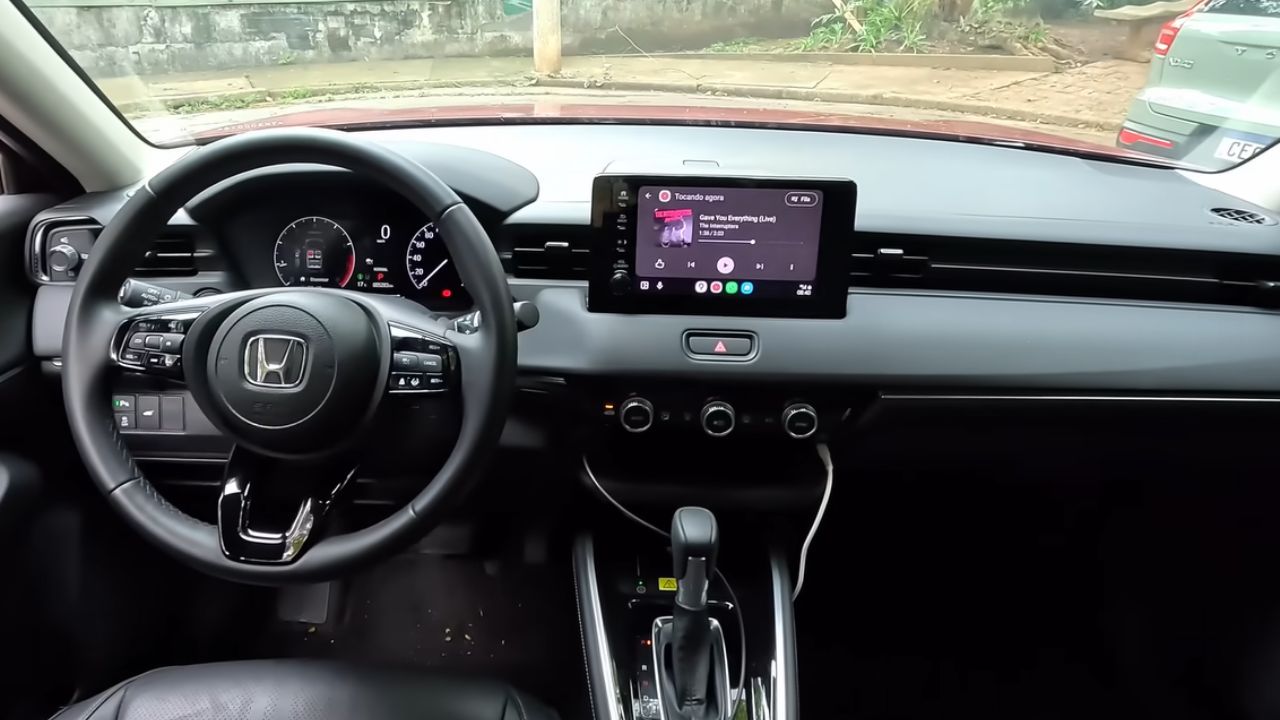
We Evaluated the Honda HR-V 2026 in the Turbo Version (Turing/Story); SUV Accelerates Strongly and Has Space for Big People, but the Price of R$ 209,900 Raises Questions About Its Cost-Effectiveness.
The Honda HR-V 2026 has arrived in the market in its top-of-the-line version, the Story (also called Turing), bringing the long-awaited 1.5 turbo engine. According to a detailed evaluation from the Carro Chefe portal, the SUV fully satisfies those looking for performance and a sporty ride. However, the 2026 facelift brought an update that no one celebrated: a significant price increase.
Costing R$ 209,900, the Honda HR-V 2026 enters a dangerous price range. The model is praised for its handling and interior space, but Carro Chefe points out that, at this price, it lacks essential equipment that competitors, especially the Chinese ones, already offer. The big question is: does the turbo engine justify the price of nearly R$ 210,000?
The Turbo Heart of 177 HP
The big highlight of the Honda HR-V 2026 is the 1.5 turbo engine with direct injection, the same setup that equipped the Civic Turbo. It delivers 177 horsepower and 24.5 kgf/m of torque (on both fuels), with maximum torque appearing early, at just 1,700 rpm. Carro Chefe highlights that the engine uses a timing chain, eliminating the need for a timing belt.
-
Volkswagen to Cut Production by 1 Million Cars by 2030, Reducing Jobs and Platforms, Focusing on More Profitable Models

-
Toyota Launches First 100% Electric Car in Brazil: bZ4X with 343 HP, All-Wheel Drive, 361 km Range, Priced at $419,990 BRL, Limited to 99 Units

-
Chinese SUV Achieves 24.4 km/l, Outperforms Toyota Yaris Cross in Real-World Tests with 224 hp Hybrid System, Offers 51-Liter Tank for Greater Range, and Costs Up to R$ 5,000 Less.
-
Uber Black Revamps Fleet, Drops Ten Car Models and Sets Deadline for Electric BYD Dolphin


This setup, combined with the CVT that simulates seven speeds, delivers performance that Carro Chefe considers “very smart.” Although Honda does not officially disclose it, tests from the source recorded a 0 to 100 km/h in 7.7 seconds on ethanol (and 8.5 seconds on gasoline). In the rain, the test recorded 8.2 seconds. The car, weighing 1,410 kg, has a good power-to-weight ratio of 7.9 kg/hp.
Giant Interior Space, Trunk Not So Much
If the engine is the strong point in dynamics, the interior space is the highlight in practicality. Carro Chefe measured the rear seat space and confirmed: it is “a beautiful space”, with the evaluator who is 1.83 m sitting comfortably. The center tunnel is low, and there are air conditioning vents and two USB ports for those in the back.
The secret to this space is the Magic Seat system, which allows the rear seat to be lifted to carry tall objects (like a plant pot, the source exemplifies). However, this engineering choice came at a cost: the trunk. With only 354 liters, it is considered small for the SUV category, although it is entirely lined and features electric opening and closing of the lid.
The Price of R$ 210 Thousand and What’s Missing in the Package


The most criticized point by Carro Chefe is the price: R$ 209,900. For this amount, the list of absences is notable. The Honda HR-V 2026 does not offer sunroof, 360º camera (only rear and the blind spot camera on the right mirror, which the evaluator dislikes) and the passenger seat has manual adjustments.
The criticism extends to the lack of a traditional blind spot monitor and the instrument panel, which is considered too simple, mixing an analog speedometer with a limited digital screen. A point “horrible” mentioned by Carro Chefe is the rear center seatbelt that exits from the ceiling.
The SUV does have positive points in technology, such as dual-zone digital air conditioning with physical buttons (praised for practicality), induction charger, and the adaptive cruise control (ACC) with “stop and go” function. However, Carro Chefe criticizes the steering assistant, which only works above 65 km/h, which “does not make sense” for urban use.
The verdict from Carro Chefe on the Honda HR-V 2026 is clear: it is a car with “beautiful performance” and “nice” handling, which stands out for its excellent interior space. The pairing of the 1.5 turbo engine with the CVT works very well, making the SUV nimble and enjoyable to drive.
The problem, however, is classified by Carro Chefe as “unacceptable”: the price. The source classifies the value of R$ 209,900 as “completely out of touch” with reality, stating that Honda “lost its way.” Despite giving a final score of 8.5, praising the car, Carro Chefe‘s recommendation is that the Honda HR-V 2026 is a “great car” to look for in the used market (especially pre-facelift), but at the price of a new one, it is hard to justify.
Do you think the performance of the 1.5 turbo engine justifies paying R$ 210 thousand for the Honda HR-V 2026? Or, for that price, do the electric Chinese competitors have the advantage? Leave your opinion in the comments, we want to know what you think about this pricing strategy.





-

-

2 people reacted to this.