






 Portuguese
  Spanish


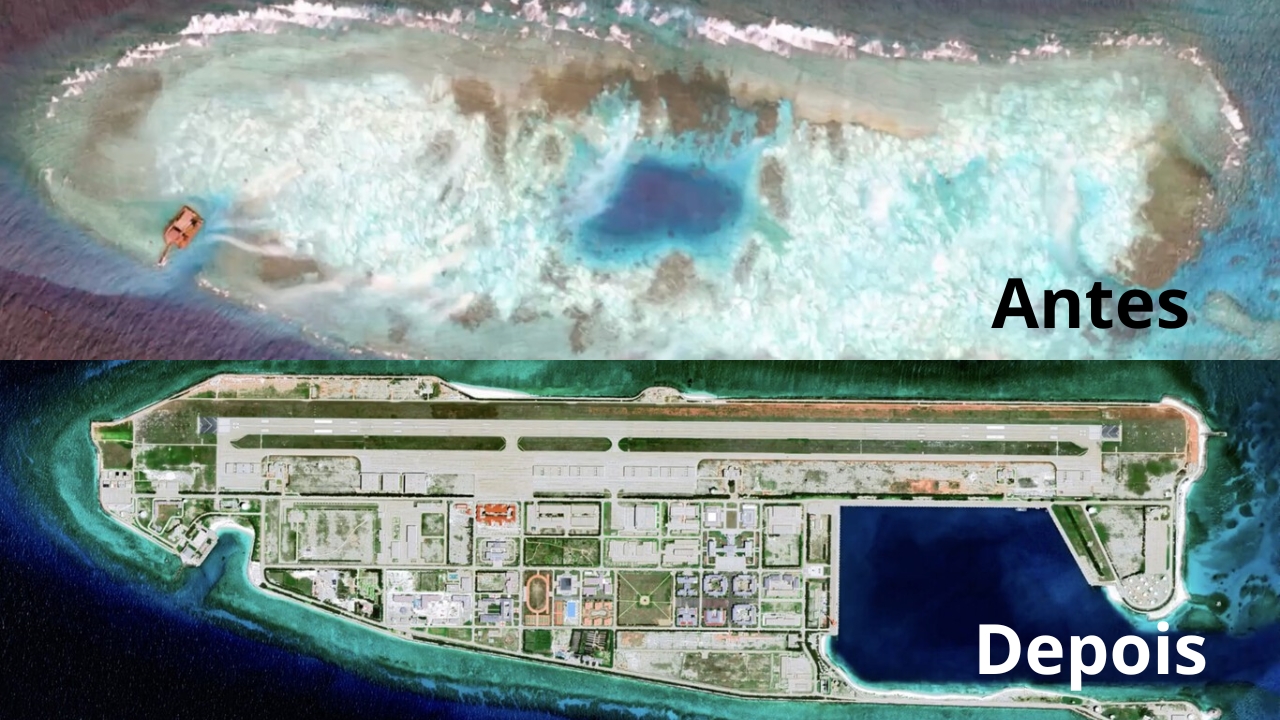


The Accelerated Construction of Artificial Islands Now Totals 12 km² in Reefs and Increases Regional Tension in the South China Sea
China has maintained a strategy of expansion in the South China Sea for 12 years, based on dumping large volumes of sand and sediment into the ocean. The result is straightforward: artificial islands appear where there were once only reefs.
The process gained scale from the end of 2013, with interventions in disputed areas and impacts that range from military infrastructure to the marine environment.
What Happened and Why It Got Attention
At the end of 2013, a land reclamation cycle began at seven reefs in the Nansha and Xisha archipelagos, also known as Spratly and Paracels. The first stage was rapid filling, completed between December of that year and June 2015.
-
Indian Student Designs Bamboo Houses with Floating Blocks and Recycled Bottles for Flood-Prone Areas; University of Texas Project Aims for Sustainable Housing in Vulnerable Communities

-
Scientists Hatch First Chicks in Shell-less Artificial Eggs, Paving Way for Research on Endangered Birds

-
3D Steel Printing Could Extend the Lifespan of Damaged Bridges by Up to Four Times Without Replacing Entire Parts
-
Archaeologists Discover Nearly Intact 1,500-Year-Old Byzantine Mosaic with Greek Inscriptions, Including a Message to “Burst with Envy”


Starting in 2015, the focus shifted to consolidating the new territory, with works to transform the reclaimed reefs into stable bases capable of supporting permanent structures.
How the Artificial Islands Were Built


The technique combines cutting the coral seabed and displacement of sediments to shallow zones. This material accumulates as fill, creating an emerged surface.
Then, dikes and retaining walls are placed around the reef to hold back the filling process. With more layers of material, machinery compacts the soil for stability.
In the final stage, the area is paved and infrastructure is added, such as internal roads and surfaces prepared for continuous operations in open water.
The Size of the Expansion and the Speed of the Reclamation
By October 2015, there were already about 12 km² of land artificially constructed over reefs of Nansha. The number shows the scale leap of the project.
The volume is contextualized as 17 times more land reclaimed in 20 months than the total achieved by other international claimants in 40 years. This reinforces why the transformation of the reefs has come to be seen as a milestone in the regional dispute.
Infrastructure Built After 2015
With the reclamation completed, runways, hangars, ports, radars, and support structures were created. This package indicates extensive use, both logistical and operational.
There are also mentions of underground facilities and platforms associated with weaponry, raising the level of concern regarding the type of presence established in the South China Sea.
What Changes in Practice for the Countries in the Region
The dispute intensifies as Beijing claims sovereignty over areas contested by Vietnam, Taiwan, Japan, and the Philippines. The regional reading is that the islands reinforce a permanent presence in disputed waters.
The Japanese Ministry of Defense assesses that the infrastructure expands China’s operational capacity in the South China Sea, with offensive reach over much of the area.
Vietnam is also advancing with similar works on reefs, replicating the reclamation logic used at the beginning of the Chinese cycle, which increases pressure in an already highly sensitive zone.
What May Happen from Now On
Assessments associated with CSIS in 2025 indicate that China’s constant activity in the region is directly supported by the works from a decade ago. The infrastructure created would enable almost permanent operations in the South China Sea.
Western analyses indicate that the runways are prepared for combat and transport aviation, while the ports would support the presence of warships. This set enhances projection and sustainment capacity in the long term.
Ecological Impact and Environmental Cost
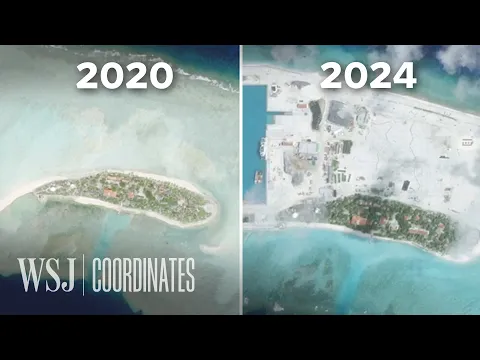

Beyond the geopolitical clash, environmental damage appears as a difficult-to-overcome effect. Estimates indicate a loss of 12 to 18 km² of reefs, including in well-preserved areas of the region.
The problem is not limited to the filled area. Sediment clouds generated during dumping can spread and affect more distant systems, altering light patterns, currents, and deposition in the surroundings.
Chinese scientific research also indicates that these practices may eliminate the ecosystem of the occupied area and harm currents and sediment patterns, accelerating the degradation of neighboring zones.
The State Oceanic Administration of China maintains that the projects undergo assessment and that corals should not be harmed, attributing the degradation to global trends such as ocean acidification and climate change.
The reclamation strategy that began at the end of 2013 created new artificial islands in record time and consolidated a physical presence that alters the dynamics of the South China Sea. With 12 km² already formed over reefs, the region begins to operate with a new level of infrastructure in disputed areas.
At the same time, the environmental cost and the escalation among neighbors such as Vietnam, Taiwan, Japan, and the Philippines keep the topic at the center of tensions, with direct impacts on security and reef preservation.


Não é questão de SE mas QUANDO teremos uma 3ª guerra mundial. A busca por conforto, menos trabalho, mais dinheiro e vida boa é o motor de tudo. A preguiça e a vaidade vão trazer o caos.
SE NÃO PREJUDICAR AS NAÇÕES PRÓXIMAS E NEM O MEIO AMBIENTE, EU IMAGINO QUE A CHINA PODE USAR ESSA TECNOLOGIA PARA CONSTRUIR BASES MILITARES, ONDE ELA QUISER.