Portuguese
  Spanish


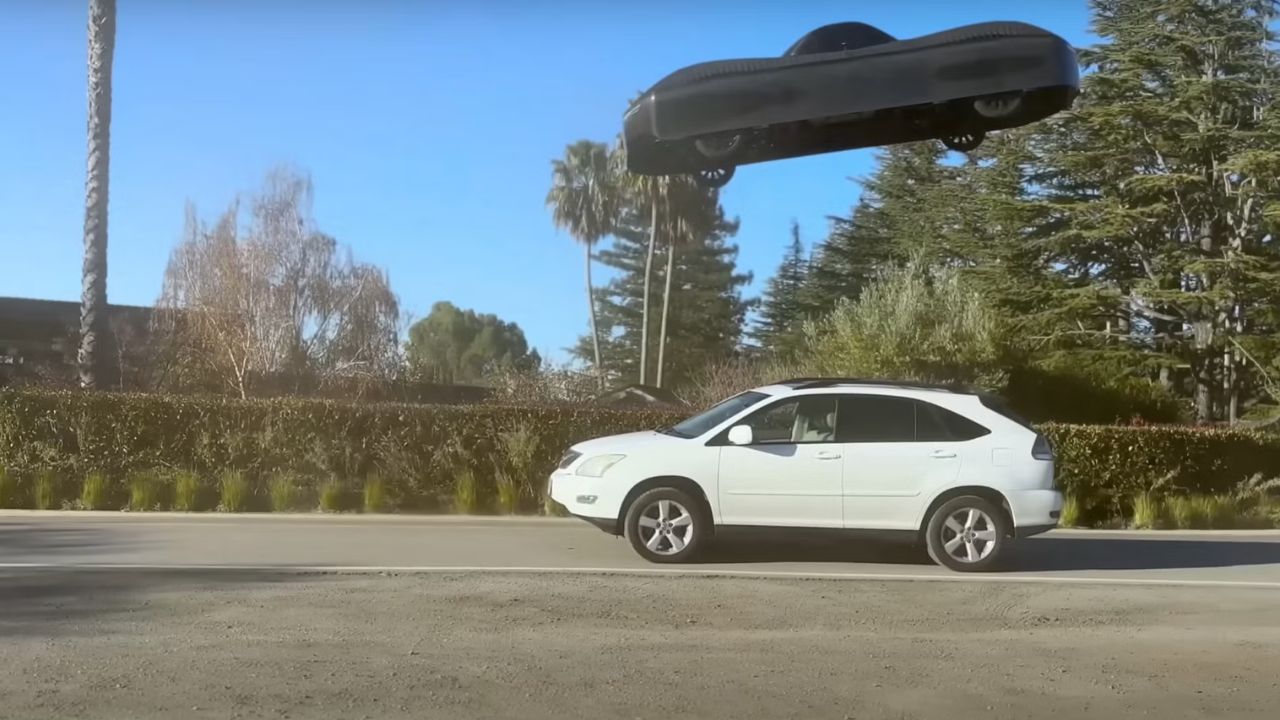


An American Company Specialized In Electric Transportation Has Just Revealed Images Of Model Zero, A Prototype Flying Car That Could Completely Transform Urban Mobility.
During tests conducted in California, the flying car was spotted taking off vertically and soaring over an SUV before returning to the ground. The best part? All of this happened without any incident, proving that the future of transportation might be closer than we think.
The Future Has Arrived: Meet Model Zero
Model Zero is not just another futuristic concept. It already exists and has been designed to operate on the streets like a regular car, but with an incredible difference: it can take off and land vertically. This means that in the future, we could see cars literally taking off from the ground to avoid traffic jams and reach their destinations much faster.
Unlike conventional drones and eVTOLs (electric vertical takeoff and landing vehicles), Model Zero hides its propellers within the structure of the car. This allows it to circulate on public roads without needing special runways for takeoff. Basically, it’s a car that flies but doesn’t look like a helicopter!
-
1983 Chevrolet Runs Over 100,000 km Without Gasoline, Powered by Wood Chips, Reaches 125 km/h in Airport Test

-
Workshop Converts Giant Tractor Tire Tricycle into a Three-Wheel Drive Hybrid with 36,000-Watt Electric Motor Capable of Climbing Hills

-
Sales of Brazil’s Cheapest Electric Car Halted Before First Deliveries: E-Motors Suspends Emova Easy Due to Import Tax Increase and Rising Freight Costs

-
Nissan Discontinues Qashqai SUV Amid Cost-Cutting, Chinese Competition, and Product Line Review



How Does The World’s First Flying Car Work?


One of the major innovations of Model Zero is its intelligent design. The rotor blades are hidden within the chassis, ensuring that the vehicle looks like a traditional car when it is on the ground. This allows it to be used normally in urban traffic without drawing attention or requiring complex regulations.
If there’s one area that could improve, it’s the internal space. According to the company’s CEO, Jim Dukhovny, the cockpit of Model Zero is small and accommodates only “one and a half people.” In other words, it’s a model more geared toward a single passenger or, at most, someone willing to squeeze in. Despite this, it represents a significant technological advancement and could pave the way for future, more spacious versions.
When Will The Flying Car Be Available?
The idea of a flying car has already captured many people’s attention. So far, the company behind Model Zero has received over 3,300 pre-orders for the vehicle. This shows there is enormous market interest in this type of technology, even before it becomes available to the public.
If everything goes as planned, production of Model Zero is set to begin as early as 2025. This means that in just a few years, we might see the first flying cars on the streets (and in the skies). Of course, there are still regulatory and technological challenges ahead, but the evolution of this project is progressing rapidly.
The Price Of The Future: Is It Worth The Investment?
If you’re excited about buying a flying car, it’s good to prepare your wallet. Model Zero has an estimated starting price of US$ 300,000, placing it in the same range as luxury sports cars. However, considering that it offers the ability to fly, it could be an interesting investment for those seeking innovation and exclusivity.
The good news is that the company is already planning a more affordable version of the vehicle, with an estimated price of US$ 35,000. This could make flying cars a reality for many more people in the future, popularizing this technology and changing the way we travel.