






 Portuguese
  Spanish
  5 min of reading
  0 comments


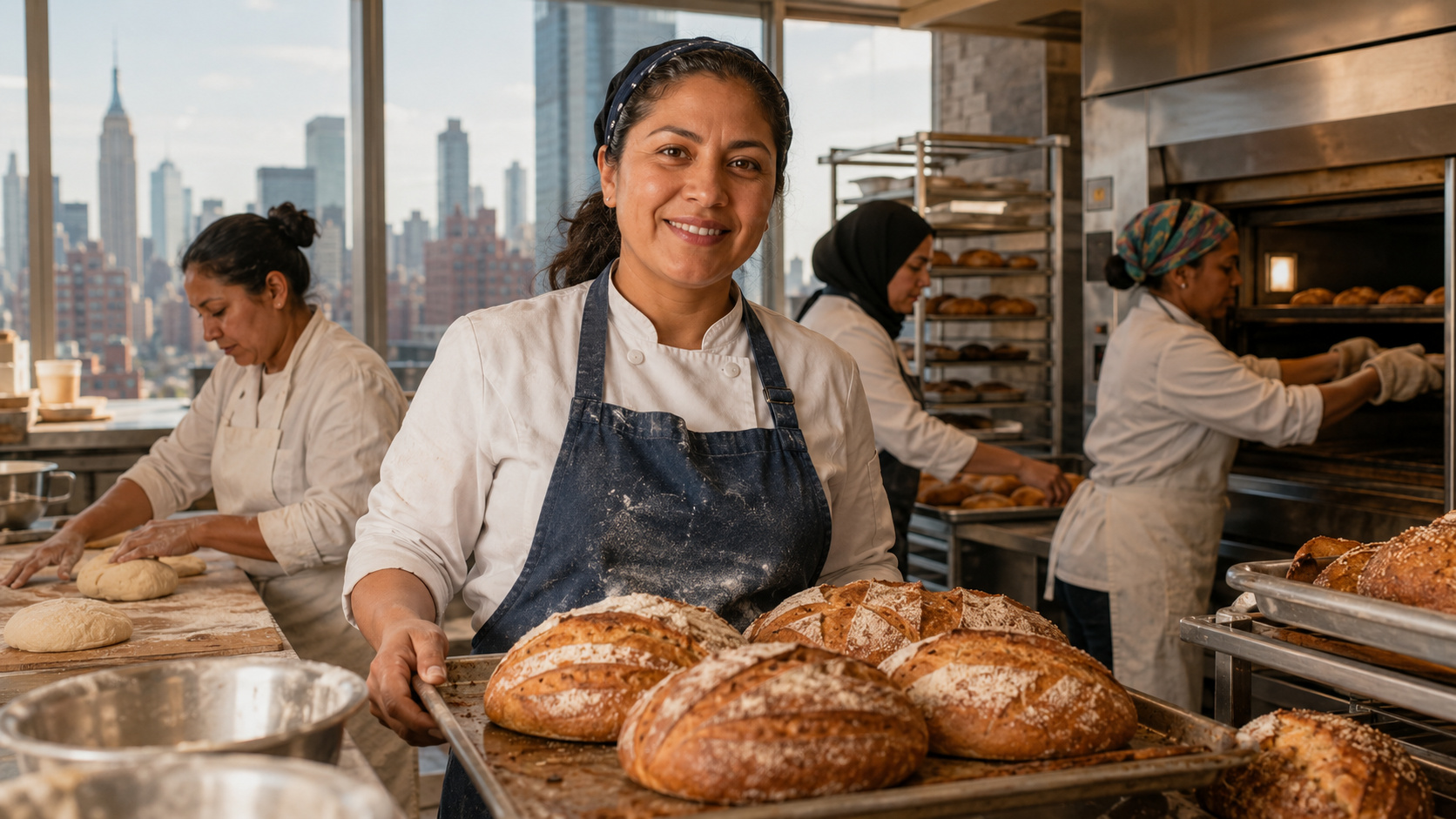
Professional baking program prepares migrants with work authorization for jobs in the food industry, with practical training, English, and career support in New York
Immigrant women arrive in New York in search of work, learn professional baking, and find in the kitchen a gateway to wages in the food industry. The information was released by Hot Bread Kitchen, a professional training organization in the food sector.
The initiative was created for migrants who have recently arrived in the city and received work authorization. The training combines practical culinary training, professional preparation, English support, and support services for those trying to establish themselves in the market.
The first class of the program was scheduled to start in the spring of 2024, at the City Harvest Sunset Park kitchen in New York. The focus is not to treat food as aid, but as professional training for entry into a sector that hires in different roles.
-
Reservoir drops in Thailand and reveals a “Death Railway” station that was hidden underwater for over 40 years, connected to the route built during World War II by Allied prisoners and Asian workers.

-
The rule of silence after 10 PM may lose strength in Brazilian cities, but noise will not be allowed, and new proposals divide residents and business owners.

-
Measuring 13m in wingspan, the F-15 Eagle is a tactical fighter that combines power, advanced electronic systems, large weapon capacity, and high maneuverability to dominate the skies in any condition.
-
Macabre garden in Poland: 34 fetuses found on former property of a doctor reveal a disturbing story of silence, pain, and unanswered questions




Bread is no longer just food and becomes a path to employment in New York
In an expensive and competitive city like New York, knowing how to cook may not be enough to get a job. The professional kitchen requires rhythm, organization, technique, and preparation to work in a team.


Therefore, baking appears as a practical tool for entering the market. Bread becomes a starting point for learning production, kitchen routine, food care, and professional behavior.
This model changes the way we look at the kitchen. It is no longer seen just as a domestic space and starts to function as a bridge to employment, salary, and economic mobility.
Professional kitchen requires technique, English, and preparation to handle work routine
The training includes culinary training guided by technique, with bilingual and experienced chef instructors. In practice, this means learning to prepare food to a professional standard, with guidance and repetition.
The program also includes expanded English teaching, job preparation, and individual support. This support is important because many migrants face barriers beyond the job, such as language, adaptation, and access to services.
In the food industry, the routine involves schedules, pressure, hygiene, communication, and responsibility. Therefore, the course tries to bring the learning experience closer to the reality found in kitchens, bakeries, and companies in the sector.
Program was created for migrants with work authorization in the city
The Culinary Career Paths for New New Yorkers program was announced for newly arrived migrants who received work authorization. The proposal is to facilitate access to quality jobs in the food industry.
The training expands a culinary program already used by the institution and combines practical training, English, professional preparation, and case support. Case support means monitoring to deal with personal needs that may hinder staying in the course or job.
The first class was planned to take place at the City Harvest Sunset Park kitchen. This detail shows that the training relies on a real kitchen structure, not just theoretical lessons.
Food industry appears among sectors with vacancies for authorized migrants
A state initiative in New York identified at least 18,000 jobs with more than 400 employers available for migrants with work authorization. Among these vacancies, 24% were linked to employers in the food and hospitality sectors.
This number helps explain why culinary training has gained importance. The food industry appears as one of the most accessible gateways to the job market, especially for those who need to start a new professional life.
Still, accessible does not mean simple. Restaurants, bakeries, markets, collective kitchens, and food services need trained people to maintain production, service, and quality.
Since 2008, network uses food to bring people closer to income and career
Hot Bread Kitchen is a professional training organization in the food sector that, since 2008, promotes the inclusion of women, people of different gender identities, immigrants, and individuals of different racial backgrounds, expanding access to economic opportunities.
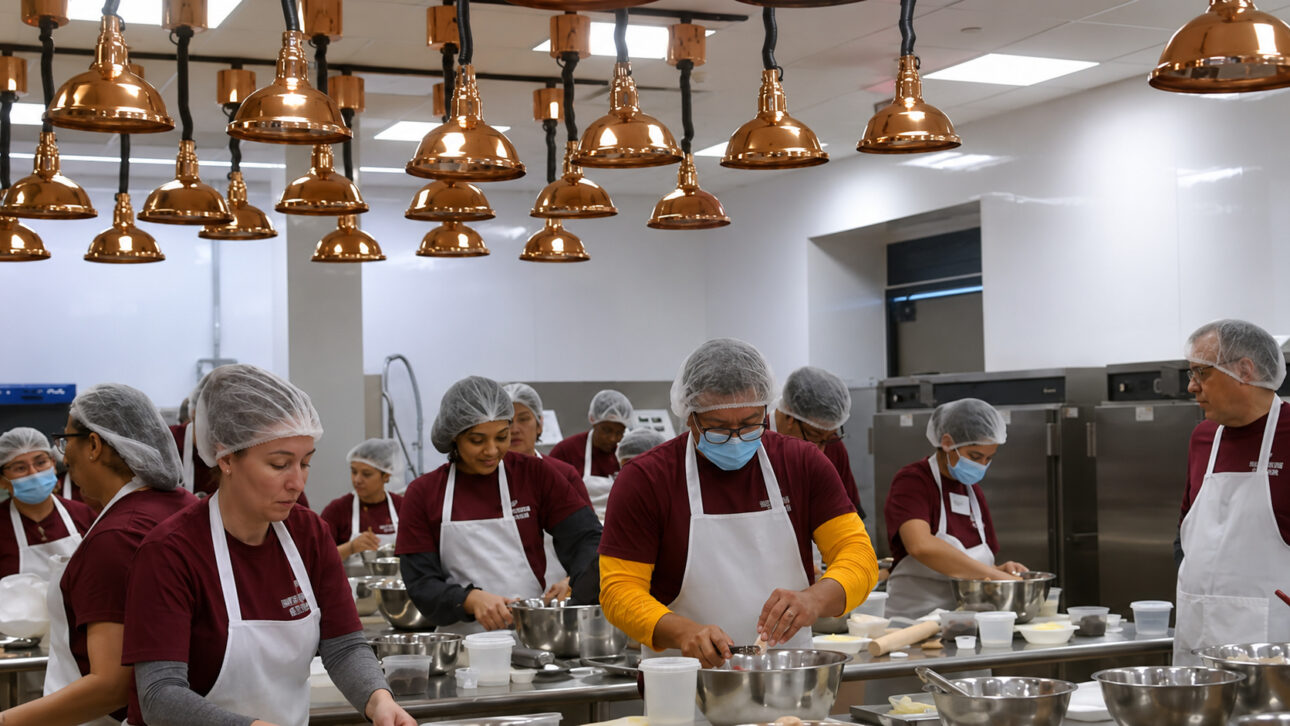
The institution reports having placed 470+ members in food jobs within a network of 250+ partner employers over 15 years. It also reports that the average starting salary for placements in 2023 was $18.39 per hour.
This data does not guarantee automatic employment for each participant. They show the reach of the network and help understand how training can work when there is a connection with real employers.
What this model teaches about training in the food industry
The experience of New York shows that cooking courses can go beyond teaching recipes. When there is technique, support, and connection with companies, food becomes a path to work.
For the Brazilian reader, the logic is easy to understand. Many people know how to cook, but cannot turn this skill into formal employment because they lack structure, guidance, and market contact.
Professional baking enters this point as a concrete skill. It helps to demonstrate discipline, care, production on a scale, and the ability to operate in a chain that involves preparation, sales, and service.
Professional baking can transform a common skill into a real job opportunity
The story of immigrant women in New York shows that the kitchen can be a gateway for those seeking work, provided there is adequate training and connection with the food industry. Bread, in this case, represents technique, routine, and income potential.
The example also raises an important question for Brazil: how many people who already cook well could change their lives if they had access to professional training, structure, and connection with employers? Leave your opinion in the comments or share with someone who follows work and income topics.









Be the first to react!