






 Portuguese
  Spanish


After Three Years Of Research, Chinese Scientists Create Solution That Makes Perovskite Cells More Stable, Efficient And Viable On A Large Scale
China may be about to change the course of solar energy. After years of leading the production of silicon panels, the country is now betting on a new technology: perovskite solar cells.
Lighter, more efficient, and versatile, these cells faced a significant obstacle. But a group of Chinese scientists has just announced a discovery that may overcome this technical challenge.
Discovery After Three Years Of Research
Researchers from the Changchun Institute of Applied Chemistry, affiliated with the Chinese Academy of Sciences, have developed a solution after three years of work.
-
Solar Energy Booms in Brazil: Over $60 Billion Invested, 68.8 GW Capacity, 2 Million Jobs Created, Now Second in National Power Grid

-
Giant Batteries Take Center Stage in Chile Auction as Company Offers 960 GWh of Solar Energy for Nighttime Use, Aiming to Stabilize Solar Power Supply
-
World’s Largest Engie Solar Plant in Brazil Highlights Billion-Dollar Energy Waste Issue: Company Considers Batteries and Bitcoin Mining to Avoid Wasting Production

-
Over 60 Tractors Take to the Streets in Lopera as Solar Parks Compete with Olive Groves, Affecting 13,000 to 100,000 Trees According to Conflicting Reports

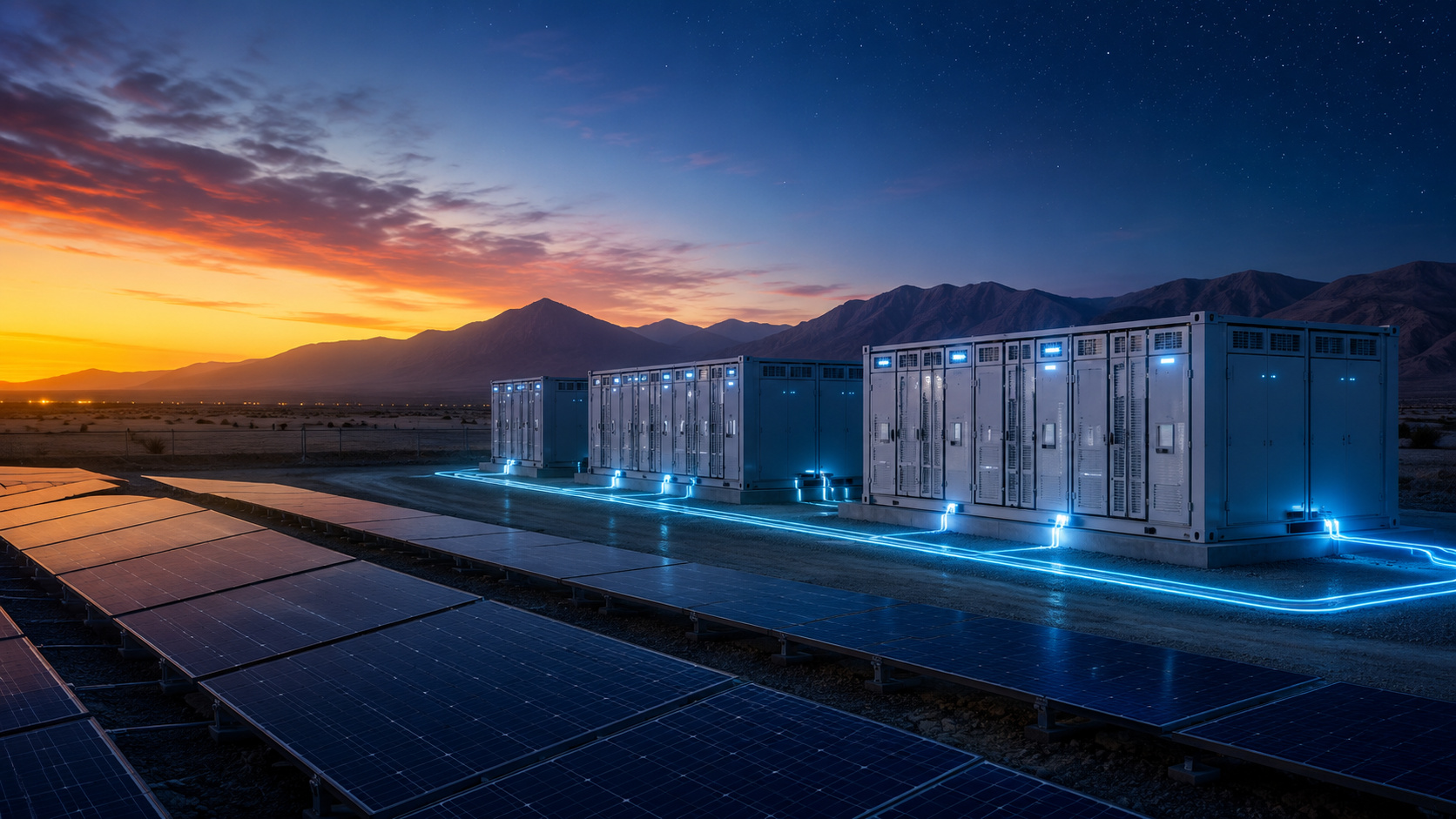


The team created an ultra-thin layer that improves the flow of electricity in perovskite solar cells.
As a result, the panels gained increased efficiency, greater durability, and can be produced on a large scale.
The discovery was published in the journal Science and represents a significant technical advance. The created material is a “self-assembled double radical molecule,” which acts as a hole transport layer, known as HTL.
This layer is essential for allowing the positive charges generated by light to circulate efficiently within the panel.
Promising Results In Tests
In tests conducted by researcher Zhou Min’s team, the results were impressive. The new material more than doubled the charge transport rate under simulated conditions.
Additionally, the devices maintained practically the same performance after thousands of hours of continuous use, demonstrating their resilience and stability.
This combination of durability and efficiency is exactly what the solar industry has been seeking to take the next step.
The innovation has also received certification from the U.S. National Renewable Energy Laboratory (NREL), ensuring technical recognition outside of China.
Perovskite Could Become Global Standard
Perovskite cells are known for their advantages. They are inexpensive, lightweight, and can be applied in windows, facades, and even fabrics.
However, large-scale production has always been the weak point of the technology. Now, that scenario may change.
With the new material, the cells gain more stability and can be manufactured uniformly, even on large surfaces. This could open the doors for commercial use on a large scale.
China Aims Beyond Production
After dominating the silicon market, China wants more. The country does not intend just to manufacture but to lead the evolution of the next generation of solar panels.
The recent advance transforms perovskite from a distant promise into a possible reality — and perhaps the beginning of a new phase for clean energy.
With information from Xataka.









O termo “lacuna” deveria ser mais explicado pois só é mais conhecido na engenharia elétrica.