Portuguese
  Spanish


Subspecies of the Pyrenees disappeared in 2000, returned by cloning in 2003 and died a few minutes later due to lung failure
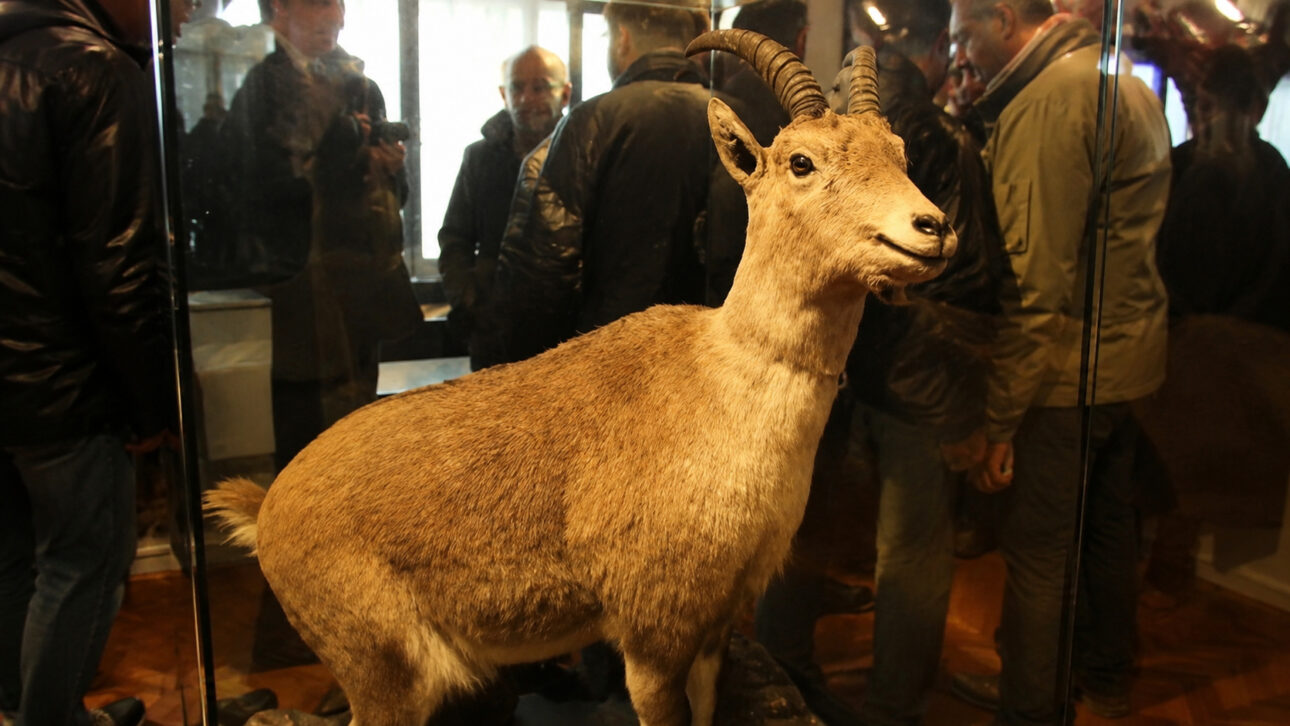
The bucardo, also known as the Pyrenean ibex, made history in science for a rare reason. After all, it is considered the only known animal to have gone extinct twice.
Firstly, the subspecies Capra pyrenaica officially disappeared in January 2000, after the death of the last known female. Then, in July 2003, it briefly returned to life through cloning. However, the clone died a few minutes after birth.
How the bucardo was cloned
Before the official extinction, scientists preserved cells from the last female bucardo in a laboratory. Subsequently, researchers from Spain and France used this genetic material in a cloning experiment.
-
Brazilian School Receives Israeli Biodigester That Converts Food Waste into Cooking Gas Equivalent to Nearly Three 13-Kilogram Cylinders Monthly

-
61-Year-Old Brazilian Retiree Produces His Own Cooking Gas from Cow Manure, Goes a Year Without Buying a Cylinder, and Sells Surplus Biofertilizer
-
Ghana to Launch Public Library Offering Over 100 Air Quality Sensors for Community Use, with Plans to Expand Across West Africa

-
Desalination Program Transforms Brackish Water into Drinking Water in Brazil’s Semi-Arid Region, Benefiting 26,000 Residents with $2 Million Investment



According to the study published in the scientific journal Theriogenology, the technique used was somatic cell nuclear transfer. This same principle became globally known with the sheep Dolly.
In practice, the nucleus of an adult bucardo cell was placed into the eggs of domestic goats. These eggs had previously had their own DNA removed.
Steps of the scientific experiment
The procedure followed a very delicate technical sequence. The goal was to recover the genetic configuration of the bucardo using domestic goats as recipients.
The main steps were:
- collection and freezing of cells from the female bucardo;
- removal of the nucleus from domestic goat eggs;
- insertion of bucardo DNA into these empty eggs;
- cultivation of cloned embryos in the laboratory;
- implantation of the embryos into recipient females.
Even with hundreds of embryos formed, only one pregnancy came to term.
Birth and Second Extinction
Subsequently, on July 30, 2003, the clone was born via cesarean section. According to scientific reports, the offspring had a normal external appearance.
Furthermore, nuclear DNA analyses confirmed that the animal was genetically identical to the donor female. However, a few minutes later, the clone died.
Thus, the bucardo became the first extinct animal to be cloned with a live birth. At the same time, it also became the only known case of extinction recorded twice.
Why the Clone Died So Quickly
Shortly after birth, the offspring showed severe respiratory difficulty. Despite veterinary care, it did not survive.
The necropsy revealed lung malformations, a problem that prevented adequate gas exchange. The journal Theriogenology reported that the death occurred due to physical lung defects.

What the Case Revealed About Cloning
The experience showed that cloning can preserve genetic material, but still presents significant risks. Among the main problems are:
- low gestational success rate;
- high embryo loss;
- epigenetic alterations;
- anomalies in internal organs;
- complications in recipient females.
The case of the bucardo remains a scientific milestone. It demonstrated, at the same time, the potential and the limits of cloning in endangered species.