






 Portuguese
  Spanish
  7 min of reading
  0 comments


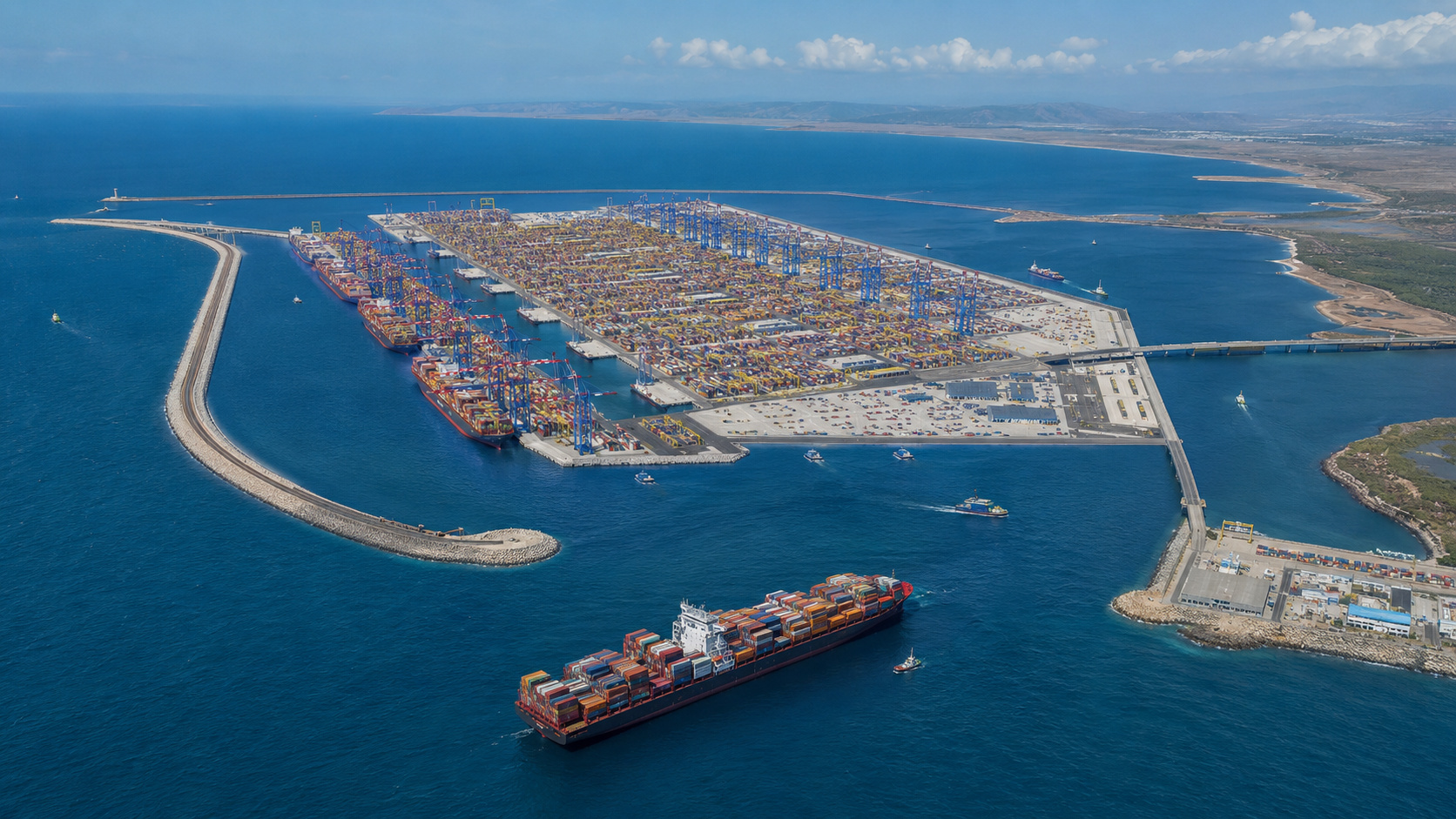
Port of Vadhavan, in India, will have 20 meters of natural depth, an artificial island of 1,448 hectares, and a capacity of 23.2 million TEUs per year.
According to Indian Infrastructure, the Port of Vadhavan is a greenfield project approved by the Indian government cabinet on June 19, 2024, with a total investment of ₹76,220 crore, approximately US$ 8.1 billion. The construction had a symbolic start on August 30, 2024, with the foundation stone laying ceremony by Prime Minister Narendra Modi.
The port will be built in Dahanu, in the Palghar district of Maharashtra, 140 km north of Mumbai, on an artificial island of 1,448 hectares reclaimed in the Arabian Sea. The natural depth of 20 meters off Vadhavan is the main technical data justifying the entire project.
Today, the largest Indian ports, such as Jawaharlal Nehru and Mumbai, have a maximum draft of 15 meters. This forces Ultra Large Container Ships, with a capacity of 24,000 TEUs, to transship at ports like Colombo, Singapore, Jebel Ali, or Salalah before reaching the final destination in India.
-
Ports without drivers and cabins already move containers like automated factories: robotic cranes, autonomous electric vehicles, and software transform giant terminals into 24-hour logistics machines.

-
About 300 American ports still breathe diesel from trucks, cranes, and locomotives, but they are now trying to electrify heavy machinery to clean the air for 31 million nearby residents.

-
A 220-meter giant powered in part by solar energy and lithium batteries has just unloaded nearly 5,000 Chinese cars at the Port of Itajaí. It is the first of ten Grimaldi super ships and the first in the world prepared to run on ammonia as fuel.

-
The Port of SC has just entered the direct route to the largest hubs in Northern Europe with a new line from Maersk, gains a connection with Manaus in 13 days, and is preparing dredging to receive giant ships of up to 16,000 containers.
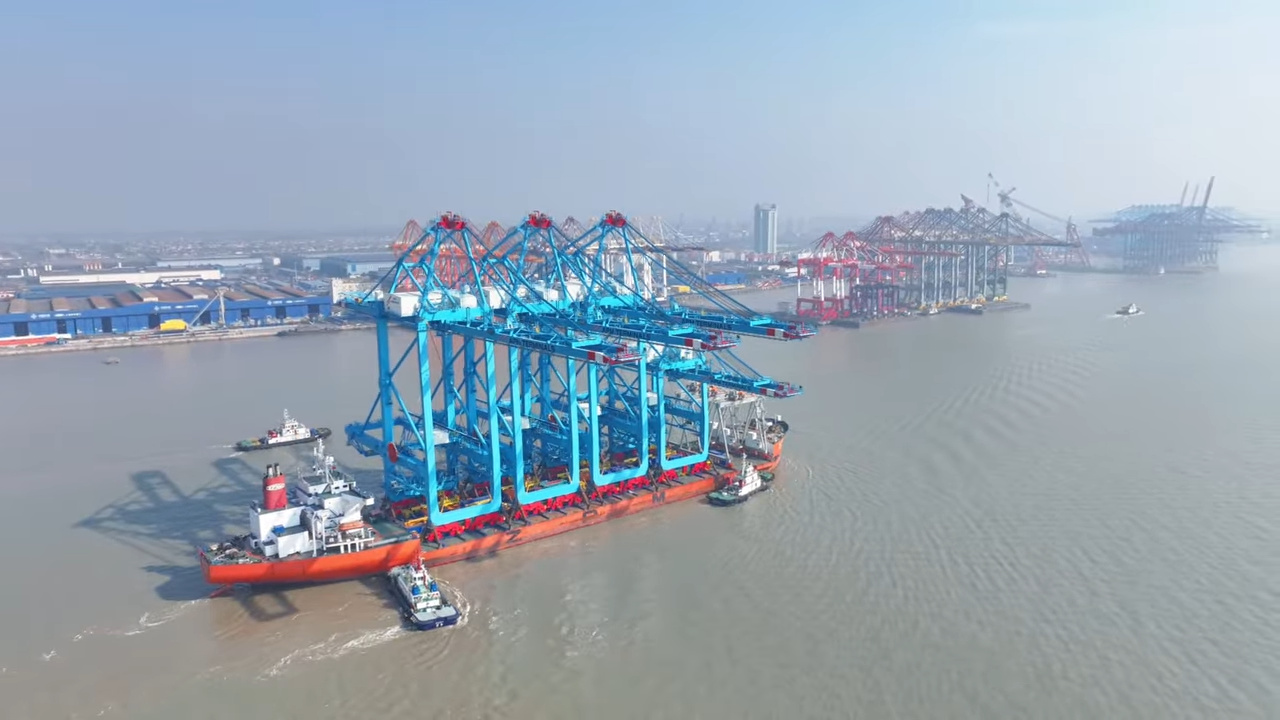


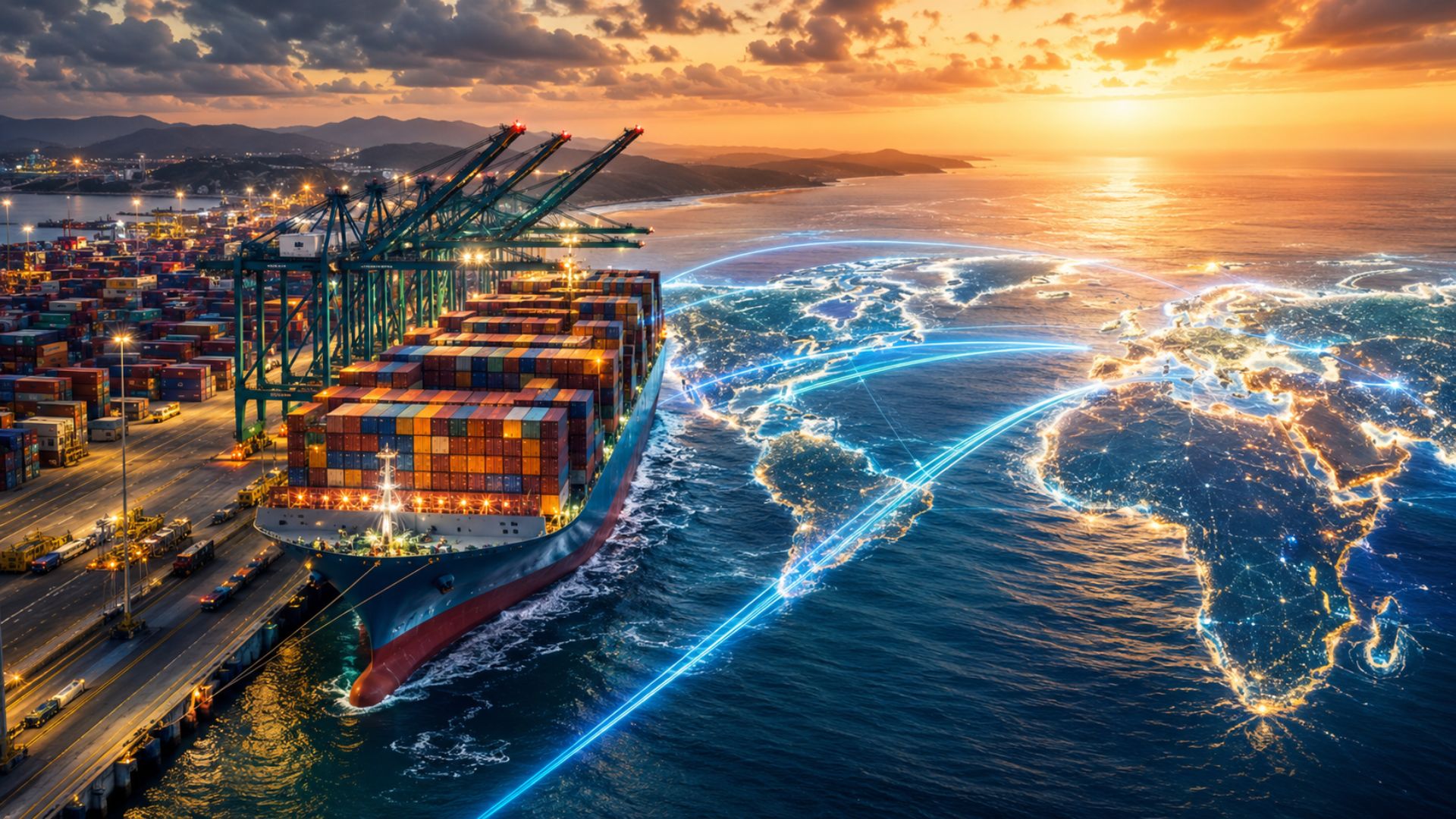
Port of Vadhavan will have 20 meters of natural depth and will change India’s logistics
The natural depth of 20 meters allows Vadhavan to directly receive the largest container ships in the world, without relying on heavy dredging or international transshipments. This is the point that places the project in a superior category to current Indian ports.


Each transshipment adds cost, time, and risk to the logistics chain. When Indian cargo needs to pass through another port before reaching its destination, the operation loses competitiveness against established maritime hubs in Asia and the Middle East.
With Vadhavan, India aims to eliminate this step. The goal is to transform the country into a deep-water hub capable of directly competing with major international ports on the Asia-Europe route.
Artificial island of 1,448 hectares will be created in the Arabian Sea
The construction of Vadhavan literally starts from scratch. The area where the terminals, container yards, internal roads, and support structures will be located is still open sea.
The island will be created by hydraulic reclamation, a process that removes material from the seabed and deposits it within a perimeter protected by dikes and containment structures. Gradually, the surface emerges until it reaches a height sufficient to accommodate heavy civil works.

The land reclamation will be divided into phases, with about 800 hectares in the first stage and 400 hectares in the second. In practice, India is creating a new artificial port platform to support one of the country’s largest logistics projects.
Breakwaters will protect the port from the Indian Ocean monsoons
The artificial island will need a robust breakwater system to withstand the Arabian Sea. The region faces intense monsoons between June and September, with waves, winds, and currents capable of putting pressure on coastal structures.
The depth of 20 meters just 10 km from the coast creates operational advantages but also imposes engineering challenges. Deepwater containment structures need to withstand high maritime energy for decades.
The environmental license granted in 2024 includes 298 mitigation and monitoring conditions. This shows that the port faces not only a logistical challenge but also one of the most sensitive coastal works of modern India.
Nine 1,000-meter terminals will receive giant container ships
The project foresees nine container terminals, each with a quay 1,000 meters long. This length allows for the simultaneous reception of two 400-meter ships or the operation of a single giant ship with a large loading and unloading area.

This specification places Vadhavan on the same level of infrastructure as major global ports like Tanjung Pelepas, Port Klang, and Hamburg. The difference is that, in Vadhavan, each terminal will have this dimension individually.
When the two phases are completed, the total capacity will reach 23.2 million TEUs per year. This could place Vadhavan among the ten largest ports in the world by container volume.
Vadhavan could surpass Mundra, JNPA, and Mumbai together in capacity
Phase 1 is scheduled to begin operations in 2029, with four terminals. Phase 2 is expected to add the remaining five terminals by 2034, completing the planned capacity.
When fully operational, Vadhavan could surpass, in container capacity, the combined capacity of the current three largest Indian ports: Mundra, Jawaharlal Nehru Port Authority, and Mumbai.
This leap is strategic for India. The country is not just expanding port capacity; it is attempting to correct a historical bottleneck that limits its participation in major global maritime routes.
Landlord port model attracts APM Terminals, PSA India, and CMA CGM
Vadhavan will be developed under the landlord port model, where the port authority builds the basic infrastructure, such as land reclamation, access roads, docks, and breakwaters, while private operators take over terminals through concessions.

This model has already attracted major industry names. APM Terminals, part of the Maersk group, signed a memorandum of understanding with the JNPA to develop a container terminal.
PSA India and CMA CGM have also signed agreements for other terminals. The entry of three of the world’s largest port operators indicates that Vadhavan has real demand, not just governmental ambition.
Port of Vadhavan will be a central piece of the India-Middle East-Europe corridor
Vadhavan also has a geopolitical role. The port will be one of the maritime nodes of the India-Middle East-Europe Economic Corridor, the IMEC, announced at the G20 summit in September 2023.
The corridor aims to connect India to the Middle East and Europe through a network of ports, railways, and submarine cables. The proposal is to create a logistical alternative to China’s Belt and Road Initiative.
In this design, Vadhavan will function as India’s maritime entry and exit point. The port can receive containers from Europe and the Middle East and send Indian goods to these markets with less dependence on external hubs.
Highway, railway, and industrial corridor will connect Vadhavan to the interior of India
A deep-water port only becomes competitive if it has efficient access to the interior. Therefore, Vadhavan was planned with road, rail, and integration to industrial corridors.
The project includes a 32 km stretch connecting the port to NH-48, declared a national highway in August 2024. A 105 km freight railway corridor is also planned, with a connection to the Samruddhi Expressway.
Integration with the Delhi-Mumbai Industrial Corridor and the Western Dedicated Freight Corridor extends the port’s reach. With efficient railways, a container can leave the ship and head inland on an industrial scale.
Offshore airport could transform Vadhavan into a multimodal hub
The most ambitious element associated with the project is the offshore airport planned on an artificial island adjacent to the port. The proposal was approved by the Ministries of Environment and Defense on February 26, 2025.

The airport is under study by the Airports Authority of India and would have a planned capacity of 90 million passengers per year, with an estimated cost of ₹45,000 crore, about US$ 4.8 billion.
The concept is similar to offshore airports like Hong Kong and Kansai, in Japan. If realized, Vadhavan could combine a deep-water port, freight railway, federal highway, and international airport in a single complex in the Arabian Sea.
Project faces opposition from fishermen and environmental risk in Dahanu
Despite the economic scale, Vadhavan faces real opposition. About 30,000 fishing families between Dahanu and Vadhavan depend on the waters where the land reclamation will be carried out.
The coastal zone of Dahanu has had Ecologically Sensitive Area status since 1991, one of the few Indian coastal regions with this legal protection. This makes licensing more delicate and increases the risk of litigation.
There are ongoing litigations in the Bombay High Court and before the Dahanu Pollution Assessment Expert Committee. Even with federal approvals, environmental and community resistance could delay the schedule.
Vadhavan could double India’s container port capacity
The official goal is to have Phase 1 operational by 2029 and complete Phase 2 by 2034. The timeline is ambitious, especially for a project that relies on maritime land reclamation, deep coastal works, and sensitive environmental licensing.
The precedent of the Tuas port in Singapore shows that mega port projects on artificial islands can take decades between conception, construction, and full operation. Even so, India is betting on Vadhavan as critical infrastructure for its commercial expansion.
Today, the port that can double India’s container capacity still exists as foundation, sand, and concrete in the Arabian Sea. If it meets the schedule, Vadhavan will cease to be just a coastal construction and will compete for space among the largest logistics hubs on the planet.




Be the first to react!