Portuguese
  Spanish


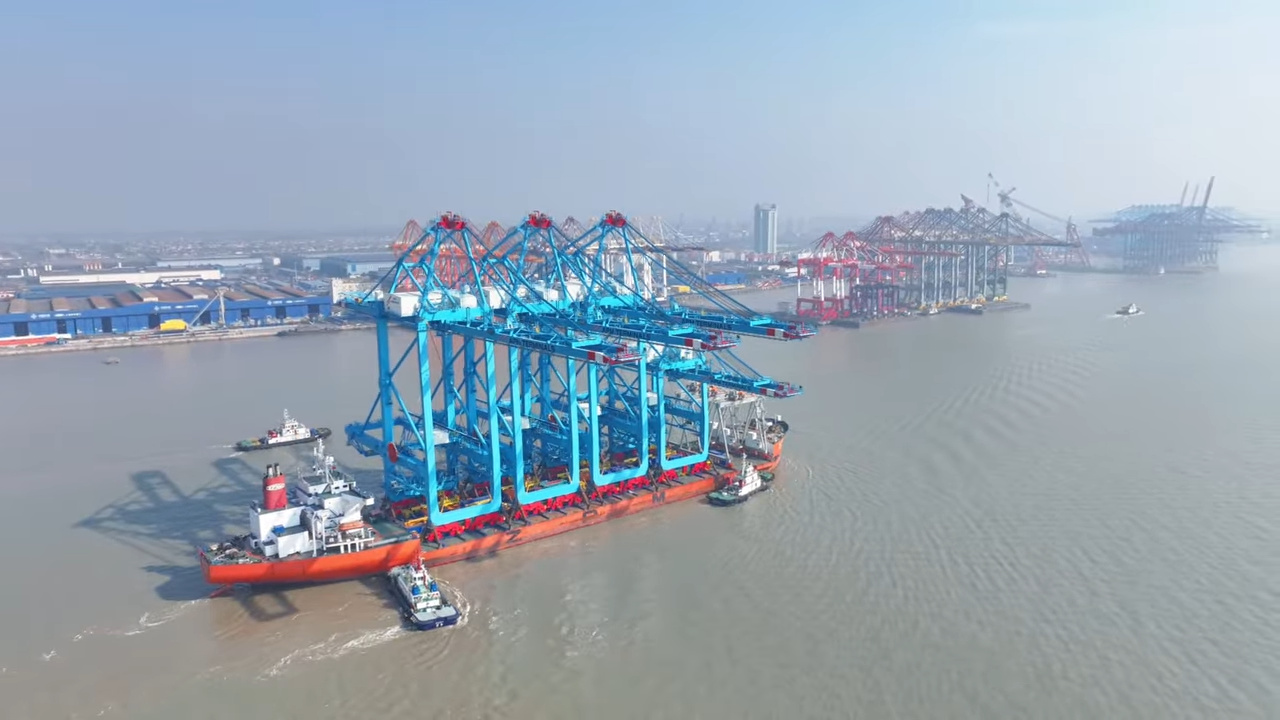

Automated ports already use cabinless cranes, autonomous vehicles, and digital systems to move millions of containers with minimal human intervention.
When it comes to automation, many people first think of autonomous cars, industrial robots, or artificial intelligence in offices. But one of the most profound transformations of the global economy is happening within the world’s largest container terminals, where machines already perform a central part of the operation with very little direct human presence.
One of the most advanced examples is at Maasvlakte II in the Port of Rotterdam, in the Netherlands. There, containers are already removed from ships by remotely operated cranes, transferred to autonomous electric vehicles, and directed to yards controlled by digital systems that coordinate traffic, positioning, and logistics flow in real-time. The result looks less like a traditional port and more like a large automated production and movement platform.
Maasvlakte II has become one of the most advanced examples of an automated port in the world
The Port of Rotterdam already presents itself as an infrastructure strongly oriented by digitalization, sensors, and data integration. In its institutional communication, the port authority highlights that technology is a central piece to increase efficiency, predictability, and logistical coordination in one of Europe’s largest entry points.
-
Brazil’s Port of Santos to Receive New $1.1 Billion Container Terminal, Tecon Santos 10, Set to Begin Operations in 2029

-
About 300 American ports still breathe diesel from trucks, cranes, and locomotives, but they are now trying to electrify heavy machinery to clean the air for 31 million nearby residents.

-
A 220-meter giant powered in part by solar energy and lithium batteries has just unloaded nearly 5,000 Chinese cars at the Port of Itajaí. It is the first of ten Grimaldi super ships and the first in the world prepared to run on ammonia as fuel.

-
The Port of SC has just entered the direct route to the largest hubs in Northern Europe with a new line from Maersk, gains a connection with Manaus in 13 days, and is preparing dredging to receive giant ships of up to 16,000 containers.


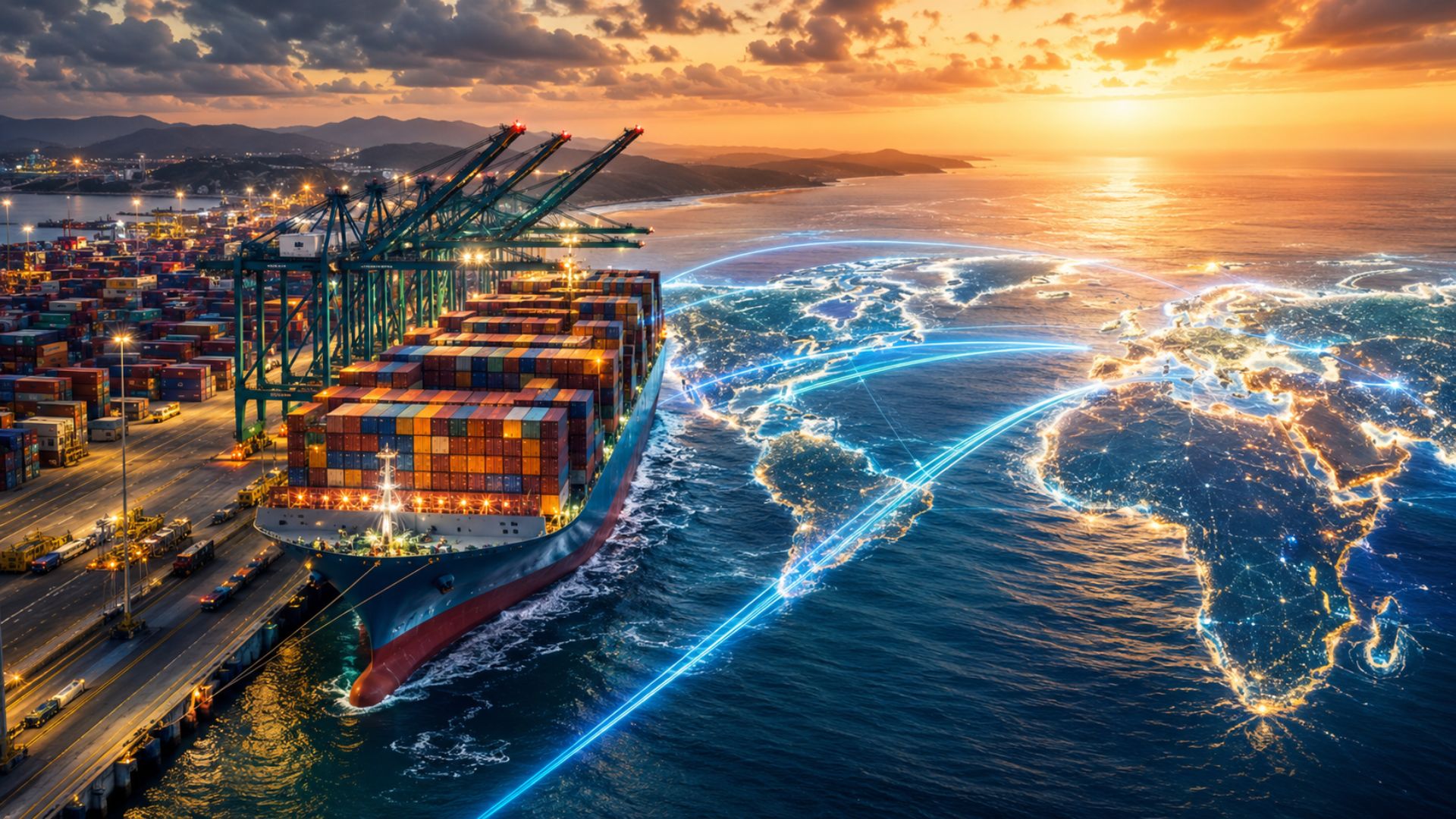


Within this ecosystem, Maasvlakte II, operated by APM Terminals, has established itself as one of the most emblematic examples of contemporary port automation. The terminal was designed to operate with a high level of automation at the quay, in internal transport, and in container storage, integrating heavy equipment, digital systems, and centralized flow management.
This change is significant because port movement is at the heart of global supply chains. When a terminal automates critical operations, it not only changes the port’s routine. It changes the speed, predictability, and potential cost with which goods enter and leave entire markets.
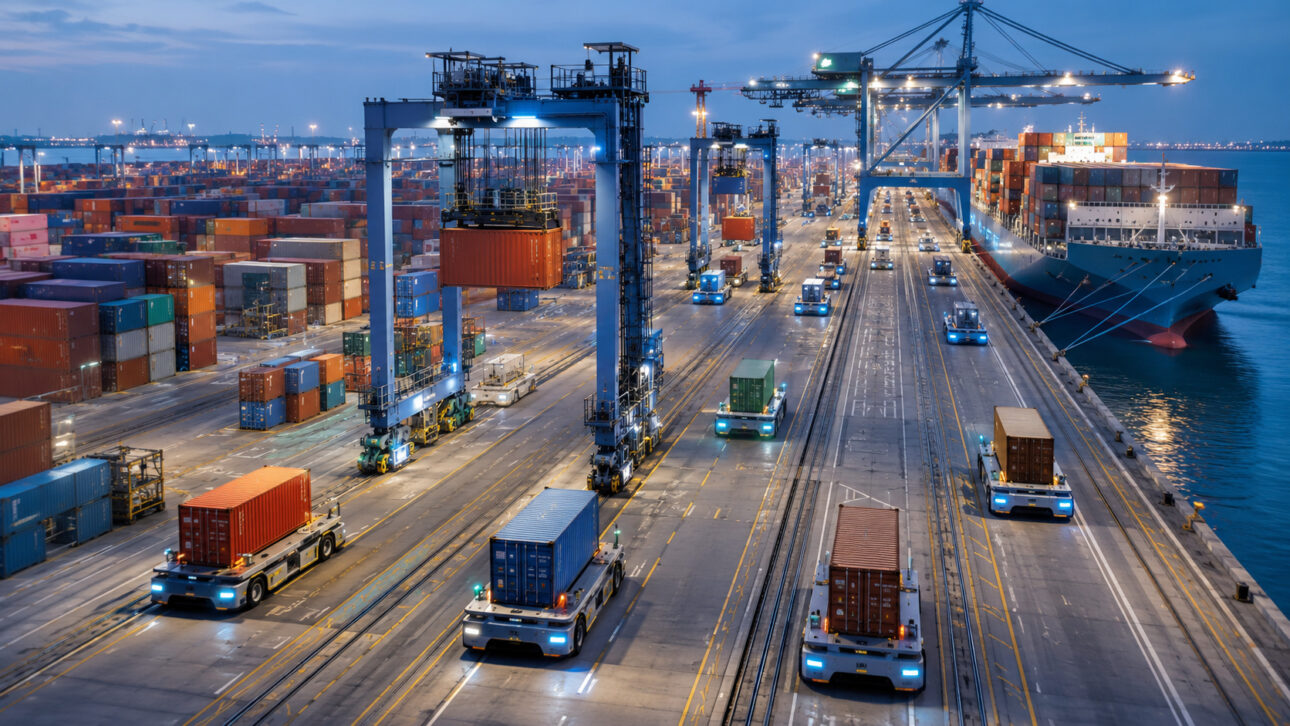
Electric autonomous vehicles transport containers without cabs and drivers
One of the most striking images of Maasvlakte II is the Lift-AGVs, the automatically guided vehicles that move around the terminal without cabs and drivers. According to APM Terminals, the first phase of the terminal already operated with a fleet of 62 electric Lift-AGVs, responsible for transporting containers between the quay and storage areas.

The expansion continues following this logic. In 2024, the operator announced the order of 71 new automated Lift-AGVs, reinforcing the terminal’s autonomous infrastructure. These vehicles are integrated into the existing operation and work in conjunction with new cranes and yard systems, expanding the complex’s capacity.
In practice, these vehicles replace part of the classic logic of internally operated trucks by people. They follow routes and commands defined by software, travel in a controlled environment, and maintain a more standardized operation, which helps reduce interruptions, reorganize flows, and increase the regularity of container movement.
Remotely operated cranes and automated yards changed the quay logic
The terminal’s automation does not rely solely on autonomous vehicles. According to APM Terminals, the Maasvlakte II system combines remotely operated quay cranes with automated storage equipment, creating an almost continuous chain of movement between ship, internal transport, and yard.
This means that the container no longer depends on the same level of manual intervention at each stage of the journey within the terminal.
Instead of a sequence of isolated machines operated locally, the logic becomes one of an operation coordinated by software, with decisions distributed by digital systems that organize flow, priority, and space occupancy.
This architecture reduces the traditional image of the port as an environment dominated by cabs, dispersed teams, and point-to-point decision-making. The automated terminal is more akin to an infrastructure where machines are physically visible, but the true operational center is in remote control, sensors, and algorithms that organize everything.
Sensors, data, and digital twin allow the port to monitor itself
Port automation in Rotterdam is not limited to moving containers with driverless machines. According to the Port of Rotterdam, the port is equipped with a large number of sensors that collect data on infrastructure, assets, operational conditions, and movement. This information is integrated to support maintenance, safety, and flow optimization.
The port authority also works with the idea of a digital port or digital twin, a virtual representation powered by data, sensors, computers, and mobile devices. This model allows tracking not only vessels but also containers, trains, trucks, and land assets in an interconnected digital environment.
In practice, this means that cargo movement can be monitored and adjusted based on continuous information, not just human reaction after a problem has appeared. The port operates as a system that observes itself, anticipates bottlenecks, and distributes decisions with the support of real-time data.
Port automation seeks efficiency, predictability, and more continuous operation
The advancement of automated ports is linked to the pursuit of greater operational regularity. In the case of Rotterdam, digitalization is presented as a tool to maximize efficiency and make the port system more integrated, with less time waste and better coordination between assets, equipment, and logistics flow.
In Maasvlakte II, this logic appears concretely in the integration between remote cranes, autonomous vehicles, sensors, and digital platforms. The goal is not just to replace visible human labor but to transform how the terminal operates, reducing variability, organizing traffic with more precision, and allowing for a more stable routine throughout the day and night.
Therefore, port automation should not be seen merely as a technological showcase. It already functions as a real test of the future of global logistics, in a sector where lost minutes can affect ships, industrial chains, regional distribution, and final merchandise prices.
Automated ports have already ceased to be an experiment and have become a real operation
While the public debate remains focused on autonomous cars on the streets, a silent transformation is already advancing within the major maritime corridors of global trade. Terminals like Maasvlakte II show that heavy automation has already moved out of the experimental field and has begun to integrate real operations on an industrial scale.
Cabinless cranes, autonomous electric vehicles, sensors spread throughout the infrastructure, and data-driven logistics systems are already part of the routine at one of the largest ports in Europe. What is at stake is not just visually impressive innovation, but a new way of moving goods across the planet.
At its core, the change is simple to describe and enormous in impact. Some of the world’s largest ports are shifting from functioning as spaces intensive in manual intervention to operating as logistical machines coordinated by software, capable of working on a continuous scale with minimal direct human intervention.