Portuguese
  Spanish


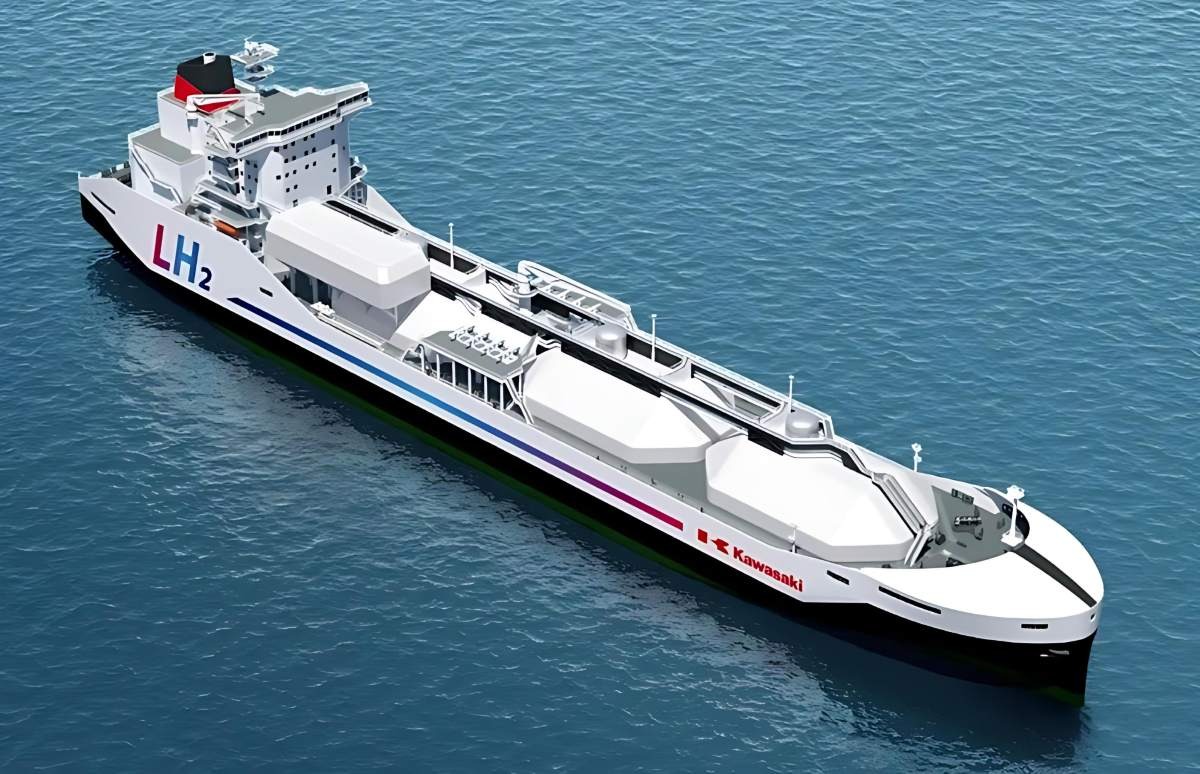


Japan Made A Strategic Step In The Race For Hydrogen By Announcing The Construction, By Kawasaki, Of The Largest Liquid Hydrogen Carrier Ship In The World, With 40,000 M³ Per Voyage, Operation Expected To Start In The Early 2030s And Integration Into A New Port And Industrial Infrastructure Focused On Energy Decarbonization
Kawasaki Heavy Industries Announced The Construction Of The Largest Ship In The World For Transporting Liquid Hydrogen, With A Capacity Of 40,000 M³, In Japan, As Part Of The National Strategy To Enable Decarbonized Energy Imports On An Industrial Scale By The Early 2030s.
Japan Suiso Energy And Kawasaki Heavy Industries Agreed To Develop The Largest Vessel Ever Designed For The Maritime Transportation Of Liquefied Hydrogen. The Project Is Described By The Companies As A Technical And Logistical Milestone For Consolidating Hydrogen As An Energy Vector On A Large Scale In Japan.
With A Capacity Of 40,000 M³ Per Voyage, The Ship Represents A Significant Leap Compared To Previous Projects. The Vessel Will Be Built At The Sakaide Works Shipyard, Located In Kagawa Prefecture, And Is Expected To Enter Operation In The Early 2030s, Accompanying The Expansion Of Port Infrastructure And Industrial Consumption In The Japanese Sector.
-
After 40 Years of Research, Powdered Coconut Water to Be Produced in Brazilian Biorefinery, Aiming to Revolutionize Health for Children, Elderly, and Hospital Patients

-
Queen Guitarist Brian May Collaborates with ESA Scientists to Study Asteroids Bennu and Ryugu Using 3D Simulations
-
Largest Known Single-Piece Meteorite, Weighing 60 Tons, Puzzles Scientists with Its Intact Fall and Lack of Visible Crater

-
Oceanographer Turns Abandoned Fishing Nets from Brazilian Waters into Bags, Creating Jobs and Earning Over $7,000 Monthly




The Announcement Comes At A Time When Japan Is Seeking To Reduce Emissions Without Compromising Energy Security. Historically Dependent On Imports, The Country Sees Liquefied Hydrogen As An Alternative To Supply Industrial Sectors That Face Challenges For Direct Electrification.
Previous Experience And Increase Of Industrial Scale
The New Project Is Based On The Experience Gained With The Suiso Frontier, The First Ship To Successfully Transport Liquefied Hydrogen Between Australia And Japan In 2022. In That Case, The Technical Feasibility Was Proven At An Experimental Scale.
The New Vessel, However, Seeks To Achieve A Real Industrial Scale. Its Cargo Volume Is More Than Thirty Times Greater Than That Of The Suiso Frontier, Reflecting The Transition From Pilot Projects To Regular, Repetitive Logistics Integrated Into The Japanese Energy Matrix.
This Scale Up Involves Not Only Physical Dimensions. It Requires More Advanced Solutions For Insulation, Thermal Control, And Operational Safety, Elements Considered Central To The Economic Viability Of Liquefied Hydrogen.
Cryogenic Challenges And Loss Control
Transporting Hydrogen In Liquid State Requires Maintaining It At Approximately -253 ºC, Just 20 Degrees Above Absolute Zero. Any Thermal Variation Causes Evaporation, Known As Boiling, Considered One Of The Main Economic Barriers Of This Logistics Route.
To Face This Challenge, Kawasaki Will Integrate Advanced Cryogenic Insulation Systems Designed To Reduce Thermal Losses During Long And Frequent Voyages. The Aim Is To Minimize Evaporation And Preserve Energy Efficiency Throughout The Route.
Each Percentage Point Of Loss Represents A Significant Impact On The Final Cost Of The Fuel. Therefore, Thermal Control Is Treated As One Of The Most Critical Elements Of The Project, From Both Technical And Financial Standpoints, Even With The Use Of High-Complexity Materials And Solutions.
Hybrid Propulsion And Transition Strategy
The Vessel Will Feature Electric Propulsion Powered By A Dual Fuel Generator System, Capable Of Operating With Both Hydrogen And Conventional Fuels. This Choice Reflects A Gradual Approach To Energy Transition, Prioritizing Reliability And Safety.
According To The Project, The Use Of Fossil Fuels In Certain Phases Is Not Viewed As A Contradiction, But As A Pragmatic Measure To Avoid Operational Bottlenecks At The Start Of Large-Scale Hydrogen Logistics.
This Strategy Recognizes That The Sector Is Still In Transition. Operational Stability Is Placed At The Forefront, While Full Environmental Optimization Is Treated As A Progressive Goal, Not An Immediate One, Even If This Seems Contradictory To Some Critics.
Ogishima As The Hub Of Port Infrastructure
The Ship Will Supply The Kawasaki Liquefied Hydrogen Terminal In Ogishima, Which Will Feature A 50,000 M³ Storage Tank. The Complex Includes Maritime Unloading Systems, Reliquefaction, And Ground Distribution By Cryogenic Trucks.
The Construction Of The Terminal Began Last November. The Site Was Designed As An Integrated Energy Center, Aimed At Supplying Refineries, Steel Mills, Heavy Chemical Plants, And Power Generation Units.
These Sectors Are Considered Prioritized As They Present Technical And Economic Limitations For Direct Electrification In The Short Term, Making Hydrogen A Relevant Alternative For Emission Reductions Without Compromising Essential Industrial Processes.
Japanese Hydrogen Import Strategy
In A Broader Context, Japan Is Accelerating International Agreements To Ensure A Supply Of Hydrogen In Large Volumes. An Example Is The Agreement Signed By Woodside Energy To Study Blue Hydrogen Exports From Western Australia.
The Initiative Involves Japan Suiso Energy And Kansai Electric Power Company, Reinforcing A Strategic Approach Focused On Securing Supply Before Advancing In Additional Improvements To The Climate Footprint.
The Logic Adopted Is Not Ideological, But Operational. The Central Objective Is To Build A Robust Supply Chain, Capable Of Sustaining Industrial Demand, While Environmental Adjustments Are Incorporated Progressively.
Comparison With Other Logistics Routes
The Transportation Of Liquefied Hydrogen Faces Criticism Related To The Complexity And Cost Of Maintaining Extreme Temperatures Over Thousands Of Kilometers. The Energy And Material Requirements Are High, And Losses Due To Evaporation Remain A Constant Challenge.
On The Other Hand, Advocates Of This Route Highlight A Structural Advantage Over Vectors Like Ammonia. Liquefied Hydrogen Does Not Require An Additional Cracking Process To Obtain Pure Hydrogen At The Destination, Reducing Stages, Energy Consumption, And Logistical Complexity.
In Industrial Applications Requiring High Purity, The Liquid State May Prove More Efficient When The Complete System Is Evaluated, Not Just The Isolated Transport, Despite All Its Technical Challenges.
Potential Impacts And Next Steps
The Standardization Of Maritime Transportation Of Liquefied Hydrogen May Open The Way For More Transparent International Markets, With More Stable Prices And Greater Competition Among Producers. This Tends To Stimulate Investments In Regions With An Abundance Of Sun And Wind.
Moreover, The Designed Infrastructure May Enable The Decarbonization Of Sectors Considered Difficult, Such As Steelmaking, Cement, And Heavy Chemicals, Which Currently Lack Clear And Viable Alternatives At Scale.
The Project Is Not Presented As A One-Size-Fits-All Solution, But As A Central Piece Of A Broader System. Well-Regulated And With Stringent Environmental Criteria, The Logistics Of Liquefied Hydrogen Can Contribute To Effective Emission Reductions, Going Beyond Formal Commitments And Goals On Paper.