Portuguese
  Spanish


Geospatial Images Captured by Satellites from the Brazil MAIS Program Reveal the Growing Presence of Chemical Foam in Urban Areas of São Paulo’s Interior. The Contamination Is Attributed to the Action of Detergents and Untreated Effluents, in a Scenario That Exposes Decades of Environmental Negligence
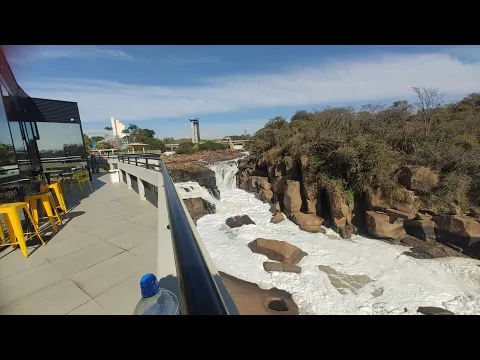
Recent images captured by satellites over 550 kilometers in altitude have exposed an environmental problem that has persisted for decades in the state of São Paulo: the presence of toxic foam covering the Tietê River, especially in the stretch that cuts through the city of Salto, in São Paulo’s interior. The phenomenon, far from new, has now reached levels so evident that they have become visible even from space — a direct warning to authorities and the population about the critical state of basic sanitation in the region.
Foam Advances 5 Km In Just 13 Days
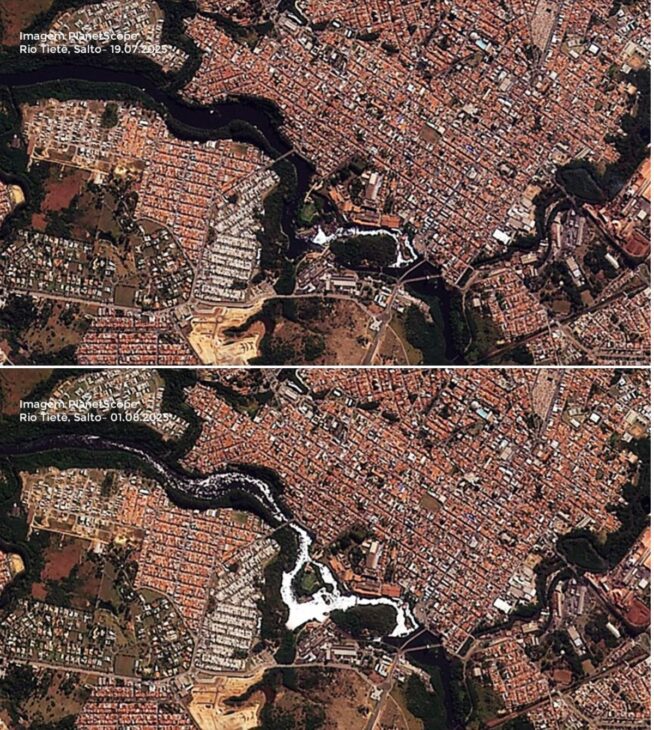
The images were taken by the Dove satellite constellation, operated by Planet, and are part of the SCCON platform, which specializes in geotechnology and detection of environmental changes. Between July 19 and August 1, the records showed a rapid expansion of the white foam, starting from an area near Salto’s central waterfall and extending for about 5 kilometers, reaching the urban limit of the city towards the west.
The toxic foam, according to the SOS Mata Atlântica organization, is a result of the high concentration of detergents and surfactants present in domestic sewage discharged irregularly into watercourses. When the river’s water volume is lower — as tends to happen in the dry season — the concentration of these pollutants intensifies, favoring the formation of thick and persistent foam.
-
11-Year-Old Entrepreneur Turns Fear of Bees into Honey Lemonade, Wins $60,000 on Shark Tank, Secures Whole Foods Deal, and Expands Brand Across U.S. Stores

-
9-Year-Old in Brazil Sells Homemade Sweets to Support Grandfather with Parkinson’s, Family Dreams of Buying Candy-Making Machine

-
Man Disguises as His Own Mother to Collect €3,000 Monthly Pension, but Makeup and Beard Stubble Raise Suspicions at Registry Office

-
Brazilian Airport to Receive $2.8 Million Investment, Completion Expected Within a Year





Government and Sabesp Admit Responsibility and Promise Investments
In response to the repercussions caused by the images, the government of São Paulo and Sabesp admitted that the phenomenon is directly related to the discharge of untreated sewage. According to Sabesp, this is a historic problem, which also involves the discharge of industrial effluents and urban waste into streams and rivers in the Tietê basin.
Only in the metropolitan region of São Paulo, until 2023, the volume of untreated sewage released into the environment was equivalent to an impressive 22 thousand Olympic swimming pools per month. Sabesp claims it intends to change this scenario through an investment of R$ 70 billion by 2029, with the goal of universalizing access to basic sanitation in the cities under its responsibility. In the first year after its privatization, the company has already connected 1.4 million people to the sewage treatment system.
At the same time, the state government plans to invest an additional R$ 20 billion in sanitation, connecting 2.2 million households to the sewage network by the end of the decade. CETESB, the state environmental agency, has also been increasing its oversight of treatment stations and industries in the region. In 2025, fines amounting to R$ 3.8 million have already been imposed on companies and municipalities that violated environmental regulations.
Daily Monitoring and Technology as Allies
The advance of the foam was monitored in real time thanks to the RedeMAIS, a system integrated into the federal program Brasil MAIS, from the Ministry of Justice and Public Security. This program allows municipalities and states to have direct access to satellite images and receive daily alerts about environmental changes, such as deforestation, wildfires, floods, and, in this case, foam formation in rivers.
The remote sensing technologies, increasingly accessible and accurate, have been essential tools to expose management failures and push for more effective public policies. In the case of the Tietê, the images speak for themselves: the degradation of the river is far from being resolved, despite the promises and projects that have dragged on for decades.

A Legacy of Neglect — and an Opportunity for Transformation
The situation of the Tietê River symbolizes the sanitation dilemma in Brazil: ambitious projects but slow and unequal execution. The visibility that this episode has gained thanks to satellites could be the necessary trigger to accelerate investments, hold wrongdoers accountable, and ensure that the population is not continually exposed to the sanitary and environmental risks caused by lack of infrastructure.
As the foam advances in the waters of the Tietê, the pressure on public and private managers is also increasing. The challenge now is to transform this snapshot from space into a concrete change here on Earth.