Portuguese
  Spanish


Fiber optic transforms internet cables into water leak sensors, identifies areas for inspection and can avoid unnecessary excavations.
Internet cables installed under cities have started to identify vibrations from water leaks in a test conducted in the United Kingdom. The monitored network reached 650 kilometers and located more than 100 leaks in three months, giving teams a clue about where to investigate before opening the asphalt.
On March 12, 2026, Openreach, a British telecommunications infrastructure company, released the results of the pilot conducted with the water company Affinity Water and the technology company Lightsonic. The estimate indicated savings of about 2 million liters of water per day.
How fiber optic started to help find leaks
Fiber optic does not see the escaping water and does not enter the pipeline. The cable conducts light and identifies small changes in the signal caused by vibrations near the water network.
-
Australia Plans to Export Desert Solar Energy to Singapore via 4,300 km Undersea Cable in a $35 Billion Project

-
Archaeologists Discover 9,000-Year-Old Stone Hammer with Perfect Hole During Routine Inspection for Norwegian Bike Path

-
New Regulations in Brazil Require Dedicated Circuit and Safety Measures for Electric Car Chargers in Condos, Highlighting Hidden Risks of Overnight Charging

-
Argentinian Students Transform Cigarette Butts into Eco-Friendly Bricks, Cutting Cement Use by Over 50% and Halving Costs



The technique is called distributed acoustic sensing. In simple terms, it transforms the cable into a kind of listening line, capable of indicating a possible water leak without needing to break the street right away.
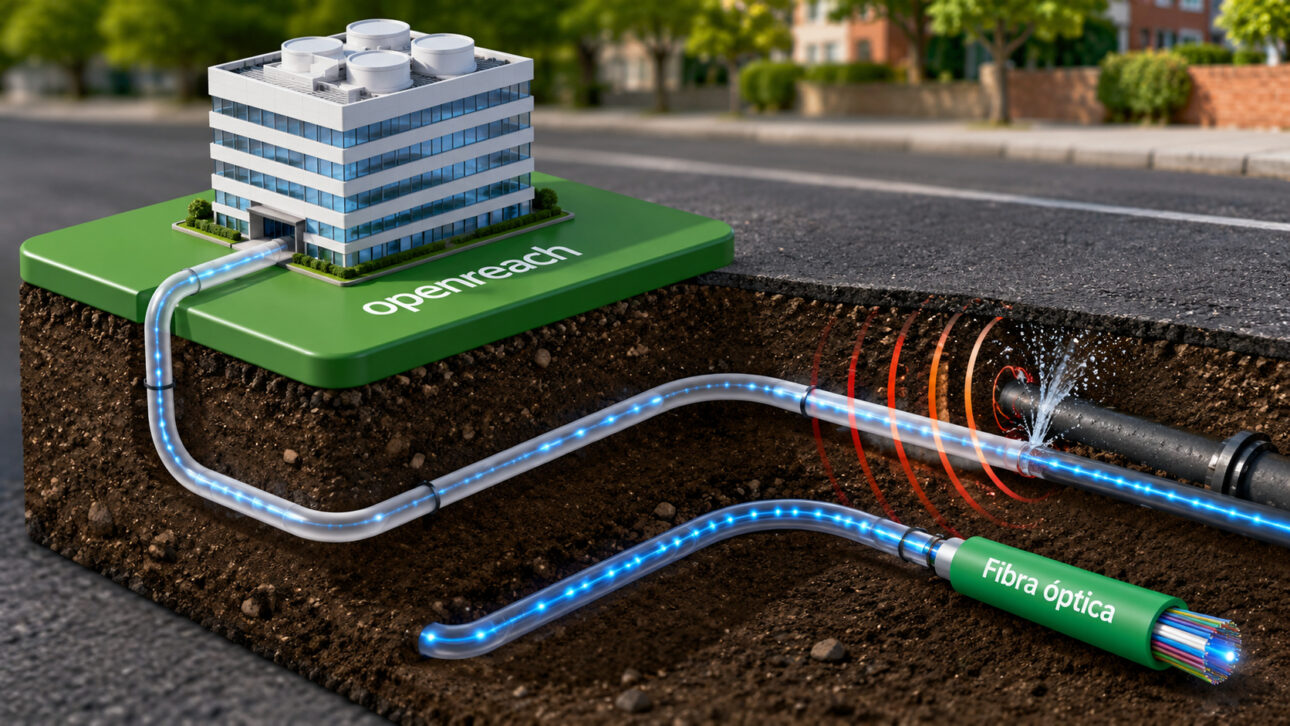
The system also tries to separate traffic noise, construction, and other movements from the sound produced by a water loss. The result is an alert for investigation, not an automatic confirmation that there is a broken pipe.
Pilot in five locations monitored 650 kilometers of network
At the time of disclosure, the pilot was being tested in five locations connected to the Affinity Water network. The monitored area reached 650 kilometers of pipelines, using fiber optic cables already installed underground.
Openreach, a British telecommunications infrastructure company, reported that the first three months of the test allowed the location of more than 100 leaks. The estimated savings reached about 2 million liters per day.
The numbers belong to a pilot, that is, a test conducted on a real scale. They show the result obtained in the monitored sections and do not automatically represent all water networks.
Why locating the problem before opening the street changes the cost of the work
A well-located alert helps the team reduce the search area. Instead of starting an excavation without a clear indication, professionals can focus the inspection on a point where there was a vibration signal.
This can decrease the time spent looking for the problem and avoid interventions in areas without confirmed leaks. Opening fewer sections of asphalt also reduces disruptions for drivers, residents, and nearby businesses.
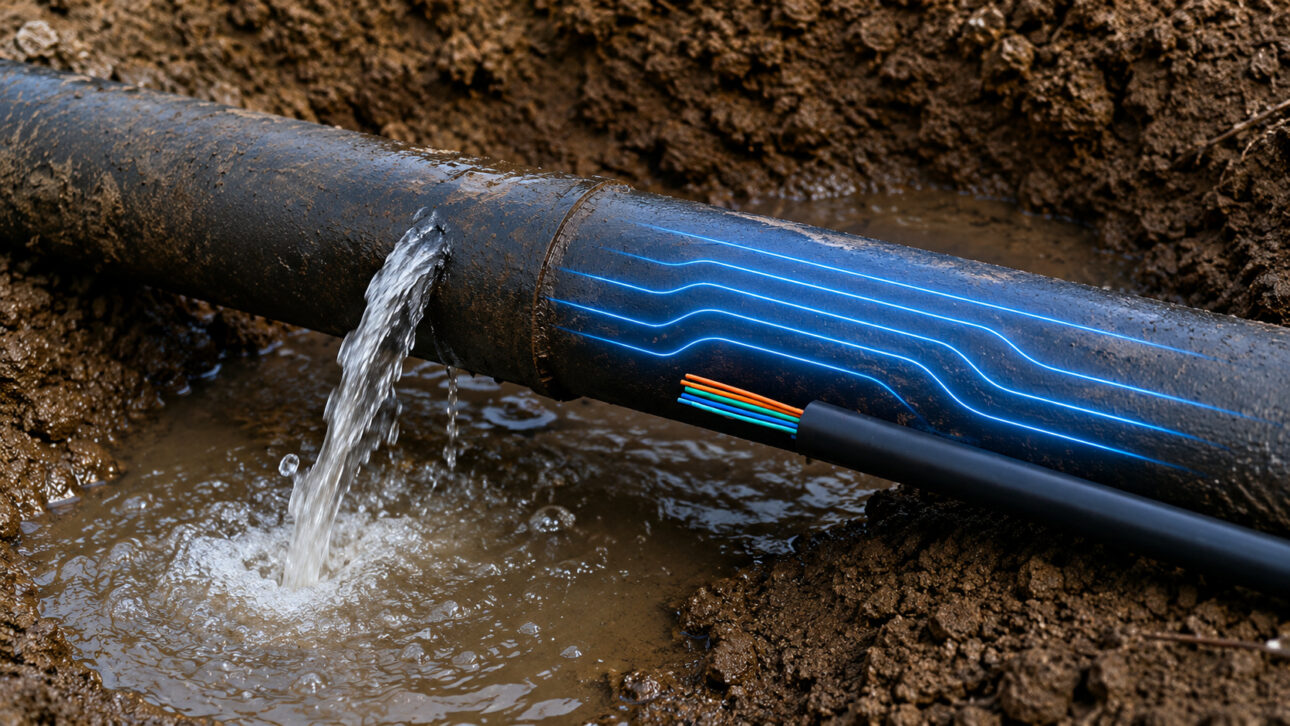
The technology does not eliminate the repair nor guarantee that every work will be smaller. The main gain is arriving at the inspection with a more precise area to investigate.
The fiber needs to be close to the pipeline to function
The method depends on the proximity between the fiber optic cable and the water network. The vibration needs to reach the fiber for the system to detect a change in the signal transmitted by the light.
Therefore, a city with many internet cables, but without fiber close to the monitored pipes, would not have the same coverage. Without fiber installed in the section, there is no cable available to act as a sensor.
The regulator Ofwat, responsible for the water sector in England and Wales, cites projects that use optical fibers installed alongside pipelines to identify leaks.
The alert does not replace field teams
The fiber optic helps indicate where there might be a loss, but the confirmation is still done on-site. Professionals need to visit the indicated point, assess the network, and decide if repair is necessary.
This care is important because the system works with signals and vibrations. An alert points to an area of interest, but does not replace the analysis of those who know the pipeline and perform the service.
The main change is the priority given to fieldwork. Instead of searching the entire region, teams can start in places where the technology detected a significant change.
What would be necessary to adapt the idea in Brazil
An adaptation for Brazilian cities would require updated maps of fiber optic routes and water pipelines. It would also be necessary to integrate telecommunications companies, sanitation companies, and teams responsible for inspections.
The system could be more useful in areas where the cables already run close to the water network. The existing underground infrastructure would be the starting point to expand monitoring without installing sensors in every section.
The technology does not solve all leaks and does not eliminate the need for repairs, teams, or construction. It can help locate the problem earlier and reduce the chance of opening a road without having a defined point for inspection.
Transforming internet cables into sensors shows a new utility for a structure that is already buried in cities. The pilot in the United Kingdom covered 650 kilometers monitored, more than 100 leaks located, and an estimated saving of 2 million liters per day.
In your city, would reducing water waste or avoiding construction that blocks traffic make more of a difference? Tell us in the comments and share this report.