





 Portuguese
  English
  Spanish
  3 min of reading
  2 comments


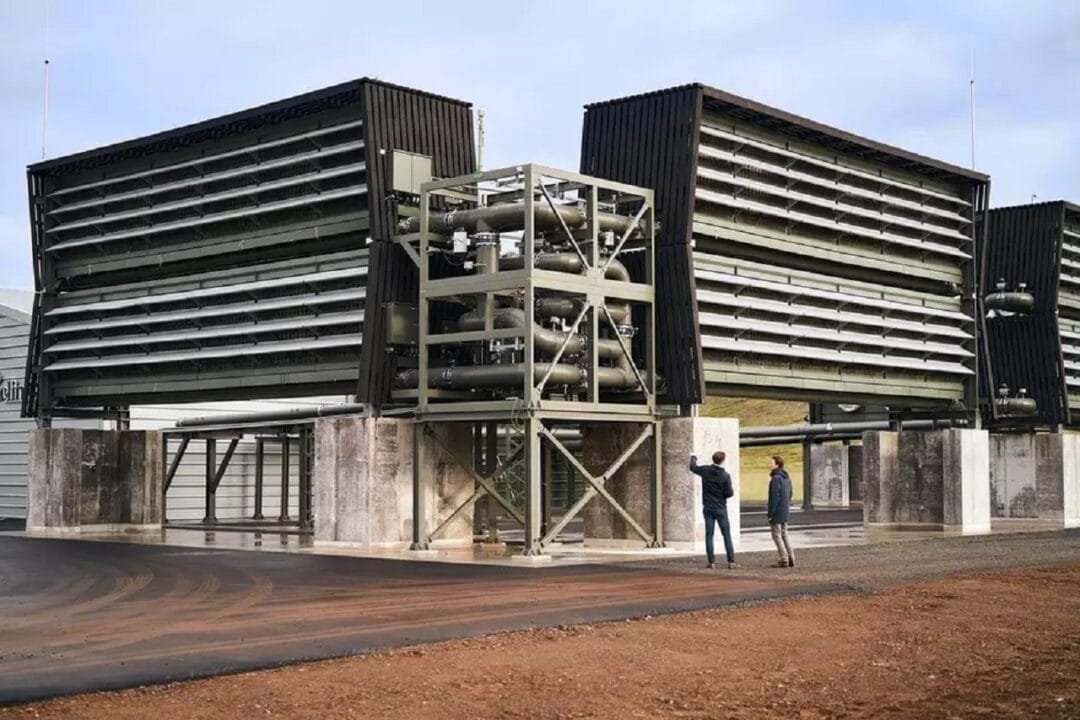

Iceland Has The World’s First Commercially Viable CO2 Capture Plant. The Carbon Dioxide Capture Plant Can Absorb 4,000 Tons Annually.
Atop a formation of solidified volcanic lava thousands of years old, in the outskirts of Reykjavik, the capital of Iceland, one can observe what looks like a set of large air conditioning units, the size of shipping containers, arranged around a building. This is the world’s first carbon dioxide capture plant.
Plant Capable Of Capturing CO2 In Iceland Absorbs 4,000 Tons Per Year
The strange image, the finishing touch on a landscape that appears extraterrestrial, is unique not only for its appearance but also for its function: it is the first viable system in the world capable of capturing carbon dioxide (CO) from the air and storing it underground.
The carbon dioxide capture plant in Iceland, the first of its kind in operation, was developed by the Swiss company Climeworks under the premise that to truly achieve a goal of net-zero global emissions, solutions for removing CO2 from the air are necessary.
-
USP wants to read the DNA of up to 5,000 Brazilian couples before pregnancy to discover if future babies may inherit silent genetic diseases.

-
With cameras attached to their heads, thousands of workers in India are recording themselves cutting fruits, folding clothes, and cooking to train artificial intelligence robots that, in the future, are expected to take over household tasks.

-
A jacket that extracts drinking water from the air seems like something out of a movie, but it has already been tested by scientists and could become an ally in emergencies.
-
Car carrier ship may receive molten salt nuclear reactor after study evaluates shielding, stability, load, safety, and operation without refueling throughout its entire lifespan.





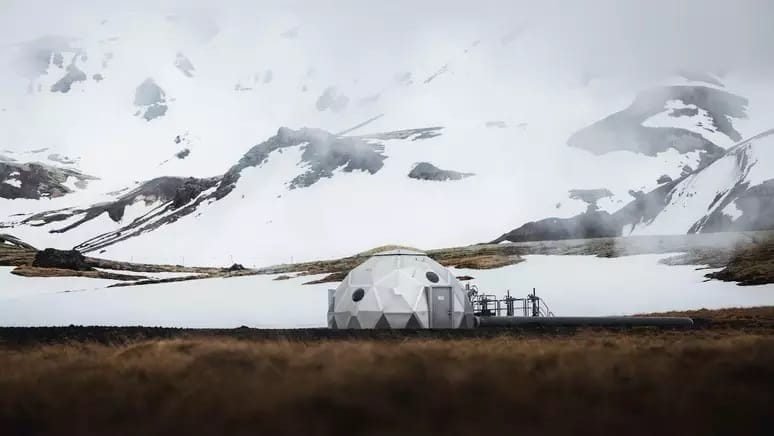
Photo: CarbFix / BBC News Brasil
The facilities of the plant, known as Orca, in Iceland currently remove 4,000 tons of CO2 from the atmosphere each year, equivalent to emissions from 900 gasoline-powered cars. What appear to be air conditioning units are, in fact, a large number of fans stacked on top of each other, filtering the captured air for existing CO2.
This is the first part of a process that seems simple and could be an essential tool in the fight against climate change. However, the plant capable of capturing CO2 from the air in Iceland is not aimed at replacing emission reduction measures, according to Bryndis Nielsen, a representative from Climeworks.
Why Was The Carbon Dioxide Capture Plant Installed In Iceland?

For Nielsen, it is necessary to have an active role in cleaning up all the mess that companies have left since the industrial revolution began; however, the company is not here to substitute emission reductions.
The main reason this technology alone is not sufficient to address the risks of climate change is the plant’s limited capacity to capture CO2. While it sounds impressive that a single carbon dioxide capture plant can absorb 4,000 tons of CO2 per year, in 2023, global CO2 emissions reached 37.4 gigatons (37 billion tons).
The intense volcanic activity in Iceland is the primary reason Climeworks has established its plants on the island, located at the boundary of the tectonic plates of America and Eurasia.
In addition to providing clean geothermal energy, with no greenhouse gas emissions, the volcanic activity means that Iceland’s subsoil is primarily composed of basalts, porous volcanic rocks that are the perfect receptacle for atmospheric CO2.
How Does The New Plant Capable Of Capturing CO2 Work?
The gas that the carbon dioxide capture plant collects from the environment is mixed with water and sent through pipes to a kind of dome protruding from the surface and operated by another company, CarbFix. There, the mixture is injected under pressure, 2 km underground, where it reacts with the basalts, and the CO2 is calcified over millions of years.
The representative of CarbFix, Edda Aradóttir, stated in an interview that the company’s focus is for large CO2-emitting industries worldwide to contract these types of services to deposit their emissions in Iceland.





Plantar árvores é mais eficiente,e não custa nada…e ainda produzem oxigênio.. apresento a vcs a tecnologia das árvores, muito melhor..
Colocando a sujeira debaixo do tapete kkkkkkk