






 Portuguese
  Spanish


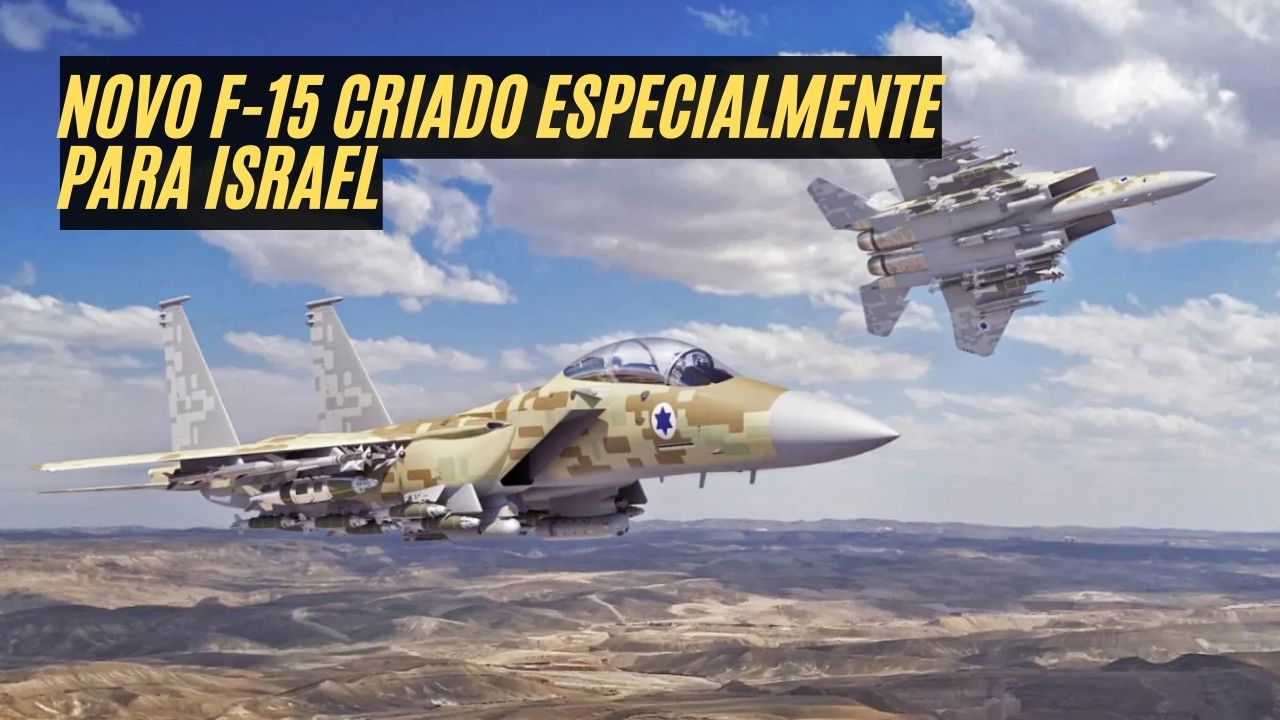

Israel Signed a $5.2 Billion Deal with Boeing for the Delivery of a New Version of the F-15, Developed Specifically to Meet the Needs of the Israeli Air Force. This New Fighter F-15, Nicknamed F-15IA, Represents More Than a Reinforcement of the Fleet: It is a Key Component of Israel’s Security Strategy Amid an Increasingly Tense Geopolitical Landscape in the Middle East. But Why Is the New F-15 Fighter So Special, and What Innovative Features Does It Bring to Military Operations?
Israel’s decision to invest in this aircraft comes at a time of heightened tensions in the region, with persistent threats from neighboring countries, such as Iran. With the new version of the F-15 fighter, Israel seeks to ensure air superiority capable of deterring and facing diverse threats.
The F-15 originated from an American project initiated in the late 1960s, amid the Cold War. The need to develop an aircraft capable of competing with the feared Soviet MiG-25 led to the creation of the F-15, a fast and maneuverable fighter, equipped with advanced radar technology for its time. Since then, the F-15 has undergone various adaptations, consolidating itself as one of the leading combat aircraft in the world. The F-15E version, developed in the 1980s, added ground attack capabilities, becoming essential in conflicts such as the Gulf War.
Technical Specifications of the New F-15 Fighter
Israel’s experience with the F-15 is long and strategic. In the 1990s, Israel acquired the F-15I Ra’am, a local adaptation with customized avionics systems for long-range operations and strikes on strategic targets. Now, the new F-15IA takes this partnership to another level.
-
Belo Horizonte Becomes First Brazilian City to Fund Housing, Utilities for 100 Homeless Families with $900,000 Initiative

-
Brazilian Joins Homeownership Consortium, Faces Decade of Dual Payments Totaling $141,000, Surpassing Traditional Mortgage

-
Land Rover to Halt Production in July, Putting 371 Jobs at Risk, as Chinese Automaker Negotiates to Convert Factory to 100,000 Vehicles Annually by 2027
-
Mexican Pest Threatens U.S. Cattle Herds at Historic Lows, Potentially Boosting Brazilian Beef Exports as Burger Prices Soar


The new F-15IA offers significant improvements over previous versions. Equipped with an active electronically scanned array radar, it has advanced capabilities to detect multiple targets at long ranges, ensuring superiority in air combat and ground attacks. Additionally, the aircraft can carry up to 13.4 tons of armament, including hypersonic missiles and guided bombs, making it one of the most powerful platforms in operation.
Its advanced avionics allow Israel to operate the F-15IA in synergy with other aircraft, such as the F-35, combining the stealth of the latter with the heavy payload capability of the F-15IA for deep attack missions. This complementarity is essential for complex operations that demand both precision and massive firepower.
Why Is Customization Essential for Israel?
The purchase of the new F-15IA represents a long-term strategy to modernize the Israeli Air Force. With the delivery of the first units expected by 2031, Israel plans to replace older aircraft, ensuring a robust presence in its airspace and sending a clear message to its adversaries about its deterrent capability.
This new F-15 fighter is ideal for facing the type of multifaceted threat that Israel encounters in the Middle East. With a combination of extended range, robustness, and advanced defense systems, it is prepared to operate in high-intensity scenarios and hostile environments.
The new F-15 created for Israel goes beyond a technological upgrade. It symbolizes the country’s commitment to maintaining its air superiority in a context of constant threats. In partnership with Boeing, Israel has developed a version of the F-15 that perfectly fits its operational needs, providing both offensive and defensive capabilities across various missions. With this billion-dollar investment, Israel reinforces its strategic position and ensures that it will continue to be a dominant player in the regional security landscape.









O assunto da matéria é muito interessante, uma pena que foi escrito de forma tão enfadonha, em mais ou menos oito parágrafos. Repetitivo demais…