Portuguese
  Spanish


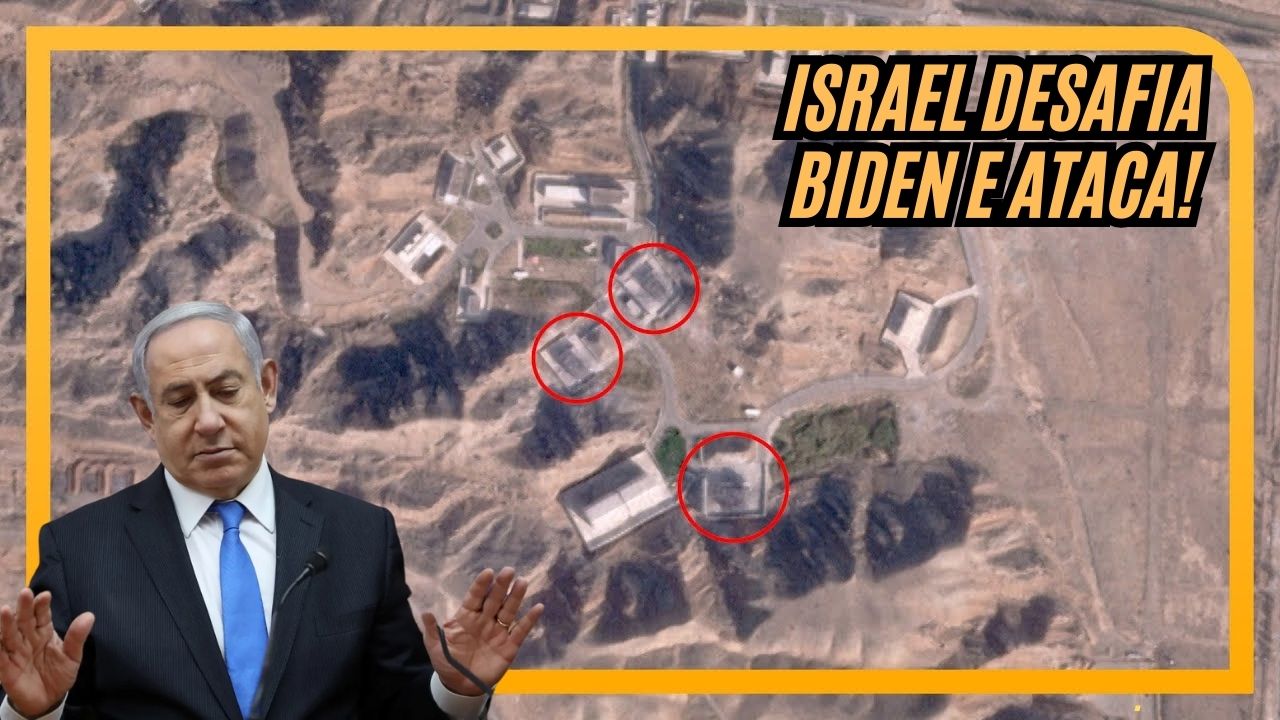

Israel’s Attack on Nuclear Installation Tegan 2 Generates International Tension and Exposes Divisions Among Global Powers.
Israel carried out a strategic attack on the Iranian nuclear installation known as Tegan 2, located in Parchim, disregarding requests from U.S. President Joe Biden for moderation. The operation used advanced drones and stealth aircraft, destroying critical buildings of the facility, which played a central role in the Iranian nuclear program. The attack reinforces Israel’s position as a decisive force in regional security.
What Happened?
The Tegan 2 facility, targeted by Israel’s attack, was a secret location used for research on plastic explosives essential for nuclear detonation. According to Israeli reports, the damage to the facility is significant, including the destruction of hard-to-replace equipment, delaying the advancement of Iran’s nuclear program. This operation occurs in a context of increasing tension between Israel and the Iranian regime, which seeks to establish itself as a hegemonic power in the Middle East.
Despite the efforts of the International Atomic Energy Agency to monitor Iran’s nuclear program, access to the facilities remains restricted. The destruction of Tegan 2 exposed vulnerabilities in the Iranian defense system, generating promises of retaliation from military leaders in Tehran, such as General Amir Ali Hajizadeh, who vowed a “crushing response”.
-
European Parliament Approves Digital Euro, Aiming to Challenge Visa and Mastercard’s Dominance and Transform Payments Across Europe by 2029

-
Israel finds Hezbollah militarized tunnel over 200 meters long under village, with 4 missile launch shafts, 12 chambers, anti-tank missiles, drones, and weapons depots at a depth of 25 meters.

-
Ukraine launches largest drone attack on Moscow since 2022, Russia claims to have intercepted nearly 200 aircraft near the capital, Kapotnya refinery targeted again, and offensive reignites alert about war reaching the Russian energy heart just a few kilometers from the Kremlin.

-
Truck drivers, freight, and fines from 2022 take center stage in politics: Chamber approves MP with amnesty, mandatory tracking by CIOT, million-dollar penalties, and new minimum wage for those who spend more than 24 hours on the road.



Why Did Israel Act Against Tegan 2?
For Israel, the possibility of a nuclear-armed Iran is a direct threat to its existence. The Iranian regime frequently expresses opposition to Israel’s existence, and Iran’s acquisition of nuclear weapons could drastically alter the balance of power in the Middle East.
This concern has led Israel to adopt a preventive stance, similar to operations conducted against nuclear reactors in Iraq in 1981 and in Syria in 2007.
The choice of Tegan 2 as a target was also strategic. Since it is not a declared nuclear facility, the attack demonstrated the depth of Israeli intelligence and complicated Iran’s public response.
The Reaction of the United States and the International Community
President Joe Biden had explicitly requested that Israel avoid attacks on Iranian nuclear facilities, highlighting the need for moderation to prevent military escalation. Despite this, the attack demonstrated that Israel is willing to act unilaterally when it considers its security threatened.
The imminent inauguration of Donald Trump, known for his hardline stance against Iran, may further bolster support for Israel. Meanwhile, the international community remains divided. Countries like Russia and China continue to support Iran, while Western powers demand greater transparency regarding Iran’s nuclear program.
Regional Impacts and Future Developments
The destruction of Iran’s nuclear facility represents a significant blow to the country’s nuclear program, but it also amplifies the aggressive rhetoric from groups allied to the Iranian regime, such as Hezbollah. Additionally, the event may pressure other Middle Eastern nations, like Saudi Arabia, to reconsider their nuclear policies.
Although Israel’s attack has delayed Iran’s plans, experts believe Tehran will continue seeking ways to advance its nuclear program. Whether through strategic alliances with China and Russia or by developing internal capabilities, the nuclear program remains a strategic priority for Iran.
The attack on Iran’s nuclear facility reinforces the role of technology and intelligence in modern warfare, highlighting Israel’s capacity to conduct surgical operations against its greatest enemy. Nonetheless, the operation increases tensions in the region and raises concerns about the escalation of a conflict that could have global repercussions.