






 Portuguese
  Spanish


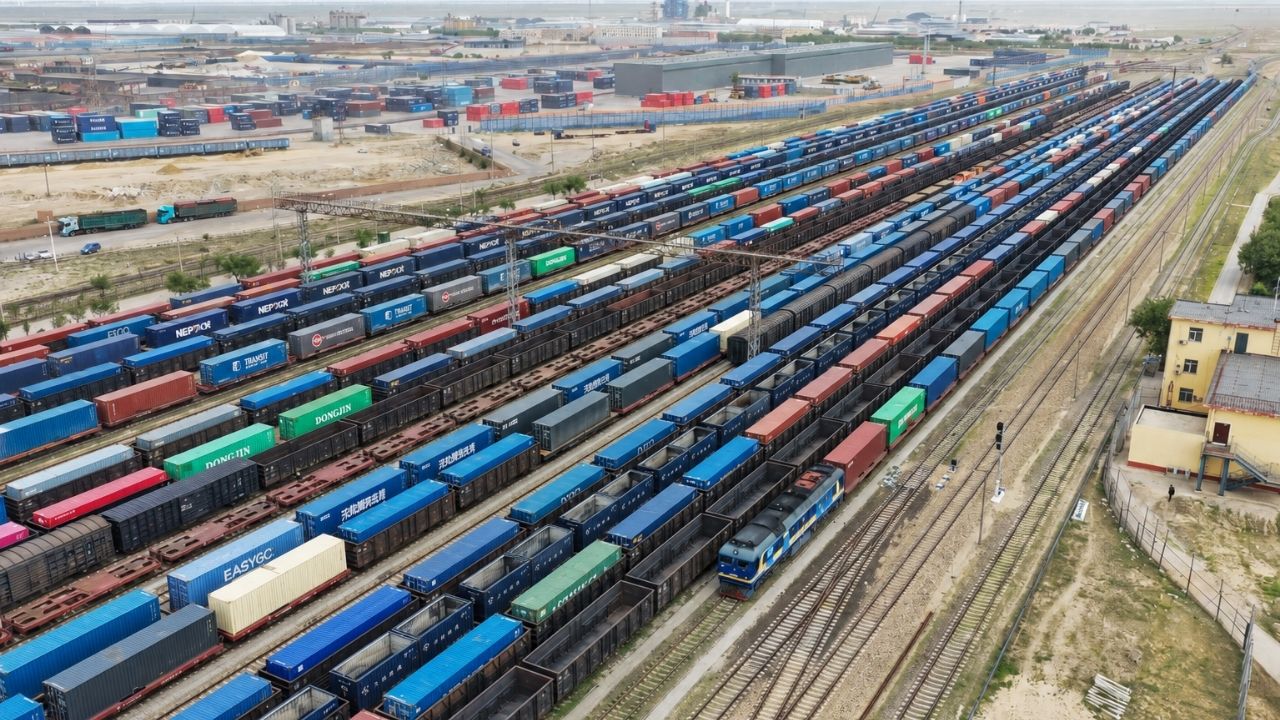

Trains China-Europe via Erenhot Port, in Inner Mongolia, total more than 25,000 operations, according to Xinhua, while 75 routes connect more than 70 stations in more than 10 countries and strengthen the central corridor as a land alternative to maritime routes between China and Europe today in modern continental logistics
The China-Europe trains gained new prominence after Erenhot Port, in the Inner Mongolia Autonomous Region, northern China, surpassed the mark of 25,000 trains moved since the start of services by the terminal in 2013. The data was released by Xinhua on June 25, 2026.
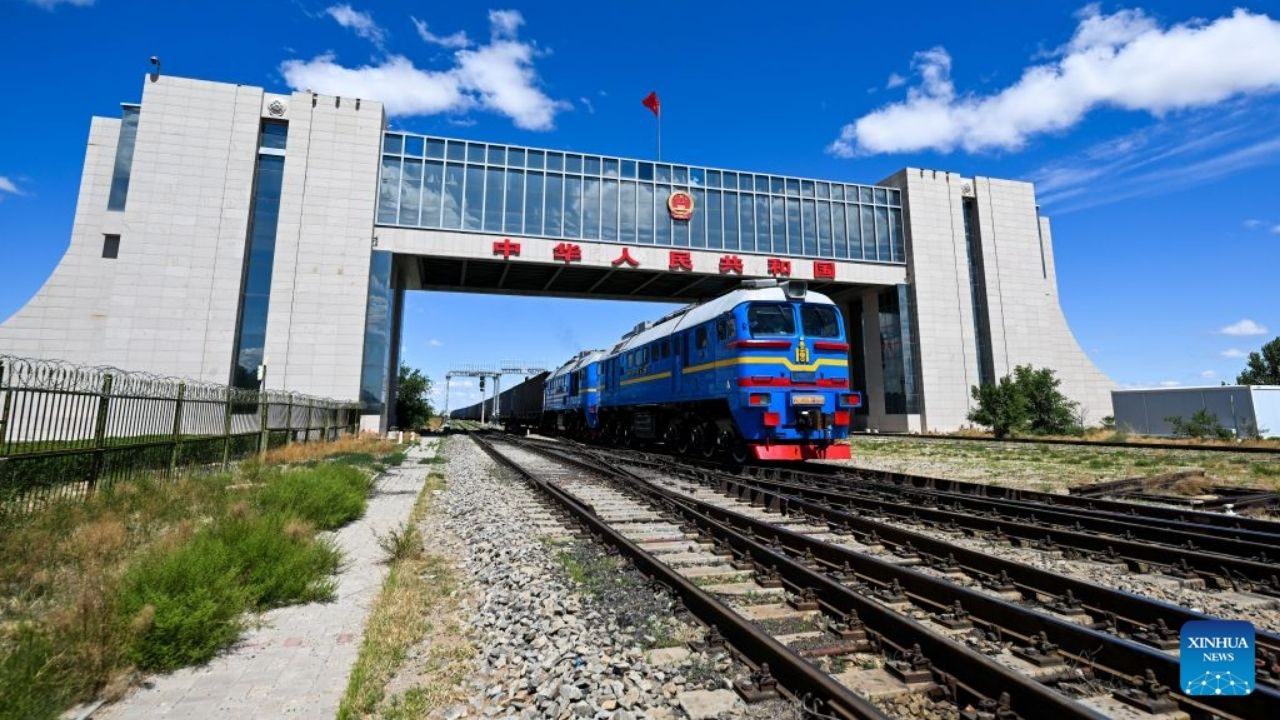
The advancement occurs in Erenhot, a strategic railway point on the border between China and Mongolia, where images recorded on June 24, 2026, showed trains, containers, operation teams, and dispatch center. According to the Chinese agency, the port operates 75 routes that connect more than 70 stations in more than 10 countries.
Erenhot Port became a central piece in land connection
The Erenhot Port is presented by Xinhua as the only transit port of the so-called central corridor of the China-Europe freight railway network. This means that the terminal functions as an important passage for cargoes crossing Eurasia by rail, instead of relying solely on the long traditional maritime routes.
-
Brazilian State Government Establishes New Fire Brigade Battalion with $74 Million Investment

-
Brazil Imports 85% of Its Fertilizers, Races to Reduce Reliance on Russia and China

-
8-Year-Old Girl Launches Candy Business with Savings, Now Earning Up to $700 Monthly
-
Brazilian Steel Giant Partners with USP to Develop 40% Stronger Rebar for World’s Tallest Residential Building in Brazil’s Senna Tower




The mark of more than 25,000 China-Europe trains moved by mid-June shows the scale achieved by the corridor since 2013. The number draws attention because it transforms a border point in Inner Mongolia into a symbol of increasingly relevant land logistics.
In practice, Erenhot operates as a link between railway infrastructure, border control, container movement, and international connection. The terminal is not just a passing point: it organizes entry, exit, maneuvering, dispatch, and reception of freight trains.
This type of structure helps explain why China invests so much in international railway corridors. The more predictable the rail circulation, the greater the capacity for companies to plan transportation, deadlines, and alternative routes for goods that travel long distances.
75 routes connect more than 70 stations in over 10 countries
According to Xinhua, Erenhot currently operates 75 China-Europe train routes. These lines connect more than 70 stations in over 10 countries, including Germany and Poland, two important destinations within the trade network between Asia and Europe.
The data shows that the port does not operate in isolation. It is linked to a network of cities, stations, and logistics centers that depend on international coordination. A railway route of this type only gains strength when it can regularly connect origin, transit, and destination.
The presence of Germany and Poland in the group mentioned by the agency reinforces the European reach of the operation. These countries appear as relevant points because they are part of the logistics circuit for entry and distribution of cargo on the continent.
At the same time, the mention of more than 10 countries indicates that the network goes beyond a bilateral connection between China and Europe. It involves multiple territories, borders, operational standards, and dispatch stages, making the efficiency of the central corridor a decisive factor.
Central corridor appears as a land alternative to maritime routes
Maritime routes remain fundamental for global trade, especially in the transport of large volumes. However, China-Europe trains offer a land option for chains seeking to diversify paths, reduce dependence on some maritime bottlenecks, and create more predictability in certain flows.
The central corridor gains importance precisely by crossing strategic regions between China, Mongolia, Russia, Central Asia, and Europe, depending on the route. In the case of Erenhot, Xinhua highlights the role of the port as a transit point for this international railway network.
This does not mean that the rails replace maritime transport on a global scale. It is more accurate to see the corridor as a complement. For some cargo and deadlines, the railway can function as a significant land bridge between production, consumption, and distribution.
This balance between sea and land is increasingly important in a world exposed to port delays, trade tensions, logistical bottlenecks, and the reorganization of production chains. When a route becomes slower or more expensive, companies look for other paths.
Operation involves dispatch, maneuvering, and container handling
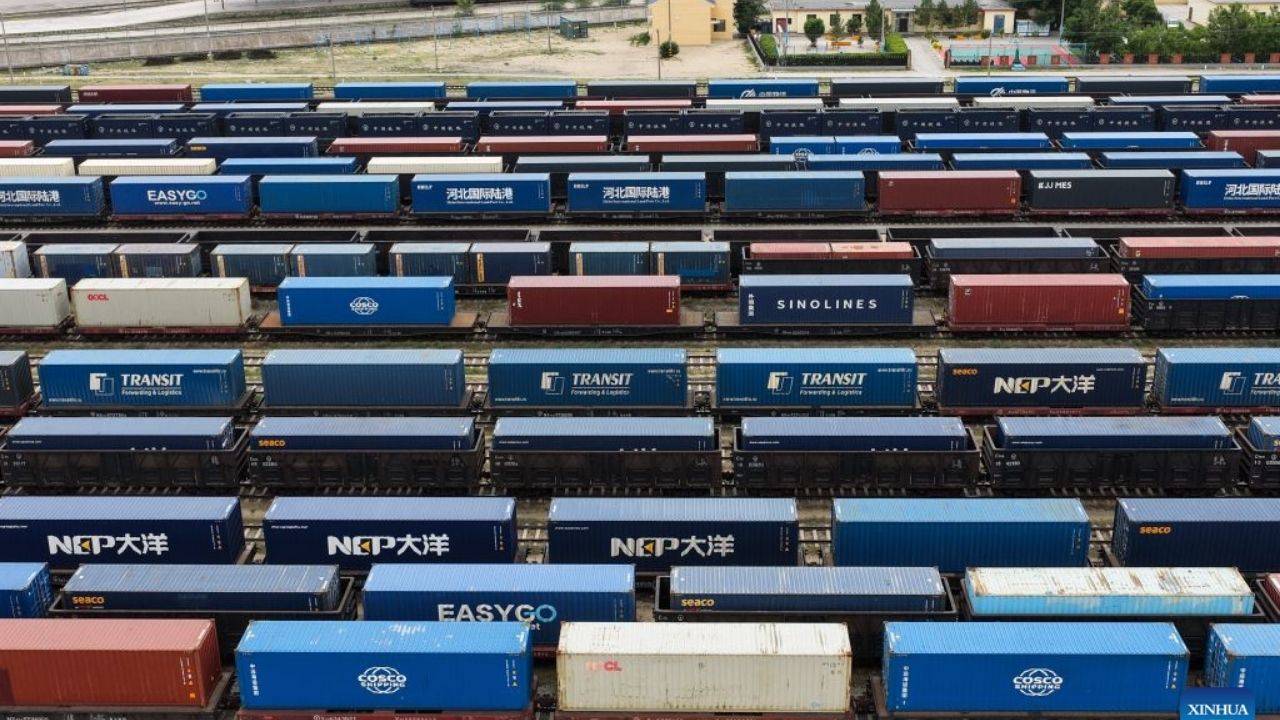
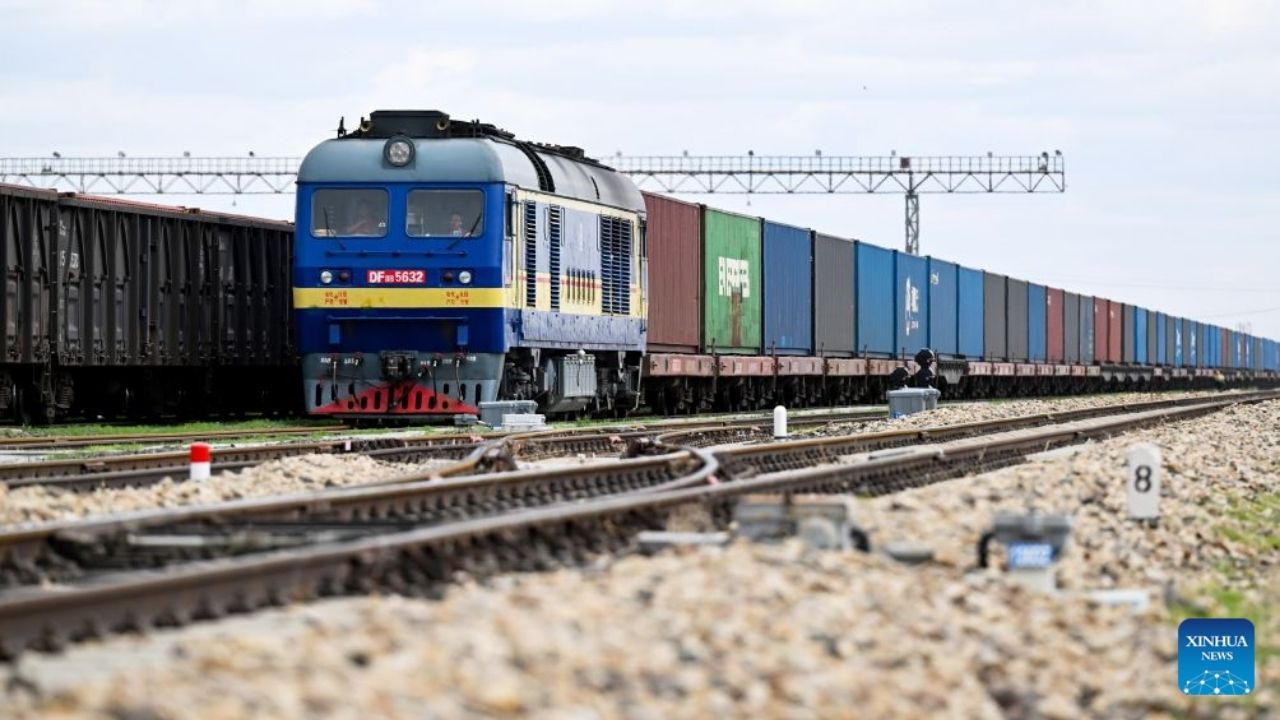
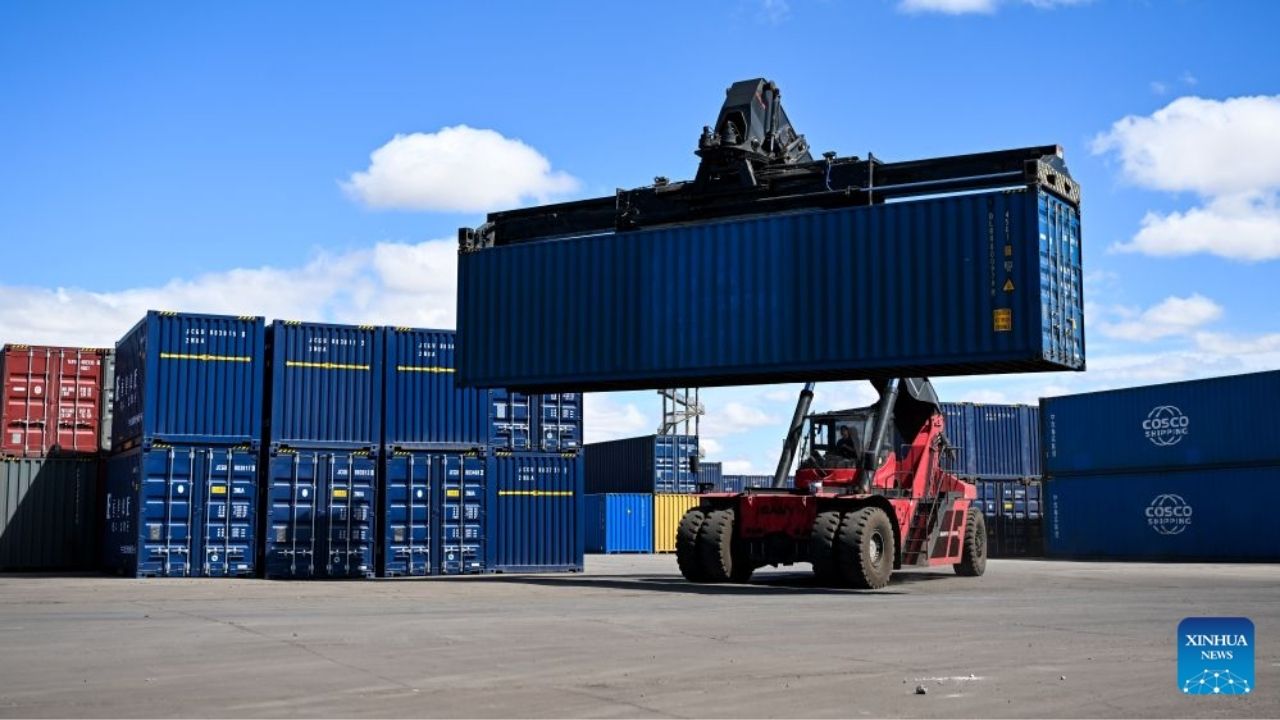
The images released by Xinhua show different stages of the routine at the Erenhot Port. There are records of trains entering the terminal, employees monitoring operations in the dispatch and control center, teams performing reception, workers maneuvering, and equipment lifting containers.
These details show that the China-Europe trains rely on a precise operational mechanism. Each train needs to be received, positioned, monitored, and released within standards that allow the flow to continue.
Container handling is a sensitive point because it connects rail transport to the global logic of standardized cargo. The container allows products to be transferred between different modes, warehouses, and destinations with more organization.
Even so, the operation is not limited to machines. Employees are seen monitoring traffic, placing chocks on wheels, and executing maneuvers. International rail logistics depend as much on heavy infrastructure as on a highly coordinated human routine.
Since 2013, scale shows accumulated progress of the terminal
Xinhua reports that the China-Europe train services through Erenhot Port began in 2013. Since then, the terminal has accumulated more than 25,000 trains by mid-June 2026, consolidating the route as a significant part of the freight rail network between the two continents.
This time frame is important because it shows that growth did not happen all at once. It took more than ten years of expansion, operational adjustments, route expansion, and strengthening the terminal’s role within the central corridor.
The milestone also helps visualize the strategic weight of Inner Mongolia in land trade. Although often less remembered than major seaports, the region holds a significant position in connecting the Chinese interior with external markets.
For China, this type of corridor helps internalize international logistics. Instead of concentrating all dynamics in coastal areas, the rails allow northern and interior regions to participate more directly in international trade flows.
Why Inner Mongolia Matters on This Route
The Inner Mongolia Autonomous Region occupies a strategic geographical position in northern China. In the case of Erenhot, its location on the border with Mongolia turns the terminal into an exit and entry point for cargo traveling overland to other countries.
This factor explains why the China-Europe trains are so associated with the port’s role. The route does not rely solely on tracks within China but also on international connections that cross borders and require logistical coordination.
Geography, in this case, becomes a competitive advantage. A well-positioned terminal can concentrate flows, reduce detours, and organize connections between different railway networks. When the crossing point works, the entire chain gains predictability.
Therefore, Erenhot appears as a broader piece of China’s land circulation strategy. The terminal connects the country’s interior to external markets and reinforces the idea that border infrastructure can have a direct impact on international trade.
Germany and Poland Help Show European Reach
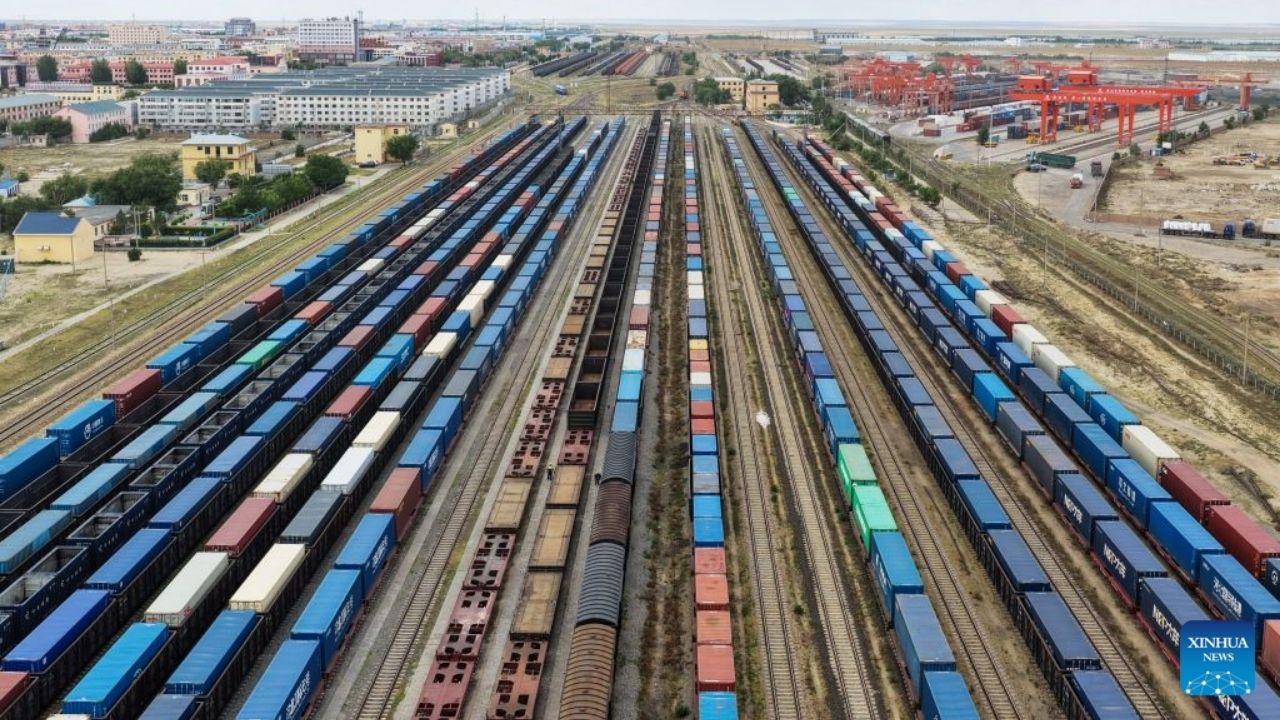
Xinhua cites Germany and Poland among the countries connected by the routes operated by the Erenhot Port. The reference is relevant because both countries have a strong logistical and industrial presence in Europe, in addition to serving as important points of regional distribution.
The presence of these destinations reinforces that the China-Europe trains are not just a symbolic route. They integrate a network reaching stations and hubs capable of redistributing cargo to different European markets.
Poland, due to its geographical position, is often seen as an important land entry point for cargo arriving from Asia towards the European Union. Meanwhile, Germany represents one of the continent’s main industrial and consumer centers.
This connection helps explain why the railway corridor is appealing to companies. The clearer the bridge between Chinese origin, Eurasian transit, and European destination, the greater the route’s attractiveness for certain types of cargo.
The Logistical Strength of Rails in Global Competition
The milestone of 25,000 China-Europe trains through Erenhot reinforces a silent shift in international logistics: rail transport has moved from being just a regional alternative to occupying space in global connectivity strategies.
The world continues to heavily rely on ships, but recent crises have shown that highly concentrated chains can suffer when there are blockages, delays, or instability on specific routes. In this scenario, land corridors gain strategic value.
The railway offers a different reading of distance. Instead of circumventing oceans and relying exclusively on large seaports, it crosses continents through inland routes. This can shorten some connections and open paths to regions that are not directly on the coast.
The case of Erenhot illustrates this logic. A border terminal, far from the traditional image of large seaports, has become a hub of international movement with dozens of routes and presence in more than 10 countries.
Railway expansion also requires careful reading
Despite the impressive numbers, it is important to avoid an exaggerated reading. The available source provides the number of trains moved, the number of routes, stations, and countries connected, but does not detail all types of goods, financial values, or direct cost comparison with maritime transport.
Therefore, the safest interpretation is to state that the China-Europe trains strengthen a land alternative within logistics between Asia and Europe, without claiming that they already replace maritime routes or are cheaper in all cases.
It is also necessary to consider that Xinhua is a Chinese state agency. Its data helps to understand the official scale disclosed by China, but the reader should view the information within this context of institutional communication.
Even so, the logistical relevance of the central corridor is clear within the presented numbers. More than 25,000 trains since 2013, 75 routes, and connection with more than 70 stations form an impressive set for any border railway terminal.
Central corridor shows that global logistics is not just by sea
The advancement of the Erenhot Port shows that the China-Europe trains have become an important part of China’s strategy for land connection with European markets. The milestone of more than 25,000 compositions since 2013 indicates accumulated scale, while the 75 routes show international reach.
The big question is what this growth represents for the future of global logistics. Do you think land railway corridors can increasingly gain strength against long maritime routes, or will ships still continue to dominate most of the trade between continents?


