Portuguese
  Spanish


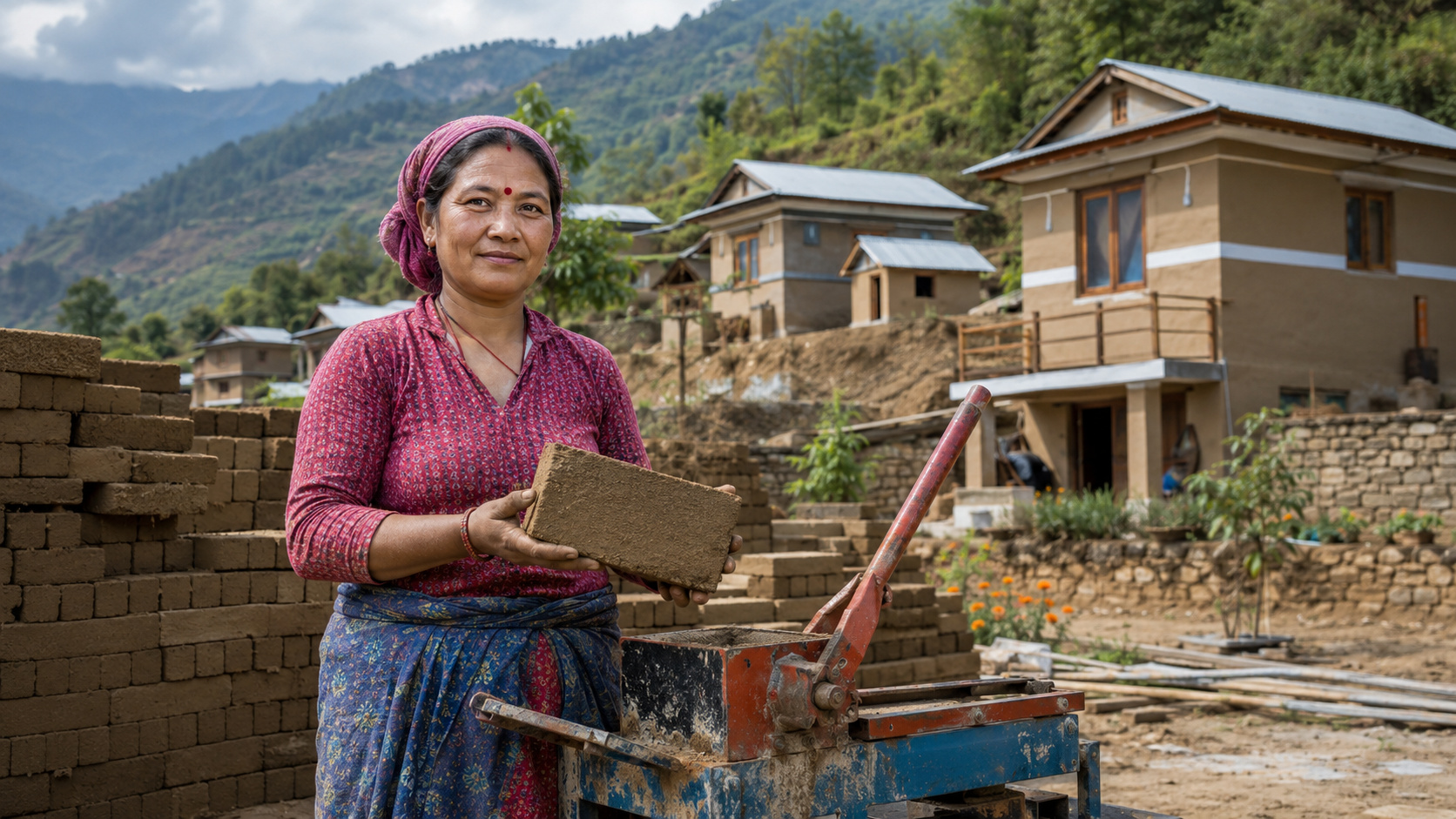

Compressed earth bricks helped a woman, even without formal education, to leave vegetable selling in Nepal, start a construction company, employ locals, and build more than 40 earthquake-resistant houses after the destruction left by the 2015 earthquakes.
A woman without formal education, who sold vegetables in Nepal, learned to press earth bricks, started a construction company, and has already built more than 40 earthquake-resistant houses after the 2015 earthquakes.
Parbati Sunar lives in a rural area of the country and raised her son alone after her husband migrated to another country. For years, selling vegetables supported her family until she gained access to training on compressed earth blocks.
The information was published by World Habitat, an international organization dedicated to improving housing conditions. The record of the project recognized in 2020 shows that Parbati started to run a company that maintained five local workers full-time.
-
Wind energy company discovers 19th-century shipwreck with 615 tons of coal while surveying seabed for 150 turbines installation.

-
Scottish Village with 15 Wooden Tiny Homes Provides Shelter for the Homeless: Each Unit Includes a Private Door, Kitchen, Bathroom, and Living Room in a £3 Million Project
-
Brazil bans donkey slaughter to prevent extinction and address health risks amid rising demand for hides in China.
-
Brazil’s Superior Court rules banks like Caixa, Banco do Brasil, and Santander not liable for compensation in fake customer service scams.




2015 earthquakes destroyed about 800,000 houses in Nepal
Two strong earthquakes hit Nepal in 2015, killed more than 9,000 people, and destroyed about 800,000 houses. In remote regions, reconstruction brought even greater difficulties for many families.
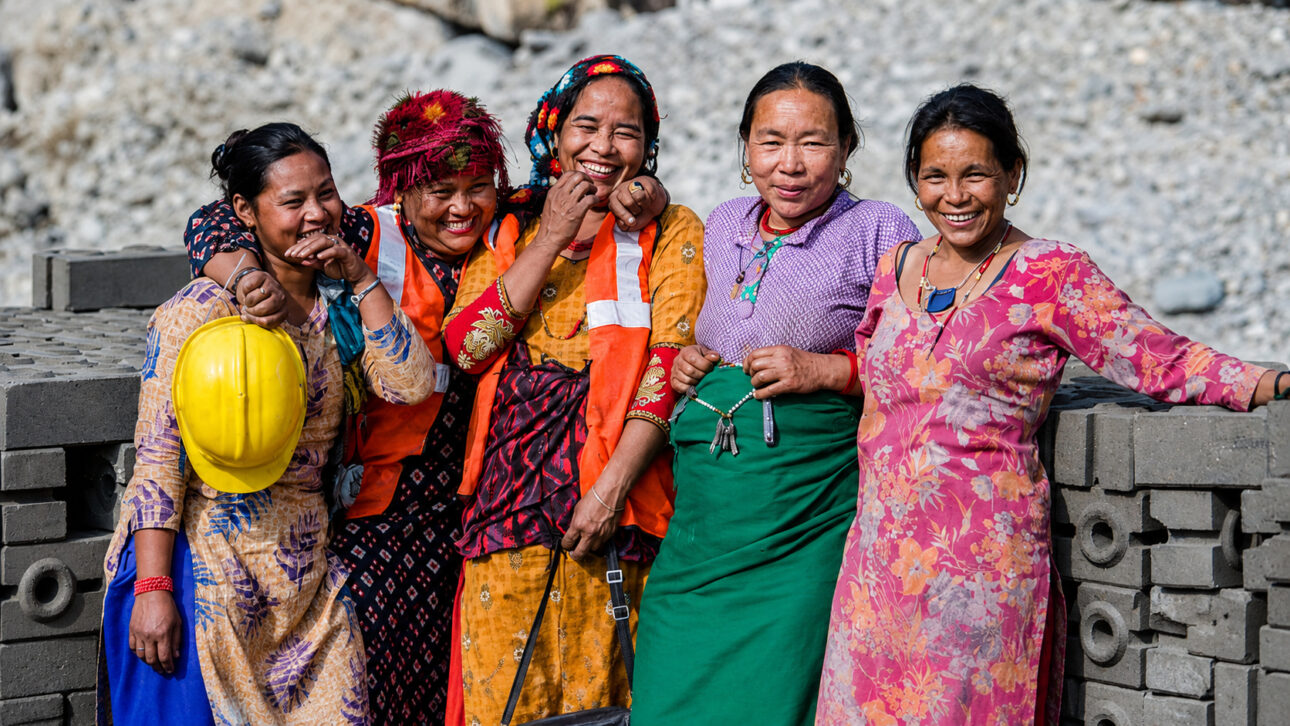
Elderly, children, people with disabilities, and adults without family support faced more obstacles to recover their own housing. Many families had to rebuild on their own after the destruction.
The program created after the disaster combined reconstruction, training, and local work. The goal was to support the construction of new houses and allow communities to continue producing housing.
How Compressed Earth Bricks Used in New Houses Work
Compressed earth bricks are pieces made by pressing the earth in a manual machine until it takes the shape of a block. In Nepal, the machines were designed so that rural communities and small entrepreneurs could primarily use materials from their own region.
Manufacturing close to the construction site allows the blocks to be produced near the families being served. This makes a difference in remote areas, where transporting a large quantity of construction materials can be difficult.
An earthquake-resistant house does not depend solely on the block. Proper design, trained labor, and safety regulations are still necessary for the construction to offer real protection to the residents.
Parbati Sunar Switched from Selling Vegetables to a Construction Company
Parbati Sunar married young, did not have formal education, and was responsible for raising her child. The opportunity to learn about compressed earth blocks opened a path she did not know in the construction industry.
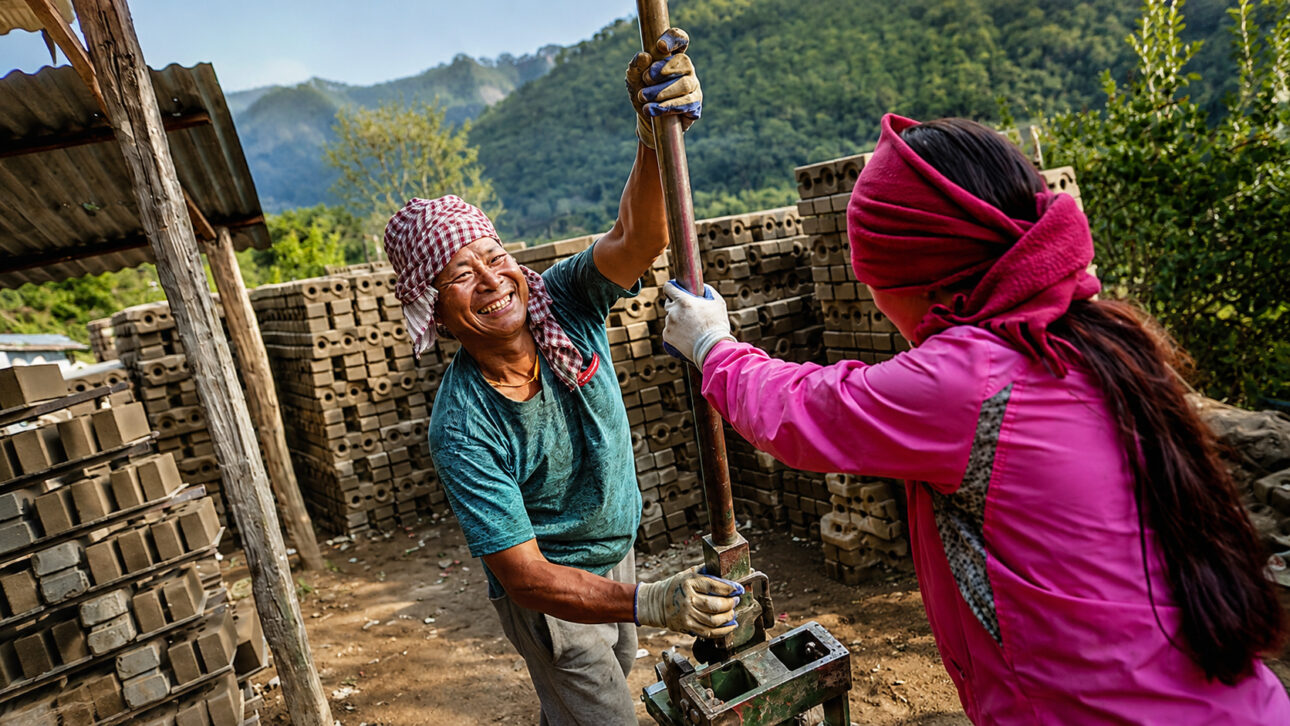
She created a construction company in her own region and started building houses for other families. The work reached more than 40 homes and generated local employment in a place marked by earthquake destruction.
The case shows that technical learning can open up opportunities for those who have never worked on a construction site. It also reveals that women can occupy roles related to the production of materials and the construction of houses.
Project Reached 31 Districts and Created Houses and Jobs
World Habitat, an international organization dedicated to improving housing conditions, recorded that the project reached the 31 districts of central Nepal affected by the earthquakes, with special attention to the 14 most affected districts.
Community Impact Nepal, a Nepalese non-profit organization, created the project to support local entrepreneurs in rebuilding homes and creating small businesses in the affected communities.
In 2020, the program had built more than 3,500 houses in remote rural areas, created 200 microenterprises, and generated 2,200 jobs. The houses came to shelter 17,500 people.
Women learned to build and entered an activity previously dominated by men
The training offered by the project included women and groups that face more difficulty in finding work. Almost one-third of the trained masons were women.
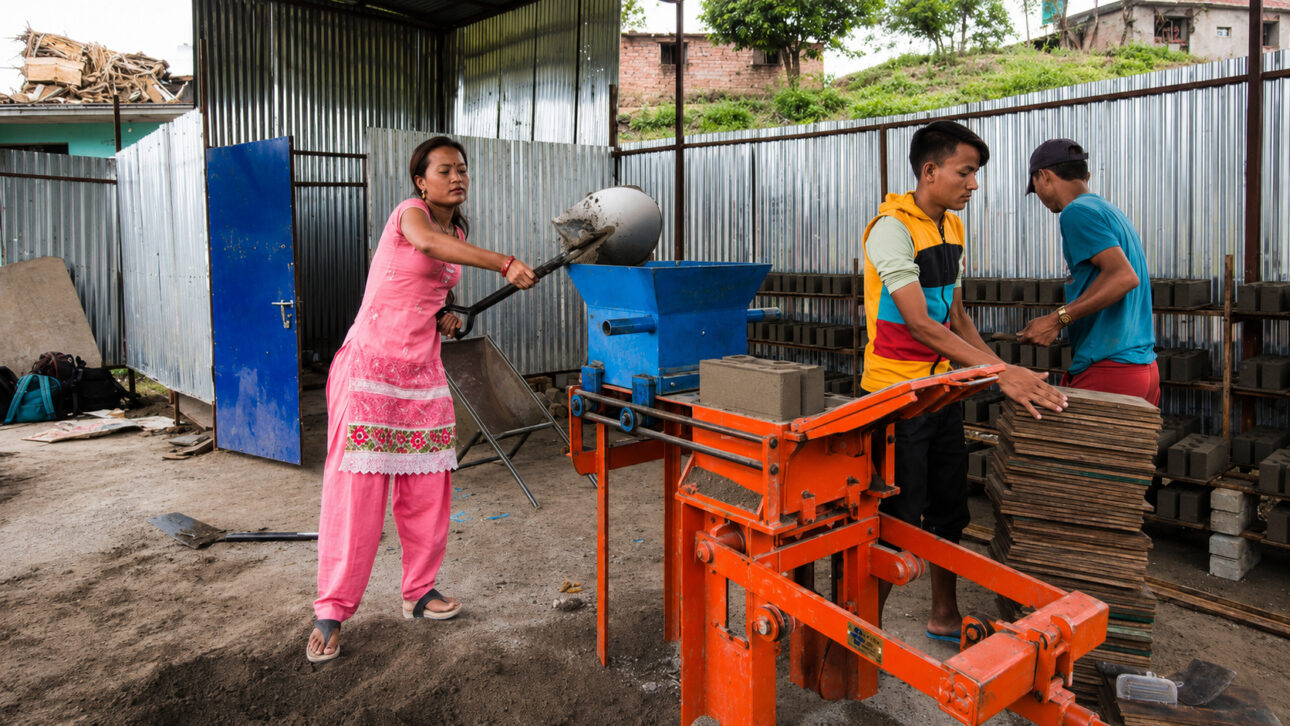
About half of the trained masons came from disadvantaged groups. The reconstruction of houses also became a way to expand technical knowledge and income within the communities.
Parbati’s journey is part of this result. She left a survival activity and began to lead a company related to building earthquake-resistant houses.
Building with earth requires care and does not dispense with safety
Nepal’s experience shows that building with earth can involve technique, training, and simple equipment. It’s not about improvising walls with mud or copying a model without planning.
In Brazil, any construction made with earth needs to consider the soil, climate, foundation, and local safety regulations. Each region has its own needs, and a solution used in Nepal cannot be repeated without technical evaluation.
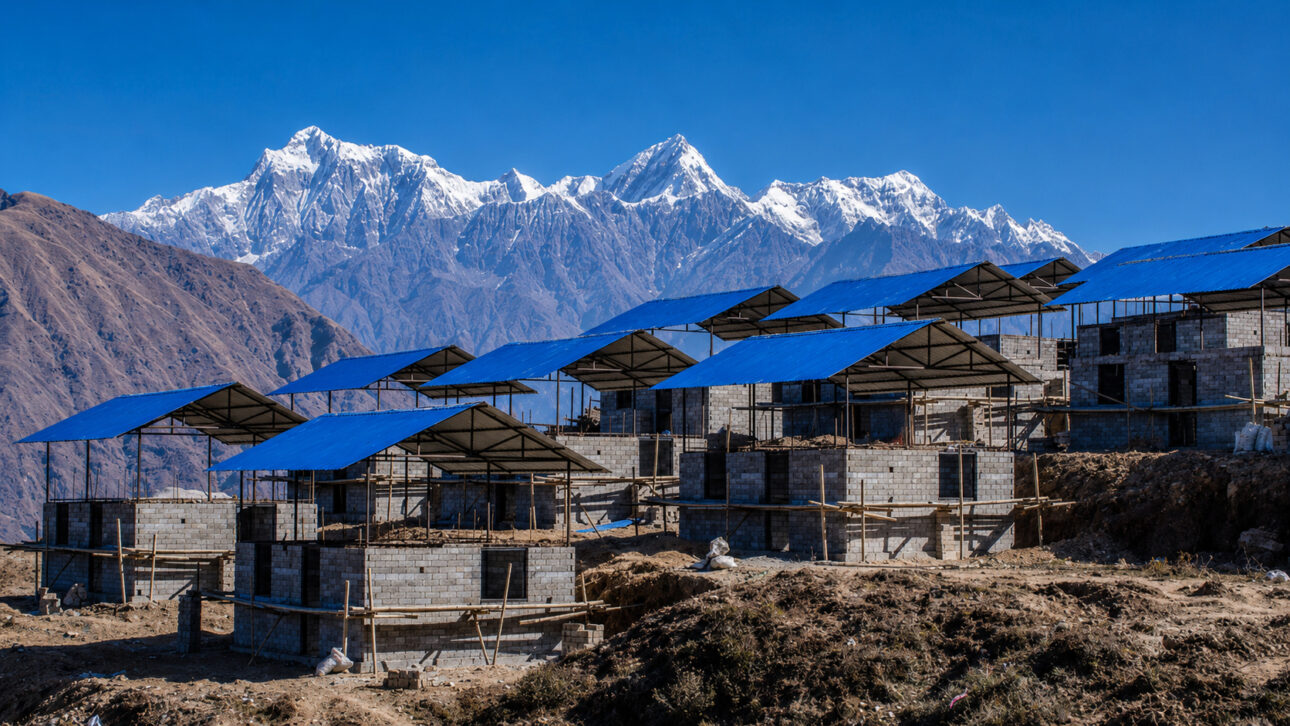
The main lesson is in using local knowledge along with proper guidance. Earth, manual machine, and trained workers became part of a concrete response for families who lost their homes.
Parbati Sunar went from selling vegetables to leading a construction company and building over 40 earthquake-resistant houses. The story also reveals the scope of a program that reached 31 districts and created jobs in rural areas of Nepal.
The compressed earth blocks helped rebuild homes, but the safety of the houses depends on technique, planning, and prepared professionals. This care prevents a simple idea from being treated as an automatic solution for any place.
Do you believe that teaching safe construction techniques can rebuild homes and create jobs after a disaster? Comment and share your opinion.