Portuguese
  Spanish


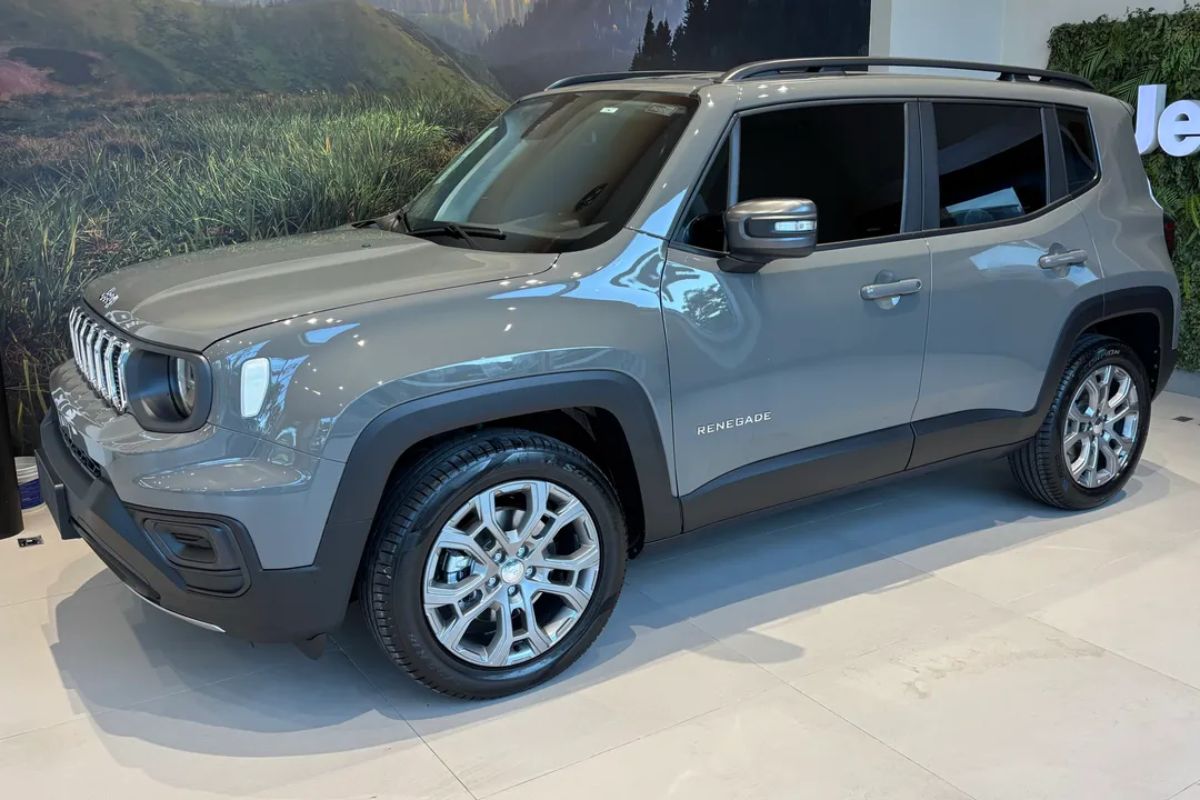

The Jeep Renegade Sport 2026 is equipped with a 1.3 turbo flex T270 engine with 176 hp and 27.5 kgfm of torque at 1,750 rpm, a six-speed automatic transmission, front-wheel drive, six airbags, and full LED headlights as standard for R$ 118,290, making it the most powerful compact SUV under R$ 130,000 in Brazil.
Among the compact SUVs sold in Brazil, none delivers as much power for less than R$ 130,000 as the Jeep Renegade Sport 2026. The 1.3 turbo flex T270 engine with 176 horsepower and 27.5 kgfm of torque available from just 1,750 rpm transforms what seems to be an entry-level Jeep into one of the most competent mechanical setups in the segment. The generous low-end torque means that the Renegade accelerates vigorously in urban traffic and overtakes on the highway without needing to stretch gears. For those comparing technical specifications, the 1.3 turbo flex engine of the Renegade Sport surpasses in power all direct rivals in the same price range.
The model arrives in 2026 with a price repositioning that made the Sport version the entry-level option, starting at R$ 118,290. Jeep celebrates a decade of the Renegade in the Brazilian market, the first national Jeep produced at the factory in Goiana, Pernambuco, and the standard equipment package of the Sport version does not leave the buyer missing the essentials. Six airbags, stability and traction controls, full LED headlights and taillights, 17-inch alloy wheels, electronic parking brake, and cruise control are items that come standard with the 1.3 turbo flex engine under the hood.
Why the 1.3 turbo flex engine of the Renegade is so much more powerful than its rivals

The power difference between the 1.3 turbo flex engine of the Renegade and the engines of direct competitors is significant. The 176 horsepower of the T270 surpasses the 130 hp of a turbo Tracker, the 126 hp of a naturally aspirated Honda WR-V, and the 120 hp of a turbo Fiat Pulse 200, placing the Jeep in a category that normally belongs to higher segment SUVs.
-
End of an era in Brazil: beloved sedan by Brazilians is discontinued despite having a 2.0 engine with 151 hp, CVT transmission, 466-liter trunk, and up to 650 km of range.

-
New Law Proposal in Brazil Could Heavily Penalize Drivers: Dangerous Overtaking May Become a Serious Offense with Fines Increased Tenfold and a 12-Month License Suspension; Update on 2026 Progress

-
Electric Revolution: Watts W125 Motorcycle Offers 160 km Range, 90 km/h Speed, and Affordable Price Starting at $3,000
-
General Motors Replaces Over a Thousand Workers with 50 Cobots at Electric Vehicle Plant, UAW Union Criticizes Move Amid Industry’s Automation Push




The advantage is not just in horsepower: the torque of 27.5 kgfm available at 1,750 rpm ensures low-end strength that 1.0 turbo engines cannot replicate.
The 1.3 turbo flex T270 engine is a four-cylinder inline engine with direct injection that delivers the same power and torque with ethanol and gasoline. The six-speed automatic transmission accompanies the engine in the front-wheel-drive versions, while the 4×4 versions receive a nine-speed transmission.
In the Sport version, the combination of the 1.3 turbo flex engine and six-speed transmission offers a balance between performance and consumption that works well both in traffic and on the road.
The consumption of the 1.3 turbo flex engine in the city and on the road

With 176 horsepower under the hood, the consumption of the 1.3 turbo flex engine is a legitimate concern. According to data from Inmetro, the Renegade Sport achieves 7.8 km/l in the city with ethanol and 11.0 km/l with gasoline, numbers that are within the expected range for a turbo compact SUV with this power.
On the highway, the figures rise to 8.9 km/l with ethanol and proportionally better numbers with gasoline.
The 55-liter tank of the Renegade is one of the largest in the segment and compensates for the higher consumption of the 1.3 turbo flex engine compared to smaller naturally aspirated engines. The range with a full tank of gasoline in the city exceeds 600 kilometers, a number that app drivers and fleet owners consider when comparing operational costs.
The start-stop system that shuts off the engine at traffic light stops contributes to urban fuel economy, although the actual gain depends on the traffic patterns of each city.
What the 2026 Renegade Sport delivers as standard with the 1.3 turbo flex engine
The Sport version may be the entry-level model, but the standard package is not stripped down. In addition to the 1.3 turbo flex engine with 176 hp, the Renegade Sport comes with six airbags, stability and traction controls, Full LED headlights and taillights, and 17-inch alloy wheels.
The electronic parking brake, conventional cruise control, adjustable steering wheel, and tire pressure sensor complete the package that the entry-level version offers.
What is missing in the Sport version and requires upgrading is the multimedia center with a screen, digital air conditioning, and rearview camera, items that are available starting from the Altitude version. For those who prioritize the mechanical set, specifically the 1.3 turbo flex engine with automatic transmission and passive safety with six airbags, the Sport version delivers the essentials.
For those who want embedded technology, the Altitude (with 7-inch multimedia and two-zone digital air conditioning) and Longitude versions complete what the Sport leaves out.
The dimensions of the Renegade and the trunk with the 1.3 turbo flex engine
The 2026 Renegade measures 4,268 mm in length, 1,805 mm in width, and 1,702 mm in height, with a wheelbase of 2,570 mm.
The square design and ground clearance of 192 mm give the SUV a robust stance that stands out from rivals with more rounded lines, reinforcing the Jeep identity that has attracted buyers seeking a distinctive visual presence in the compact segment since 2015.
The 320-liter trunk is where the Renegade falls short compared to rivals like the WR-V (458 liters) and Creta (422 liters). It is a known limitation that Jeep compensates for with the more powerful 1.3 turbo flex engine in the segment and the option for 4×4 traction in the higher versions, something no other compact SUV in Brazil currently offers.
For those who prioritize cargo space, the trunk is a deciding factor. For those who prioritize performance and visual identity, the Renegade justifies the 320 liters with what it delivers under the hood.
For whom the Renegade Sport 2026 with 1.3 turbo flex engine makes more sense
The profile of the Renegade Sport buyer is someone who wants above-average power in the segment without paying for a top version.
The 1.3 turbo flex engine with 176 hp at R$ 118,290 represents the best power/price ratio among compact SUVs in Brazil, and the Jeep visual identity attracts an audience that values robust and distinctive style. For those coming from hatchbacks or sedans and wanting to transition to an SUV without losing performance, the Renegade Sport fills that gap.
Jeep celebrates 10 years of Renegade in Brazil with a model repositioned in price and equipment.
From R$ 118,290 for the Sport version to R$ 185,990 for the top of the line, the range offers options for different profiles and budgets, all with the same 1.3 turbo flex engine that has been the mechanical heart of the model since it became national.
What weighs more in your choice of compact SUV: the power of the Renegade’s 1.3 turbo flex engine or the larger trunk of its rivals? Do you think 176 hp justifies the choice even with 320 liters of trunk space? Let us know in the comments. Comparisons between compact SUVs always generate heated debate, and the Renegade Sport 2026 has entered this fight with arguments that go beyond price.