Portuguese
  Spanish


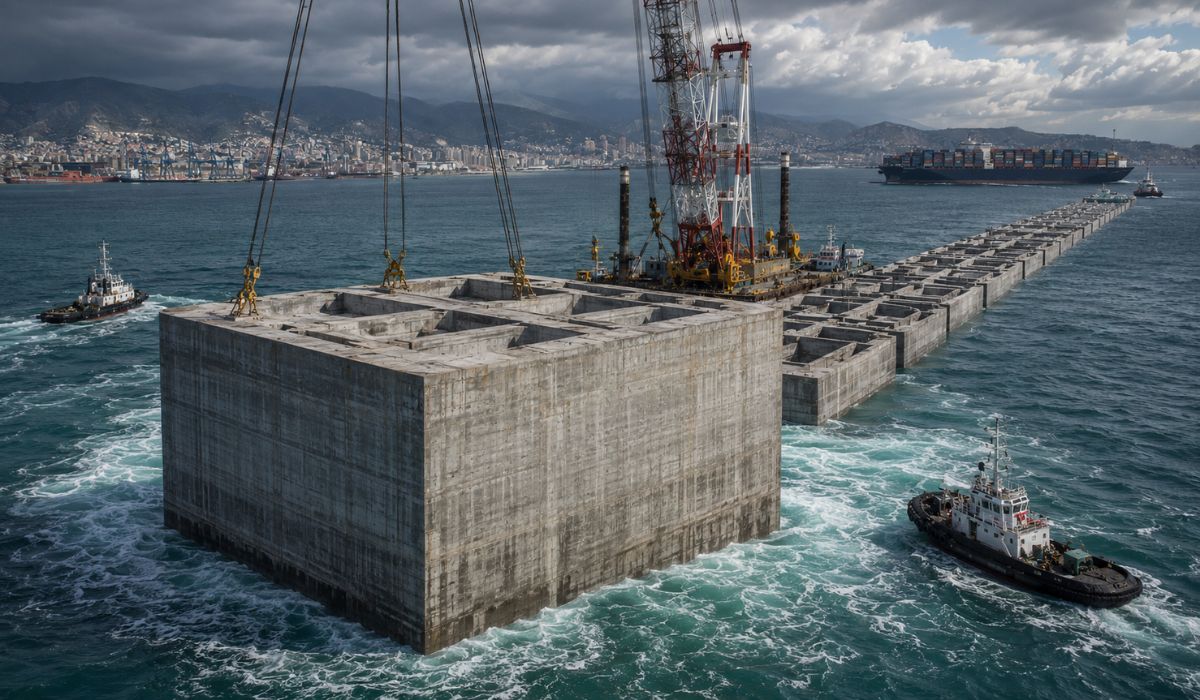

The new Genoa Breakwater has already surpassed 1 kilometer in length and uses concrete megacaissons installed in deep waters to redesign access to the Italian port in the Ligurian Sea.
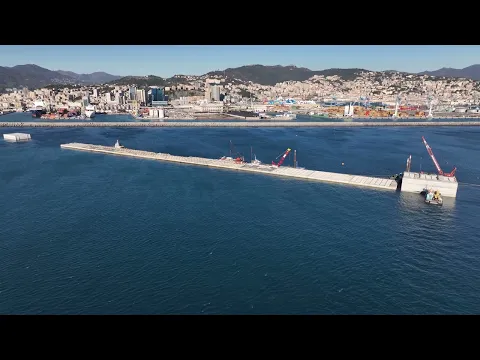
Italy has advanced in the construction of the new Genoa port barrier in the Ligurian Sea, which had already surpassed the first kilometer of development on June 9, 2026, after the installation of the 23rd caisson.
The project gained prominence months earlier, on November 5, 2025, with the installation of the first of the 35 concrete megacaissons planned for the deepest part of the work.
Positioned in the sea near the city’s port, this first structure is 33 meters high, 67 meters long, and 30 meters wide, dimensions comparable to an 11-story building.
-
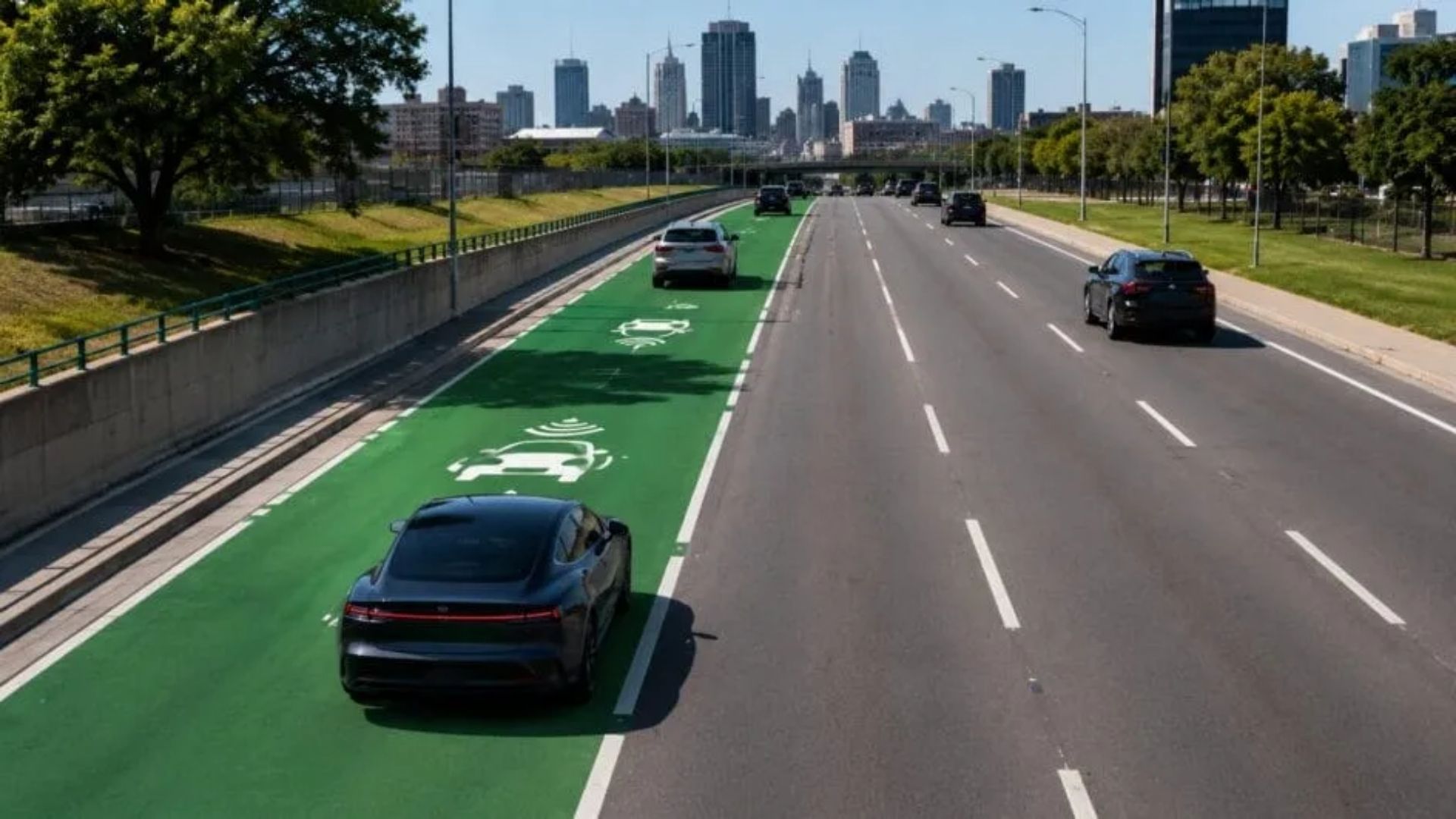
Wireless Charging Roads for Electric Vehicles: Detroit Implements Coil Technology, France Successfully Tests 300 kW Transfer Near Paris

-
Scientists Create Lab-Made Cell with Only 36 Genes That Eats, Grows, Copies DNA, and Divides, Raising the Question: Is This Life?

-
World’s Largest Camera, with 3,200 Megapixels, Begins Operation, Capturing Sky Images Every 30 Seconds for the Next Decade

-
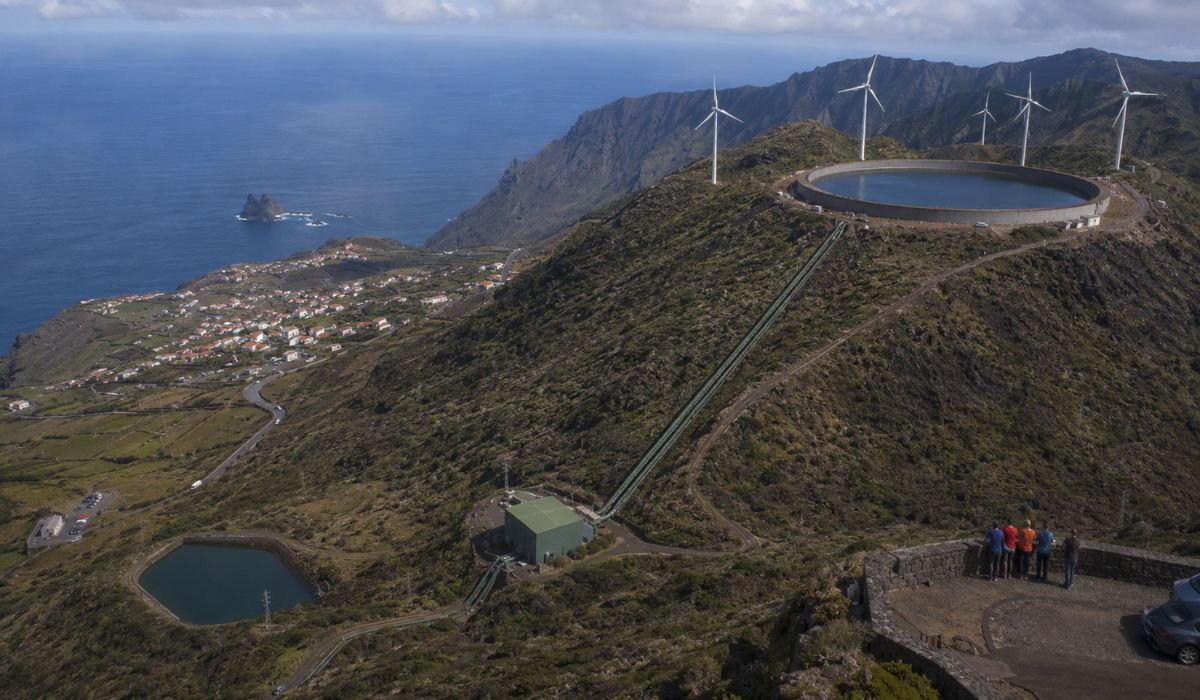
Canary Island with 11,000 Residents and Over 500 Volcanoes Uses Wind and Water as a Giant Battery to Demonstrate Remote Areas Can Survive Without Fossil Fuels



The block is part of the new Genoa Breakwater, an offshore barrier designed to reach 6.2 kilometers in its final configuration.
According to Webuild, the company leading the consortium responsible for the work, the structure should enhance the port’s protection against swells and allow the operation of new generation ships, up to 400 meters long.
The execution is carried out by the PerGenova Breakwater consortium, led by Webuild, on behalf of the Western Ligurian Sea Port System Authority.
The first megacaisson was laid 50 meters below sea level, a depth described by the builder as unprecedented for an offshore breakwater in Europe.
Concrete megacaissons form the barrier on the seabed
The cellular caissons used in the work are reinforced concrete modules formed by internal cavities.
These structures are manufactured in maritime yards, transported by specialized vessels, and sunk at the point planned by the project.
Once laid on a prepared base on the seabed, the modules receive water and rocky material inside the cells.

This filling increases the weight of the structure and contributes to its stability, according to the technical description of the project.
Each unit becomes a part of the sea barrier.
The blocks are installed side by side on the submerged foundation, creating the main outline of the new port protection.
In the upper stage, the project includes a superstructure designed to reduce wave action and improve operational safety in the port area.
The dimensions of the largest caissons are among the technical aspects highlighted by the project.
The official documentation states that the larger modules reach 33 meters in height, 30 meters in width, and more than 67 meters in length.
Installation in the Ligurian Sea requires a semi-submersible barge
The construction and positioning of the first mega-caisson involved the Tronds Barge 33, a semi-submersible barge equipped with a submersion system controlled by pumps.
This equipment allows the platform to partially sink and return to the surface, an operation necessary to handle large pieces in a maritime environment.
The mega-caisson was manufactured in the Vado Ligure basin, used as a production hub for the larger units and also for the standard dimension modules.
According to Webuild, the manufacturing of these elements occurs in parallel to meet the different fronts of the work.
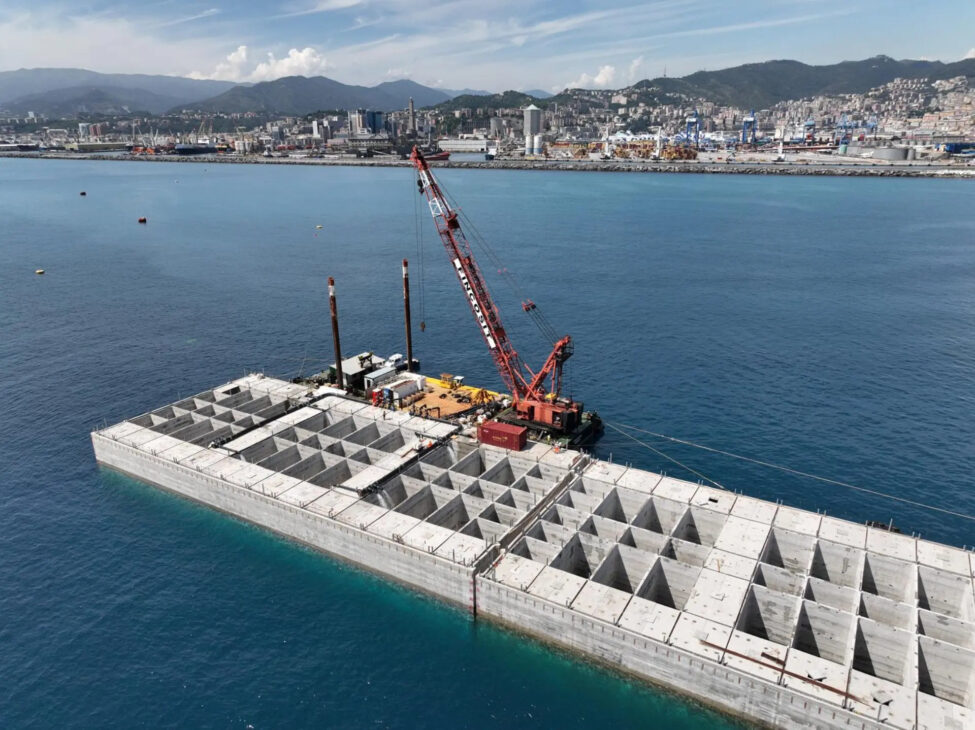
Before the installation of the caissons, the seabed undergoes remediation and consolidation stages.
In November 2025, the construction company reported that more than 2.3 million tons of gravel had already been laid and about 49 thousand submerged columns had been executed, totaling almost 560 thousand linear meters.
These gravel columns are part of the preparation of the base where the concrete modules are supported.
The project also includes the use of millions of tons of rocky material in the foundation, including material reused from the demolition of the old barrier, according to the official information of the work.
Port of Genoa prepares for 400-meter ships
The new barrier was designed to shift the port protection to a position further from the coast and improve access conditions to the port.
According to the project, the intervention will allow the reception of large container ships with more than 400 meters in length and 60 meters in width, as well as international class cruise ships.
The port of Genoa plays a logistical role in the Mediterranean and in connections with Northern Europe.
The project is presented by the Port Authority and Webuild as part of the strategy to strengthen the city in the Rhine-Alpine Corridor of the Trans-European Transport Network, known by the acronym TEN-T.
The barrier also has a maritime protection function.
By creating a new line in the open sea, the structure aims to reduce the effects of swells and improve access conditions to the terminals, in an area that brings together cargo operations, cruises, and port activities close to the urban fabric of Genoa.
New Genoa Breakwater Exceeds 1 Kilometer
The milestone of the first mega-caisson occurred in November 2025, but the work continued with new installations throughout 2026.
On April 28, 2026, Webuild reported the placement of the 20th caisson, a stage in which the barrier exceeded 880 meters in total length.
At that time, the set comprised three larger units and 17 standard modules.
On June 9, 2026, the company announced that the installation of the 23rd caisson led the new Genoa Breakwater to surpass the first kilometer of development.
The update also informed that the work continued on multiple fronts, with activities consolidating the seabed and operations at the offshore site.
The construction mobilizes engineers, technicians, maritime operators, divers, and professionals specialized in port logistics and open sea operations, according to Webuild.

The company classifies the intervention as one of the most complex maritime projects underway in Europe, a reference attributed to the depth of the seabed, the scale of the modules, and the coordination required between production, transport, and installation of the pieces.
The complete project is divided into phases.
The official documentation foresees, in the first stage, the construction of the new eastern entrance, with an access channel of more than 300 meters in width, expansion of the maneuvering area for ships, and widening of the Sampierdarena channel.
The second phase includes the completion of the section near the airport and the dismantling of the existing barrier.
The work in Genoa shows the adaptation of European ports to the operation of larger vessels, according to the information released by the entities responsible for the project.

In the Italian case, this adaptation involves the installation of concrete modules in deep waters, consolidation works on the seabed, and the use of specific equipment for the transport and settlement of the structures.