Portuguese
  Spanish


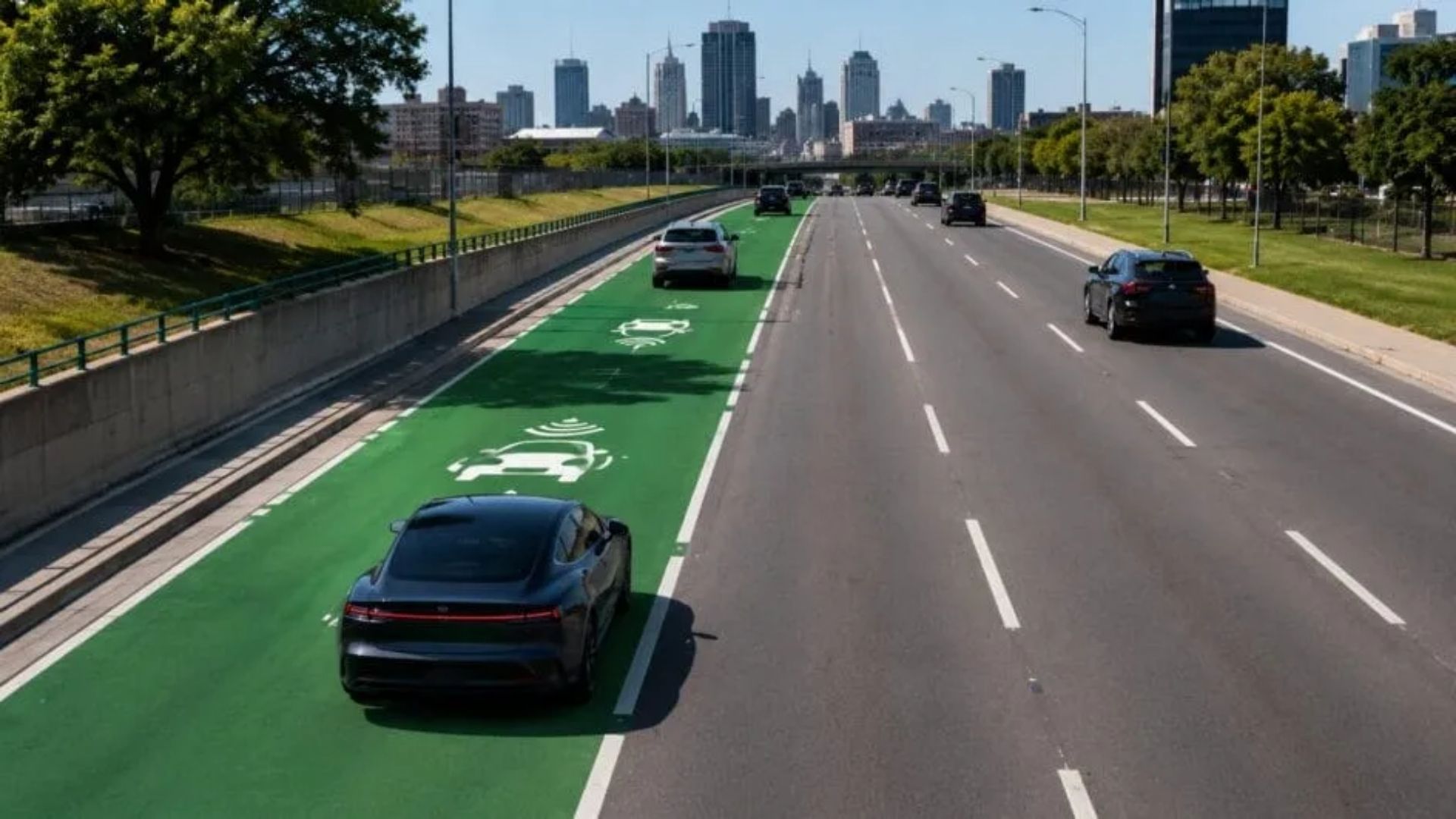

A seemingly ordinary street in Detroit, United States, hides a technology that seems straight out of a science fiction movie, as on a section of 14th Street in the Michigan Central district, electric cars can receive wireless charging while driving over the asphalt.
Instead of stopping the car, connecting a cable, and waiting for the battery to recharge, the path itself aids in the recharge, in a system that is in the testing phase but already operates on American public roads.
According to information released by the NSC Total portal, the secret lies in coils installed under the pavement, which operate by induction, a principle similar to that of wireless cell phone chargers, but on a much larger scale. When an electric vehicle equipped with a compatible receiver passes over the electrified area, the system activates the coils in the ground and creates a magnetic field, whose energy is captured by the car’s receiver and sent to the battery.
The asphalt of Detroit that charges in motion
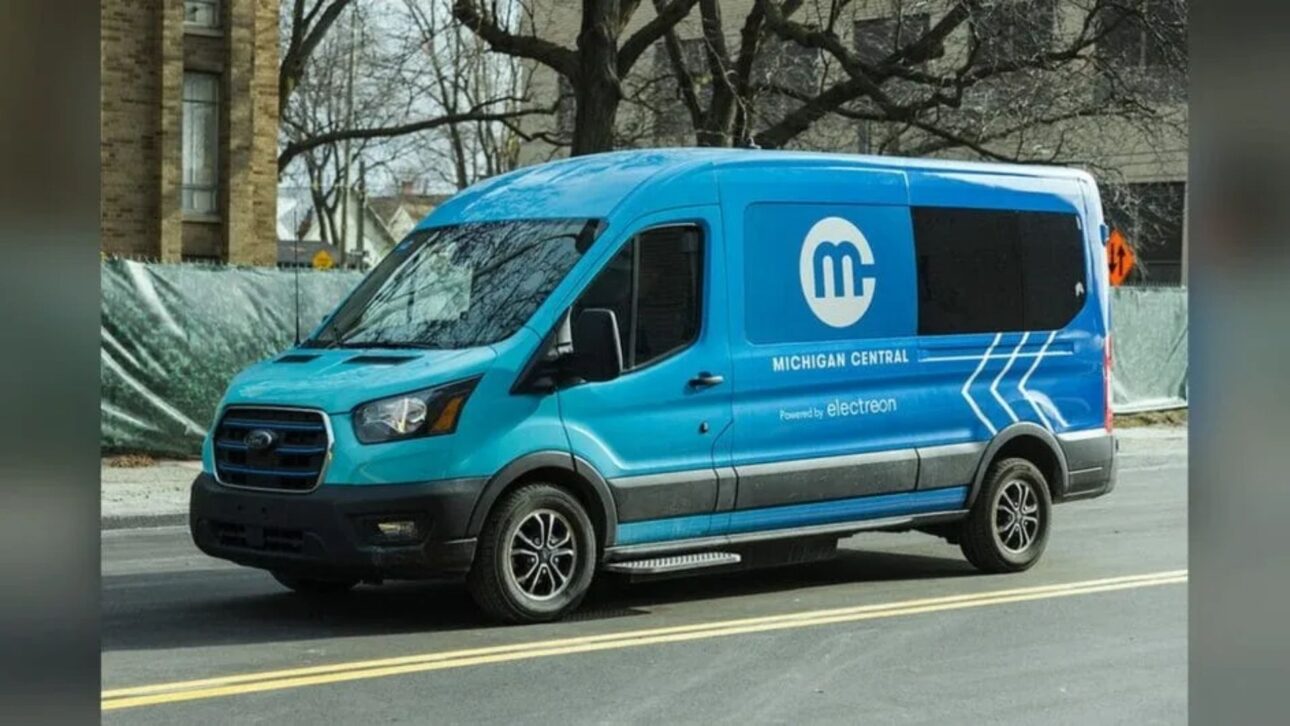
On a stretch of 14th Street, in the Michigan Central district, Detroit’s asphalt was prepared to transfer energy to electric cars without the need for a cable.
-
Scientists Create Lab-Made Cell with Only 36 Genes That Eats, Grows, Copies DNA, and Divides, Raising the Question: Is This Life?

-
World’s Largest Camera, with 3,200 Megapixels, Begins Operation, Capturing Sky Images Every 30 Seconds for the Next Decade

-
Canary Island with 11,000 Residents and Over 500 Volcanoes Uses Wind and Water as a Giant Battery to Demonstrate Remote Areas Can Survive Without Fossil Fuels

-
Brazilian Craftsman Builds Small Hydropower Plants Generating Over 1,000 kWh Monthly, Paying for Themselves in Just Over a Year





Instead of stopping the vehicle and connecting a charger, the road itself helps with recharging, in a solution that is still in the testing phase but already works on public roads in the United States.
The street, however, does not charge any electric vehicle that passes by because the vehicle needs to have specific equipment from Electreon.
According to the Detroit City Hall, the coils under the asphalt are only activated when a vehicle with an approved receiver passes over them, and the technology can work both with the car stationary and in motion.
The coils and induction under the pavement
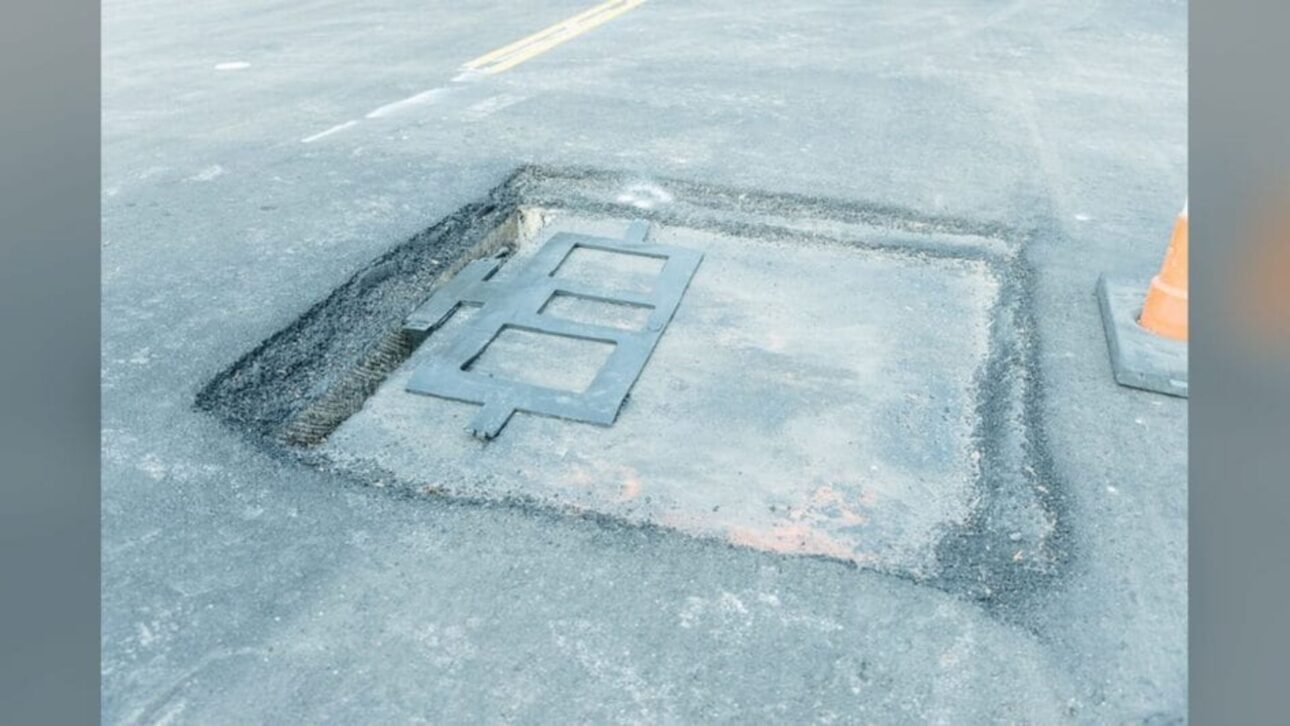
The operation of the electrified asphalt relies on coils installed under the pavement, which operate by induction, the same principle as wireless cell phone chargers, but on a much larger scale.
When a vehicle with a compatible receiver passes over the electrified area, the system activates the coils in the ground and creates a magnetic field.
This energy is then captured by the receiver installed in the car and sent to the battery, without the driver needing to touch any cable.
It is this setup under the asphalt that allows for energy transfer in motion, something that brings car recharging closer to the same logic used to charge a cell phone on a base.
Why wireless charging can change electric vehicles
The great promise of this type of asphalt is to reduce the so-called range anxiety, the fear of running out of battery before finding a charging point.
If technology advances, part of the energy spent during the journey could be recovered while the vehicle is in motion, which would not make traditional chargers disappear, but would open up space for a new way of thinking about electrical infrastructure.
The greatest impact could be on urban fleets, such as buses, vans, delivery trucks, and vehicles that follow repeated routes, where it would be enough to electrify strategic points of the route to reduce the need for long stops.
In Detroit, the tests include a Ford E-Transit adapted with a receiver from Electreon and, according to the company, the van traveled the electrified section under real traffic conditions, including cold, heat, and urban traffic.
Still an Urban Laboratory, Not a Mass Solution
Despite the progress, Detroit’s asphalt still does not charge like an ultra-fast highway charger, and the American section is more of an urban laboratory than a ready-to-use mass solution.
Wireless charging in motion remains an experiment on public roads, aimed at testing the technology in real conditions before any large-scale application.
Still, other tests show that dynamic charging could gain strength on larger roads, outside the urban environment.
The idea is that, with more power and longer sections, the same principle applied to Detroit’s asphalt could also serve higher traffic highways, where vehicles spend more time in motion.
The A10 Highway in France and Over 300 kW
In France, a project led by VINCI Autoroutes, in partnership with Electreon, Gustave Eiffel University, and Hutchinson, installed dynamic wireless charging on 1.5 km of the A10 highway, near Paris.
Four prototype vehicles, including a truck, a van, a car, and a bus, began to run on the asphalt section in real traffic.
According to VINCI, the initial results indicated a transfer of more than 300 kW of instantaneous power and more than 200 kW of average power under ideal conditions.
The company states that, on a larger scale, this type of solution could reduce the size of batteries, especially in heavy vehicles, which helps explain the interest in taking electrified asphalt beyond urban tests.
The asphalt that charges electric cars in motion is already a reality in tests, with Detroit using coils under the pavement that transfer energy by induction, without cable and without stopping, but only for vehicles with an approved receiver from Electreon.
The system, according to the Detroit City Hall, activates the coils only when the compatible car passes over them, and still functions more as an urban laboratory than as a mass solution.
In France, a project by VINCI Autoroutes with partners installed dynamic charging over 1.5 km of the A10 highway, where, according to the company, four prototypes transferred more than 300 kW of instantaneous power under ideal conditions, a power that, on a larger scale, could reduce the size of batteries.
The technology, therefore, still depends on prepared vehicles and further advancements, but points to a new way of thinking about electric vehicle charging.
And you, what do you think of the asphalt that charges electric cars on the move, tested in Detroit and France? Do you believe that wireless charging on roads can reduce range anxiety and change urban fleets? Share your opinion and exchange ideas with other readers about electric mobility and infrastructure.