Portuguese
  Spanish


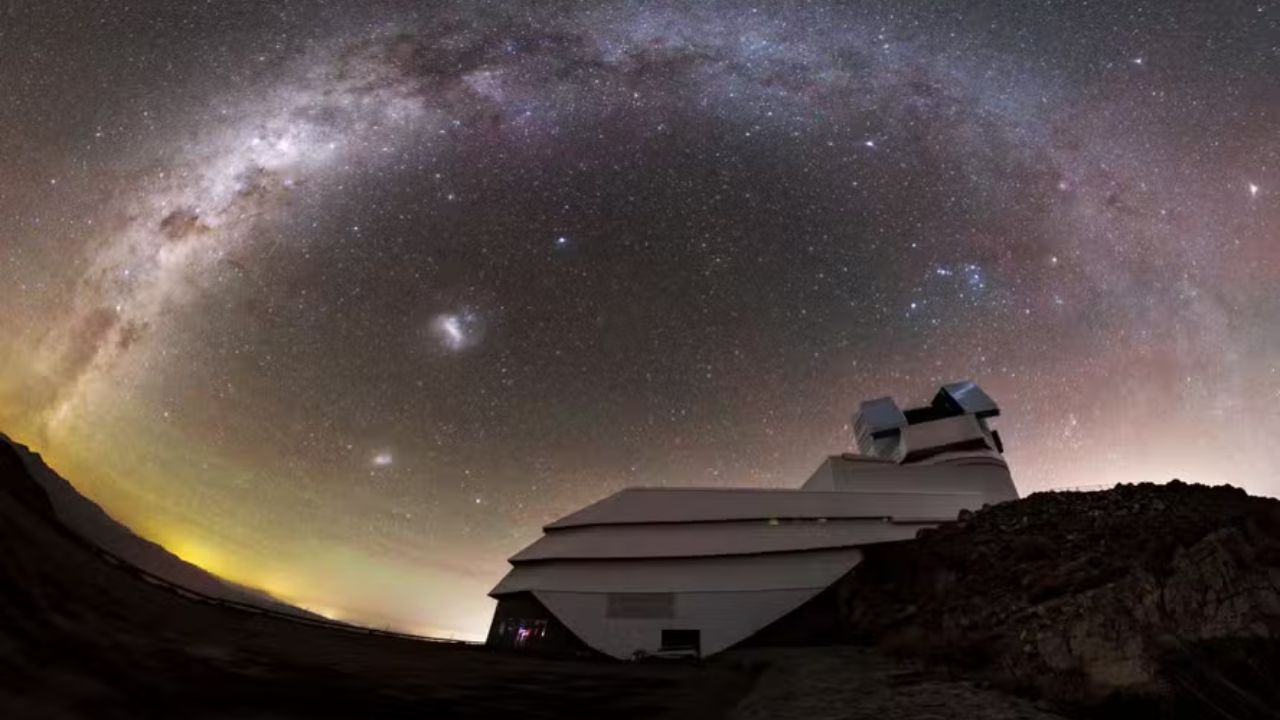

Vera C. Rubin Observatory begins ten-year survey with 3,200-megapixel camera, 10 terabytes of data per night, and millions of astronomical alerts.
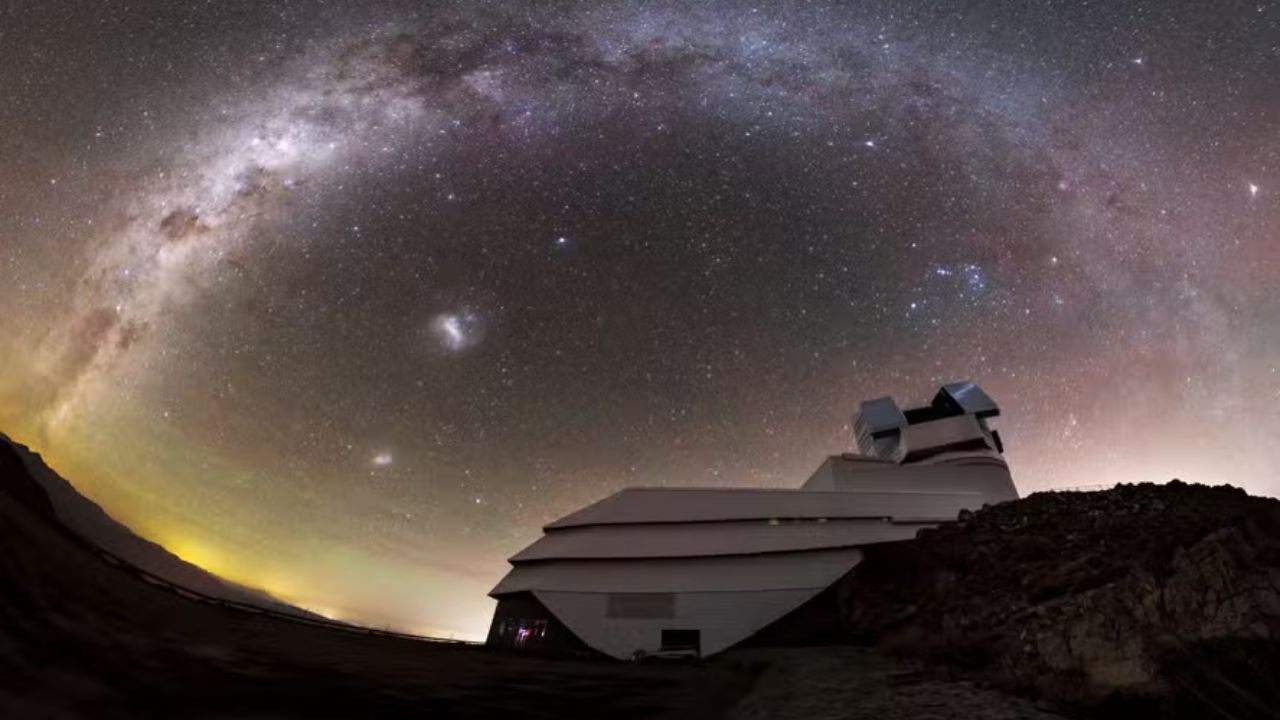
A 3,200-megapixel camera installed at the Vera C. Rubin Observatory in Chile officially began operation on June 30 to start the most comprehensive continuous sky survey ever planned. Over ten years, the equipment will repeatedly capture the Southern Hemisphere, forming a sequence capable of revealing changes in the brightness, position, and appearance of billions of celestial objects.
Called LSST, short for Legacy Survey of Space and Time, the project will produce a new image approximately every 30 or 40 seconds. By combining photographs taken on different nights, researchers will be able to track stellar explosions, asteroid movements, comet passages, and transformations in distant regions of the cosmos.
The operation is also expected to generate about 10 terabytes of information per night and issue up to seven million automatic alerts when detecting any changes in the sky. The structure will allow other telescopes to quickly react to events that require immediate observation.
-
Canary Island with 11,000 Residents and Over 500 Volcanoes Uses Wind and Water as a Giant Battery to Demonstrate Remote Areas Can Survive Without Fossil Fuels

-
Brazilian Craftsman Builds Small Hydropower Plants Generating Over 1,000 kWh Monthly, Paying for Themselves in Just Over a Year

-
Unknown Molecule Possibly Detected on Pluto and Titan by James Webb Telescope

-
Global Population Estimates May Be More Inaccurate Than Thought: Study Finds Rural Areas Underestimated in 35 Countries, Sparking Debate Over Earth’s 8.2 Billion Inhabitants



Vera C. Rubin Observatory turns the sky into a ten-year sequence
The survey was designed to return to the same areas of the sky every few nights. Instead of producing only isolated images, the system will build a timeline of each observed region. By the end of the mission, the same section may have been photographed approximately 800 times.
This repetition will allow for comparing the sky at different moments and locating phenomena that could remain invisible in a single observation. The result will be similar to a time-lapse video, in which photographs captured at different intervals are combined to show gradual changes or rapid events.


“Today, we begin filming the greatest cosmic movie ever made,” declared Brian Stone, interim director of the United States National Science Foundation, NSF.
For Stone, the start of operations represents the culmination of decades of planning and technological development. According to him, the observatory is expected to push the boundaries of knowledge every night it operates.
Camera will take a photograph every 30 or 40 seconds
Traditional observatories usually dedicate part of their time to stars, planets, galaxies, or other previously selected targets. The Vera C. Rubin Observatory adopts a different strategy. Its camera was built to capture extensive areas of the sky at short intervals, repeating this process over the years.
This combination of wide field and high frequency will allow the identification of objects that move or change rapidly.
Among the phenomena that can be monitored are:
- supernova explosions;
- changes in the brightness of stars and galaxies;
- movement of asteroids;
- displacement of comets;
- distant objects from the Solar System;
- events still unknown to researchers.
Phil Marshall, deputy director of operations at Rubin, told The New York Times that the survey was developed to observe even what scientists do not yet know they should be looking for.
For him, the set of information should become a “true gold mine for science.”
Vera C. Rubin Observatory will produce 10 terabytes of data per night
The frequency of the images will create an unusual flow of information even for large astronomical projects. It is estimated that approximately 10 terabytes will be collected each night of observation. The volume corresponds to hundreds of films in 4K resolution.
This data will need to be processed continuously so that the systems can compare current images with previous records and recognize relevant changes.
The operation can be summarized in four steps:
- the camera photographs a large region of the sky;
- the systems receive and process the new image;
- the record is compared with previous observations;
- detected changes generate alerts for the scientific community.
The goal is not just to store photographs, but to transform the material into a database that can be researched and used by scientists from different countries.
Up to seven million alerts may be sent
When an object varies in brightness, changes position, or shows another visible alteration, the system can produce an automatic alert. The expectation is up to seven million alerts during operations, creating an almost immediate tracking network of the sky.
These alerts can guide telescopes located in other parts of the world. Upon receiving a notification, researchers can direct their own instruments to the same point and obtain additional data.
This process will be especially important for short-duration events, which may disappear before a conventionally scheduled observation. A stellar explosion, for example, can be identified by Rubin and quickly followed by other equipment with different capabilities.
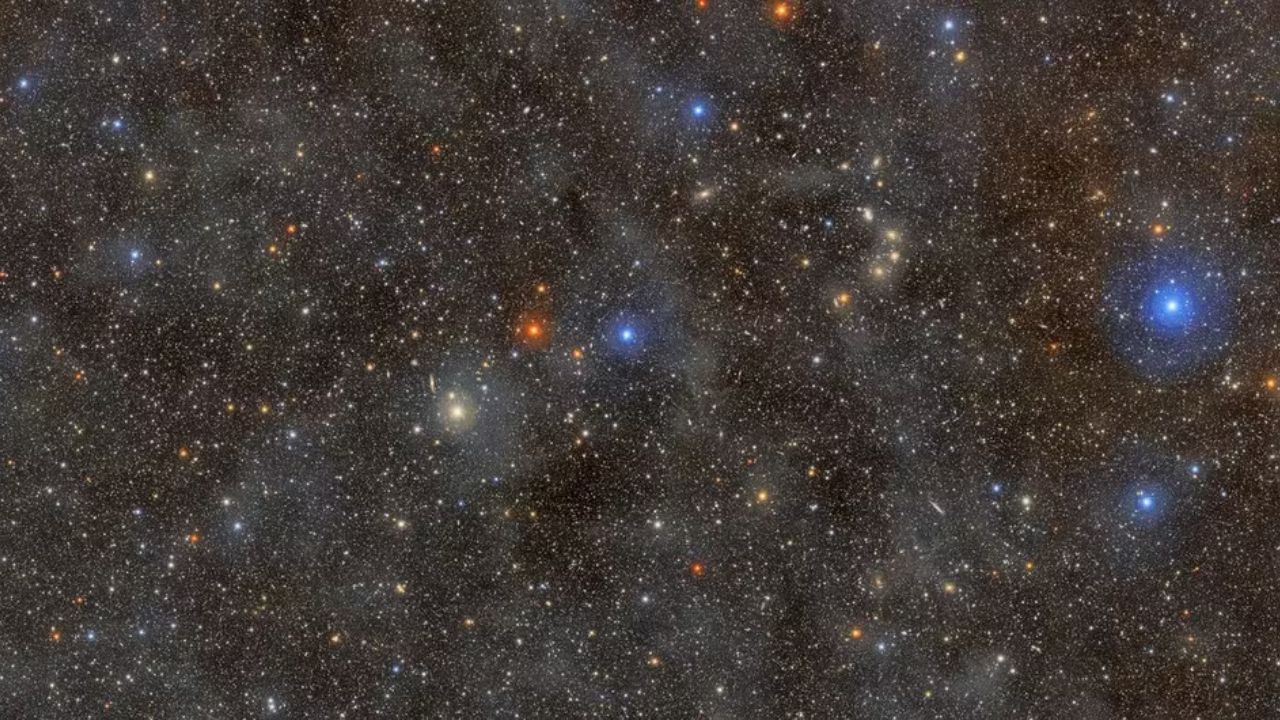
The LSST is expected to expand the catalogs of existing objects in the Solar System and in much more distant regions. During the ten years, the Vera C. Rubin Observatory will record billions of celestial bodies. The observations will allow measuring movements, comparing brightness, and identifying objects that have not yet appeared in the databases.
Frequent monitoring will be particularly useful for locating asteroids and comets, as their positions change relative to the background formed by the stars. In the case of galaxies and other distant objects, the repetition of images will help observe transient events and build more detailed maps of the distribution of matter in the Universe.
Tests have already located more than 11,000 unknown asteroids
Before the official opening of the survey, the observatory underwent a series of technical evaluations. Even at this stage, the camera demonstrated its capability by identifying more than 11,000 asteroids that had not yet been recorded.
Among them were 33 near-Earth objects and hundreds of bodies located beyond Neptune’s orbit. The equipment also captured images of the interstellar comet 3I/ATLAS, whose origin is outside the Solar System.
These results were obtained while engineers and scientists were still checking the quality of the photographs, the stability of the instruments, and the reliability of the systems responsible for continuous operation.
Vera C. Rubin Observatory will investigate dark matter and energy
In addition to recording rapidly changing phenomena, the survey is expected to contribute to the study of two of the biggest questions in current astronomy.
Dark matter cannot be observed directly, but its existence is deduced from the gravitational effects exerted on galaxies and other bodies. Estimates indicate that it accounts for approximately 85% of all matter in the Universe.
Dark energy, on the other hand, is associated with the acceleration of cosmic expansion, although its nature is still not understood. By mapping billions of objects and tracking their distribution over a large area, the Rubin can provide new data for research on these invisible components.
Darío Gil, Under Secretary of Science at the United States Department of Energy, stated that the project should record the dynamic nature of the cosmos and open perspectives on its greatest mysteries.
“With its world-class design and tools, the Rubin Observatory will capture the dynamic nature of our cosmos,” declared Gil. According to him, investigating dark matter and energy also means seeking a broader understanding of the fundamental laws of the Universe.
Repeated recording will allow finding what a single image does not show
An astronomical photograph reveals how a certain region appeared at the time of exposure. The Rubin survey will add the dimension of time. By observing the same point hundreds of times, scientists will be able to distinguish permanent objects from temporary events.
A bright spot that appears and disappears may indicate an explosion. Small position changes may reveal an asteroid. Gradual changes in brightness may point to transformations in distant stars or systems.
The scientific strength of the project will therefore lie not only in the camera’s resolution but in the systematic comparison of images taken over a decade.
Project required more than twenty years of development
The start of operations ends a wait of approximately three decades since the initial conception of the survey. More than twenty years were dedicated to developing the technologies necessary to build, install, and operate the system.
In the months leading up to the official start, the teams conducted tests to confirm whether the camera would maintain image quality and if the equipment could operate stably during successive observations.
Bob Blum, director of the Vera C. Rubin Observatory at NSF NOIRLab, highlighted the accumulated work of the teams involved. “It is incredible and rewarding to be here at this moment, after more than two decades of exceptional work by our dedicated team,” he stated.
For Blum, the project is expected to change the way astronomy and astrophysics are conducted, mainly due to the amount of information that will become accessible to researchers.
The 3,200-megapixel camera was not created just to produce more detailed photographs. Its main advantage lies in the ability to observe extensive areas repeatedly, transform changes into alerts, and build a visual memory of the sky over ten years.
With 10 terabytes of data per night, billions of objects cataloged, and each region photographed about 800 times, the project will form an archive capable of tracking the Universe in motion. The Vera C. Rubin Observatory thus begins a stage where astronomy stops merely observing portraits of the cosmos and starts gathering the scenes of a story recorded night after night.
With information from Revista Galileu