Portuguese
  Spanish


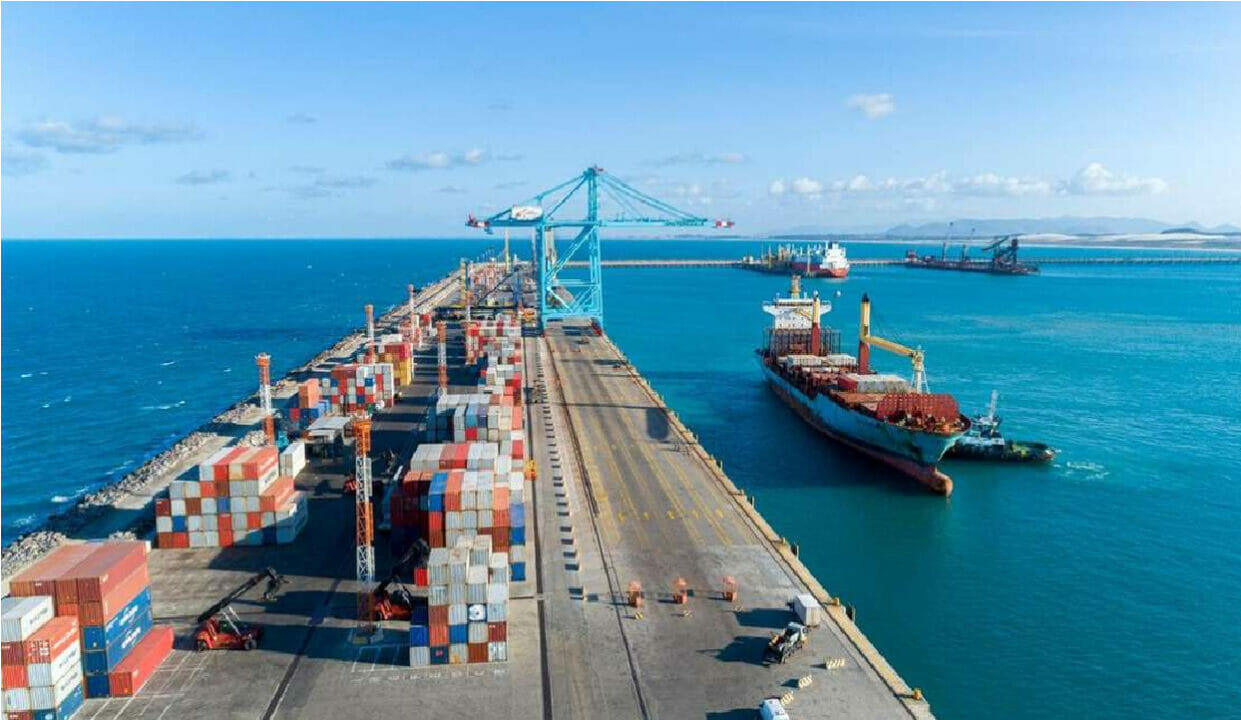


National Piloting Is Not a Very Common Topic, but It Is an Extremely Important Profession for Commercial Navigation in Brazil
The profession of pilot in Brazil is a crucial activity for commercial navigation in the country. However, there is much misinformation about the salaries and costs associated with this profession. In this article, we clarify some important points about Brazilian pilots and their role in maritime transport, according to the website Sociedade Militar.
One of the common misconceptions is the idea that pilots in Brazil receive monthly salaries. In reality, they do not have defined and mandatory wages from an employer. Instead, they are selected through a public selection process conducted by the Brazilian Navy to work in a private commercial activity, in which the shipowner pays for piloting services.
After being qualified, pilots have the option to open their own piloting company or to associate with an existing one in the area for which they were qualified. As partners of these companies, they do not receive fixed salaries but rather a share of the profits after covering the costs related to service provision.
-
Brazil’s Maceió Port Joins Decarbonization Efforts with Study to Supply Clean Energy to Cruise Ships

-
Brazilian Port Expands Ship Capacity to 9.5 Meters, Boosting Cargo Transport and Reducing Logistics Costs
-
New Smart Radar Begins Issuing Fines to Solo Drivers in Carpool Lanes, Uses Cameras to Count Occupants, Changing Traffic Enforcement Rules on Busy European Roads

-
Why can the crane operator only obey the correct signalman on the construction site: among dozens of workers, a hand raised by the wrong person can confuse the maneuver and turn a load of tons into an immediate risk.



Variation of Earnings and Different Realities
The statement that pilots earn between “R$ 50 thousand per month to R$ 300 thousand per month” is inaccurate, as it would imply fixed and mandatory wages, which is not the case with piloting. The earnings of pilots vary significantly within the same piloting area and between different areas, depending on the number of ships serviced during a given period.
While in the largest port cities in Brazil, piloting companies tend to be profitable, this is not the reality everywhere. In smaller ports, with less ship traffic, companies may not have enough resources to cover their operational costs. In some cases, this can even lead to the extinction of the piloting area, as happened with the pilots in Camocim, Ilhéus, and Sergipe.
Cost of Piloting vs. Service Efficiency
Despite discussions about the costs of piloting, it is important to consider the efficiency and benefits that this service offers to the Brazilian port system. In 2021, the Transport and Logistics Laboratory (LabTrans) of the Federal University of Santa Catarina (UFSC) analyzed the cost of piloting in relation to soybean exports, one of the main products of Brazilian agribusiness.
The study revealed that, at the Port of Santos, the cost of piloting is R$ 0.70 per ton of soy transported. This is significantly lower than costs in ports with similar characteristics in other countries, such as Argentina and the United States. In Quequén and Bahía Blanca, Argentina, the service costs R$ 0.79 and R$ 1.53 per ton, respectively. In Norfolk, the United States, the price charged is R$ 1.25 per ton.
Furthermore, the value of piloting in Brazil is much lower than the costs charged by the port terminal for loading the cargo and by the ship owner for transporting it.
In summary, pilots play a fundamental role in Brazilian maritime transport, ensuring the safety and efficiency of port operations. Although there is variation in pilots’ earnings and discussions about costs, piloting in Brazil remains an essential part of the country’s logistical infrastructure.