






 Portuguese
  Spanish




The Japanese government bets on monitoring technology to try to contain a record wave of dangerous encounters between humans and bears, a phenomenon that has already changed the routine of entire communities in the north of the country
The fear of encountering a bear along the way is no longer a distant concern for thousands of residents in northern Japan. In light of the significant increase in attacks recorded in recent months, the Japanese government decided to act with a technological solution: the installation of more than 800 cameras in the mountainous areas of the country to closely monitor the populations of these animals.
The announcement was made this Thursday (2) by the Ministry of the Environment of Japan, according to information released by the channel O Liberal. According to the department, since April 1st of this year, at least five people have died in bear attacks in the Tohoku region, in the north of the country — a number that already surpasses most of the previous years and follows a record of 13 deaths recorded in 2025. A sixth death is still being investigated by local authorities.
A routine marked by constant fear


In this sense, the daily life of Tohoku residents has changed drastically in recent months. Reports of bears spotted in commercial spaces, public parks, and even near schools have become frequent, fueling a constant atmosphere of tension among the local population. In June, for example, an episode drew national attention: police, hunters, and public agents needed four whole days to capture a bear in the city of Utsunomiya, north of Tokyo, which forced several schools in the region to temporarily suspend classes.
-
Workers Installing Fiber Optics in French Town Discover 75 WWII-Era Concrete Training Bombs, Each Weighing 250 Kilograms

-
Dogs Eating Grass: A Simple Act That Debunks Long-Held Myths About Canine Behavior

-
Brazil Hosts the World’s Largest Continuous Mangrove Belt, Acting as a Natural Shield Against Erosion and Extreme Weather

-
Brazilian Government Offers Free New ID Cards Without Appointment for Four Days, Including Night and Saturday Services for Citizens Aged 14 and Up.


On the other hand, Japanese scientists have already identified part of the causes behind this sudden increase in incidents. According to them, the phenomenon is directly linked to two combined factors: the growth of the bear population over recent years and the constant decrease in the number of inhabitants in rural areas, which reduces human presence in previously busier areas and expands the circulation space for these animals.
How monitoring with the new cameras will work
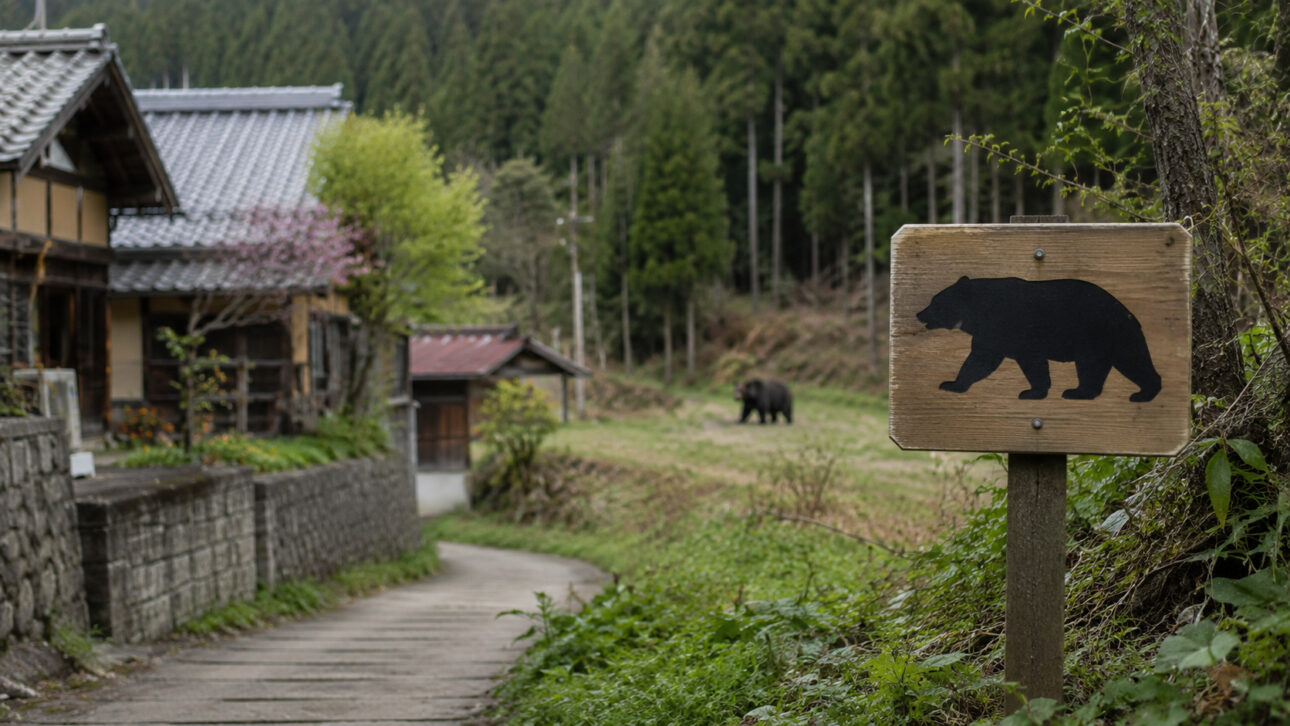
In light of this scenario, Japanese authorities will focus the initial effort on six of the main bear populations identified in the Tohoku region. However, the expectation is that the operation will not be restricted to this area: the plan foresees the gradual expansion of monitoring to the entire Japanese territory over the next four years.
To enable this more accurate census, the responsible teams placed pots containing a mixture of honey and wine at various strategic points in the mountains, positioned at approximately the height of an adult person’s head. The logic behind the bait is simple: when bears stand on their hind legs to reach the sweet mixture, the cameras can capture the characteristic white markings present on each animal’s chest — a true natural “identity card” that allows for the identification of specific individuals within the monitored population.
Until now, this type of survey was conducted in isolation by local communities, each following their own methods and schedules — which made it difficult to form a reliable national overview of the actual size of the bear population in the country. Meanwhile, with the new unified camera system, the goal is precisely to standardize this data collection, allowing different regions to work with comparable information among themselves.
Even so, while the new monitoring system is not fully implemented, Japanese authorities reinforce basic safety recommendations for those who need to travel through the mountainous areas of the country — which, it is worth remembering, cover about 80% of the entire Japanese territory. Among the main guidelines are to avoid climbing the mountains alone, as this condition is present in approximately 80% of recorded incidents, in addition to carrying a bell to alert animals of human presence and carrying bear-specific pepper spray as an additional protection measure.


