Portuguese
  Spanish


The Victus Haze mission deployed the Jackal satellite, from True Anomaly, to hunt the Puma satellite, from Rocket Lab, in Earth’s orbit, in a military exercise that simulated the interception of an adversary spacecraft
For the first time in history, a private spacecraft intercepted another private spacecraft in orbit on behalf of a military force. According to Olhar Digital, in an article from July 3, 2026, the Victus Haze mission, operated by the US Space Force, completed the first tactical interception between two satellites in orbit, 11 hours ahead of the official 72-hour deadline.
The feat involved two American companies and no state spacecraft. The Jackal satellite, from True Anomaly, pursued, reached, and photographed the Puma satellite, from Rocket Lab, while both orbited around the Earth, according to Olhar Digital. The exercise served to simulate what the Space Force would do in the face of a real adversary spacecraft.
The hunt in orbit: how the Jackal found the Puma
The choreography began long before the encounter. According to Olhar Digital, the JACKAL-0004, a vehicle from True Anomaly, went into space in May 2026 aboard a Falcon 9 rocket, from SpaceX, and waited in orbit for the signal to start the operation.
-
Scientists Predict Earth’s Habitable Lifespan: 1.8 Billion Years Before Oceans Evaporate and Sun Forces Planet Out of Life Zone

-
LG Unveils XBOOM Stage 501 Portable Speaker with 25-Hour Battery, AI Karaoke, and Sound by will.i.am in Brazil

-
Scientists Warn San Andreas Fault Holds Highest Seismic Tension in 1,000 Years, Renewing Fears of “The Big One” Megaquake on U.S. West Coast

-
Brazil Advances with 14-X Hypersonic Project to Achieve Speeds Over Mach 5, Surpassing Concorde, After Two Decades of Research




The target arrived later, and then the real chase began. Once both satellites were in space, the duo executed the complete sequence of a military interception: target acquisition, orbital rendezvous, controlled approach, tracking, imaging, and characterization of the pursued spacecraft, as Olhar Digital details, with each vehicle returning to its base orbit at the end of the exercise.
In practical terms, the Jackal did with the Puma what a fighter jet does with an invading aircraft: got close, identified, photographed, and cataloged the object, all at thousands of kilometers per hour and without physical contact.
16 hours and 42 minutes: the rocket that launched in record time
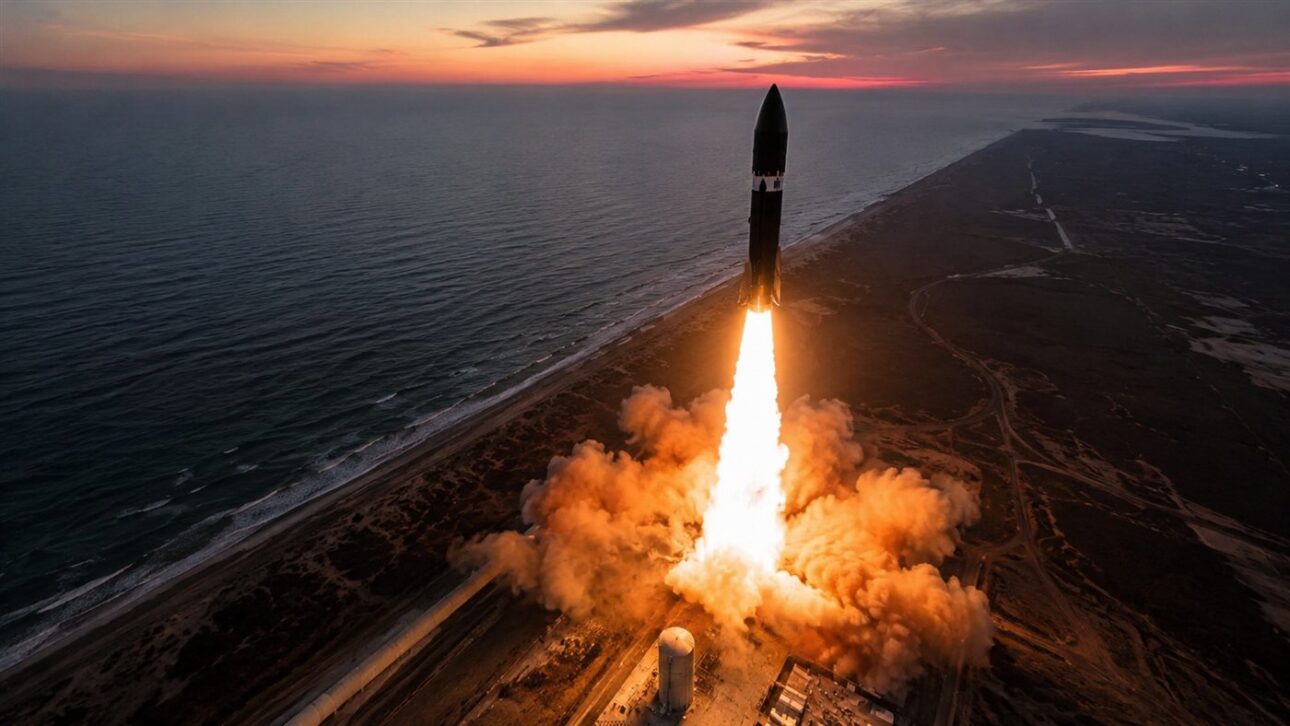
The second half of the mission tested the speed of the industry. According to Olhar Digital, the Puma satellite, from the Pioneer class, was launched on June 19, 2026, by a Rocket Lab Electron rocket, just 16 hours and 42 minutes after the company received the official launch notification.
The number is at the heart of the responsive launch concept. A military satellite left the hangar and reached orbit in less than a day’s work, something unthinkable in the era when space missions took years between ordering and liftoff. For an armed force, this agility means being able to replace or position an eye in the sky almost at the speed of a crisis.
The 72-hour deadline beaten with 11 hours to spare
The mission clock had an owner. According to Olhar Digital, the Space Force command set a 72-hour window for the entire orbit operation to be completed, and the exercise ended 11 hours before the deadline.
The spare time is not a scheduling detail, it is the result the military wanted to measure. Intercepting an object in orbit within a combat timeframe, not a calendar one, is exactly the capability that separates a scientific space program from a defense space program. Victus Haze proved that the calculation closes with surplus, and it did so using ships purchased from private suppliers, not its own fleet.
Mosaic: the software that planned the interception alone
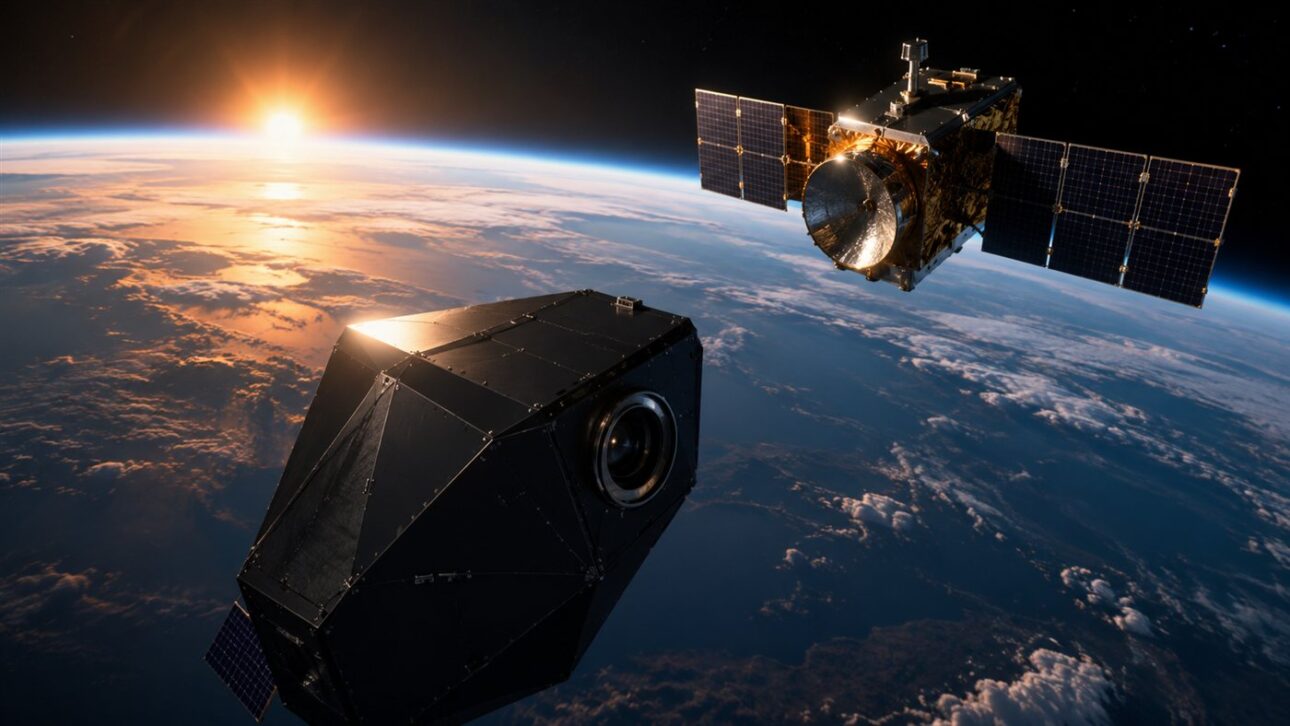
Behind the maneuver was a digital brain. According to Space.com, True Anomaly handed control of the Jackal to Mosaic, the company’s own space superiority software, which executed the planning of the strike against Puma.
The detail changes the nature of the game. The orbital hunt was not piloted maneuver by maneuver by human operators, it was planned by an autonomous system that calculated approaches, windows, and trajectories, as Space.com describes. During the chase, the Jackal demonstrated proximity operations and satellite image identification, the two central skills of any military inspection in orbit.
Autonomy also solves an unavoidable physical problem. A satellite in low orbit completes a full circle around the Earth in about 90 minutes, and maneuver windows open and close in seconds of calculation, too much time for the traditional human decision chain. Handing the wheel to software trained for this orbital chess was less a choice of convenience and more a requirement of the very physics of the problem.
Private ship hunting private ship: the new defense market
The commercial arrangement of the mission says as much as the maneuver. The Space Force did not build either of the two vehicles: it hired a private ship from True Anomaly for the role of hunter and another private ship from Rocket Lab for the role of target, turning the interception into an off-the-shelf service.
This model mirrors what SpaceX did with cargo and astronaut transportation, now applied to space warfare. Instead of decades-long state programs, the Pentagon now hires startups for the capability to inspect, track, and ultimately neutralize objects in orbit. For companies, it opens a billion-dollar and recurring market; for the military force, it cuts costs and timelines in one stroke.
Why the US wants to intercept satellites
The mission was not born out of scientific curiosity. According to Space.com, the Space Force treats the advancement as a response to the growing threat of non-cooperative satellites, the so-called objects that change orbit, approach American assets, or behave suspiciously without explanation.
The Victus Haze trial precisely simulated the interception and characterization of a potential adversary ship, according to Olhar Digital. The declared objective is to demonstrate the capability to deny and neutralize space threats, which in practice puts Earth’s low orbit back on the map of military disputes, alongside sea, land, air, and cyberspace.
What this changes for Brazil and the space race
For the Brazilian reader, the message is less distant than it seems. Brazil operates observation and communication satellites on which crop forecasting, Amazon monitoring, and telecommunications depend, and the existence of ships capable of approaching and inspecting any object in orbit changes the board for all countries with assets in space, including those not participating in the arms race.
There is also the industrial angle. The Alcântara Space Center, in Maranhão, competes for clients precisely in the commercial launch market that Rocket Lab has just redefined with the mark of 16 hours and 42 minutes between the call and the launch. The more responsive launch becomes a military and commercial requirement, the more valuable a spaceport near the equator becomes, and this is a card that Brazil still has up its sleeve.
The geographical position of Alcântara reduces the fuel needed to reach most orbits, and it is exactly this type of physical advantage that rapid launch companies seek when the military client demands launch within hours. If the market opened by Victus Haze grows at the pace the contract suggests, well-located spaceports cease to be a diplomatic showcase and become a contested strategic asset.
The Next Step: From Encounter to Physical Engagement
The next chapter is already outlined. According to Space.com, a physical engagement could be the next logical step in the Space Force’s plans, which would elevate the exercises from the current stage of photographing and cataloging to the stage of directly interfering with a target in orbit.
If and when this happens, the frontier will have been completely crossed: the first generation of US orbital combat ships will not come from a state arsenal, but from private production lines, with autonomous software in command of maneuvers and contracts signed in months, not decades. The Victus Haze will be recorded as the day a private ship hunted another in orbit on a military order, and when space ceased to be just the stage of exploration to also become a theater of operations.
Tell us in the comments: is hiring a private ship for a military mission the inevitable future or a risk that countries will regret taking?