






 Portuguese
  Spanish
  5 min of reading
  0 comments


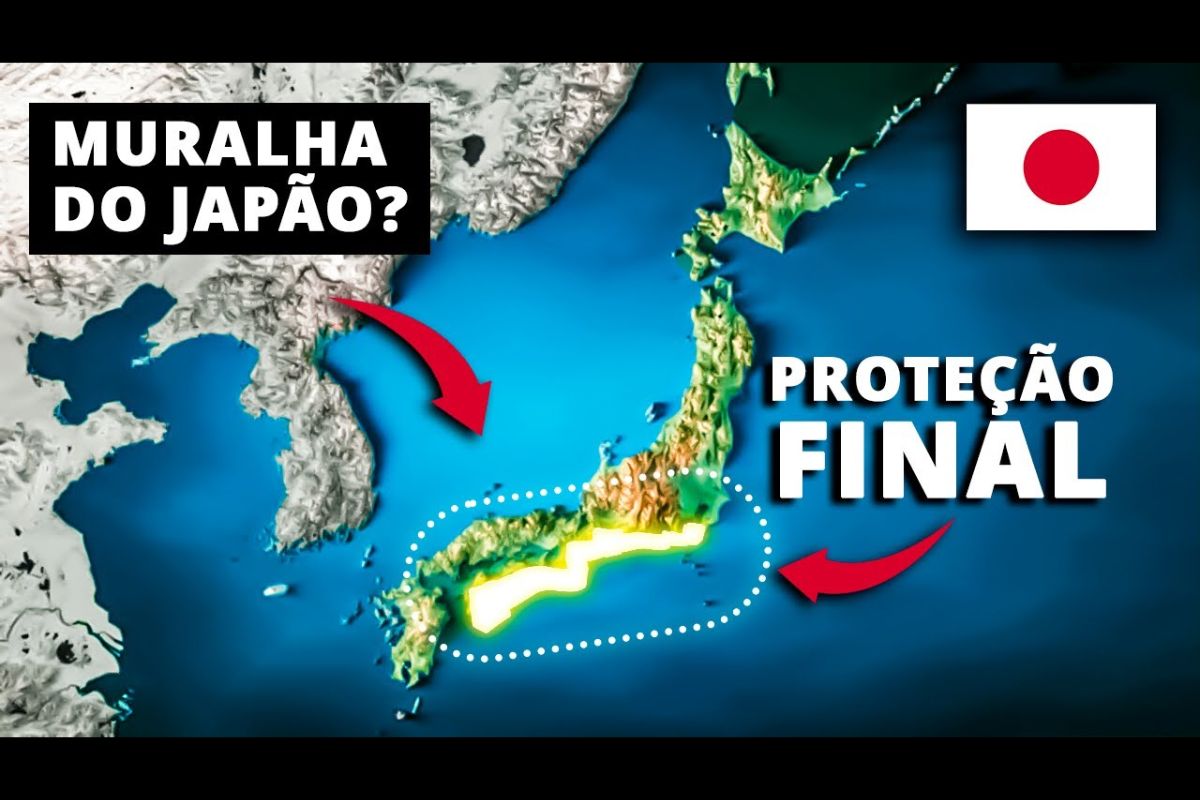
An Unprecedented Coastal Infrastructure, Started After 2011, Raises Walls Up to 12 Meters Along the Northeast Coast of the Country. Japan Builds a 400 Km Wall with a Budget of US$ 12.7 Billion, a Promise to Save Lives, Delivery Schedule by 2030, and Controversy Over Blocking the Sea View and Affecting Local Tourism.
After the earthquake and tsunami on March 11, 2011, the country adopted an unprecedented coastal defense strategy. It involves sections that reach up to 15 meters in height, designed to reduce wave energy, gain critical evacuation minutes, and limit infrastructure losses. Some segments are already completed, while others are still under construction in a continuous building regime.
The project totals 30 million cubic meters of concrete and mobilizes over 50,000 workers, operating continuously. The central guideline is simple and technical: it is not about stopping a tsunami, something physically impossible, but about dampening its force and ensuring effective escape routes and shelters in the first few minutes after the alert.
Why the Wall Exists
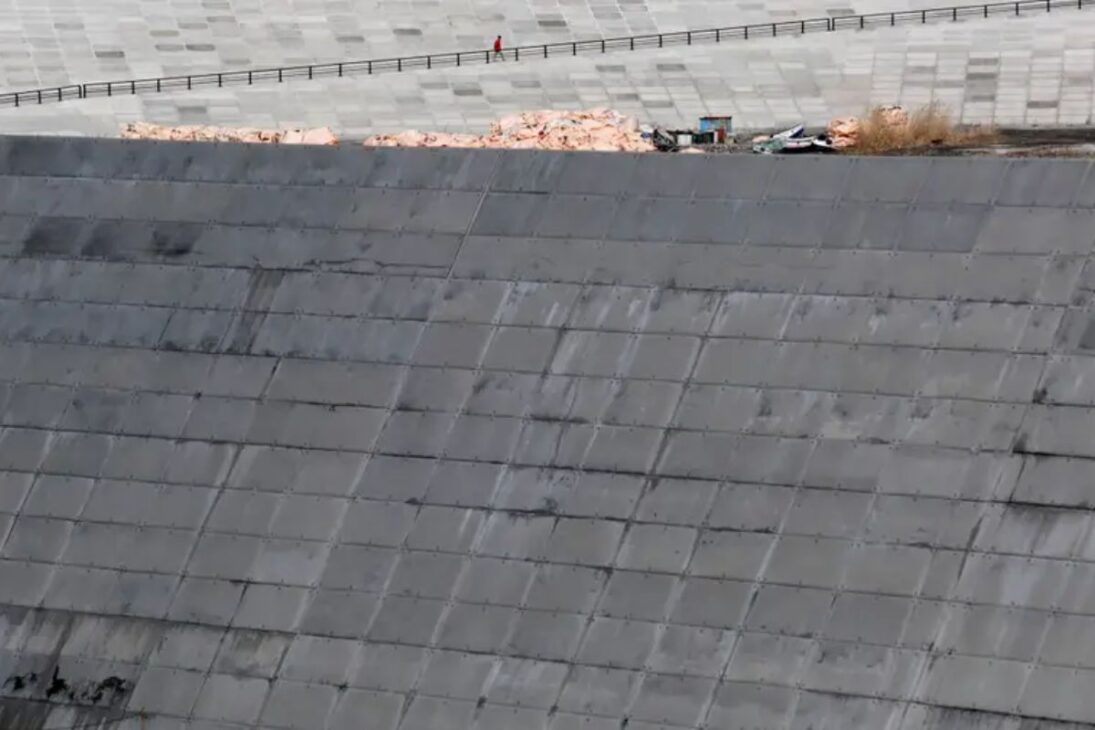
The decision was made in light of the archipelago’s seismic history and the damages from 2011, when the first wave breached up to 10 km inland and successive waves exacerbated the damage.
-
He started with a jigsaw, his father’s screwdriver, and many drawings made during classes; years later, the young man who built a roller coaster in his own backyard went viral on the internet, was hired by Cacau Park, and now coordinates Brazilian and foreign professionals in the installation of an attraction weighing 737 tons, 55 meters high, one kilometer long, featuring moments of zero gravity and a speed of 120 km/h, in a journey that turned curiosity, calculations, and persistence into a professional career.

-
Between Egypt and Sudan, Bir Tawil is no man’s land that neither country wants on paper, but in practice has gold mining, nomadic tribes, and even fake “kings.”

-
Swimming champion Shavarsh Karapetyan dove about 40 times into a frozen lake in Armenia to rescue a sunken bus, saved 20 lives, and lost his career because of it.
-
Júlia Pimentel, an 11-year-old from Minas Gerais, independently invented a new formula to calculate the square root using simple addition and multiplication, and her method was published in one of the most important mathematical scientific journals in Brazil.


The precedent of Sendai and the chain collapse observed in Fukushima consolidated the need for an additional physical barrier to the evacuation protocol.
The local geodynamics involve the interaction of four tectonic plates.
This configuration explains the recurrence of severe tsunamis and makes Japan Builds a 400 Km Wall a structural element of public policy, alongside sirens, elevated shelters, and regular evacuation drills.
What the Wall Does and What It Does Not Do
Walls averaging 12 meters do not “stop” a potential wave of 15 meters or more.
The function is to dissipate energy and reduce speed, preventing vehicles from being dragged as projectiles and residential foundations from collapsing instantly.
Even partial dampening opens a window of time for the population to reach areas above 15 meters of elevation.
Still, water may overflow.
The combination of barriers, alerts, and shelters is the core of the strategy.
The official narrative states that Japan Builds a 400 Km Wall as a defense layer, not as a standalone solution.
Social Impacts and the Invisible Cost
Fishing communities depend on visual contact with the sea for reading wind, current, and navigation safety.
The concrete wall interrupts this relationship, reconfigures work routines, and alters the landscape of coastal neighborhoods.
In areas with the wall, tourism has fallen by around 40%, affecting accommodations and restaurants.
Residents report a loss of visual identity and a sense of enclosure.
The balance between preserving lives and maintaining local vocations has become the main conflict axis, with protests and requests for adjustments to specific layouts and heights.
Engineering, Materials, and Operation
The foundation reaches about 20 meters below ground level, designed to withstand hydrodynamic impact and the corrosive action of the marine environment.
The concrete uses a formulation resistant to salinity, and the projected lifespan is decades with low maintenance.
In critical sections, automated gates remain open during normal times and close within about 5 minutes after the alert is triggered.
The infrastructure integrates with subseafloor seismic sensors that transmit real-time data.
The automatic sequencing activates sirens, closes gates, and directs the population to migrate to shelters and safe elevations, reducing dependence on manual intervention in the first few minutes.
Layers of Protection and Precedents
Before 2011, small dikes of 3 to 5 meters and pine belts already existed but were pulverized by higher waves.
Studies indicated marginal deceleration gains, insufficient for entire cities.
The conclusion was to adopt multiple layers: breakwaters, walls, elevations, and timed evacuation procedures.
Japan also tested deep submarine breakwaters, which reduced wave heights in specific scenarios but did not prevent complete flooding in extreme events.
Japan Builds a 400 Km Wall to act as a second line, maintaining redundancy with elevated shelters.
Timeline, Cost, and Governance
The estimated budget is around US$ 12.7 billion, and the delivery timeline points to 2030, with staggered worksites.
Operational sections serve as learning pilots, adjusting execution, landscaping, and integration with roads and fishing accesses.
Governance involves local and national entities, with a focus on more vulnerable sections.
The final design aims to balance protection elevation, controlled access, and operational comfort for essential coastal activities.
Remaining Risks and Community Preparedness
Even with walls, community education remains vital.
Annual training in schools and businesses, mapped routes, and shelters above 15 meters form the core of self-protection.
In successive wave events, staying in elevated areas may be as important as initial displacement.
The technical message is constant: time is a critical variable. In different historical events, those who evacuated immediately survived.
The system only works if the population responds to the first alert without hesitation.
Alternatives, Adjustments, and Landscape
Solutions for elevating the terrain and artificial hills can improve landscaping integration but involve more time and cost and provide inferior protection on the same time scale.
Practical application tends to mix techniques, incorporating controlled visual passages, reordering of maritime fronts, and facade treatments.
Projects for visual mitigation, walkways, and viewpoints at safe elevations are discussed locally as an urban countermeasure to reduce the impact of continuous barriers on daily life.
What to Observe Until 2030


The performance evaluation goes through three indicators: gains in evacuation minutes, structural integrity after seasonal storms, and economic recovery of tourist areas with new itineraries and infrastructure.
The success of Japan Builds a 400 Km Wall will depend on both the technique and the social acceptance and the ability to adapt solutions along the coast.
The consolidation of the system will also be measured by the maintenance of sensors, gates, and sirens, ensuring reliability in scenarios of multiple events and long windows without occurrence.
The Japanese strategy combines heavy infrastructure, sensing, and collective discipline to face a recurring geological risk.
Japan Builds a 400 Km Wall as a pillar of a broader arrangement, which includes shelters and escape routes, and will still need to adjust urban impacts in coastal communities.
The central decision remains technical: save minutes, save lives.
Do you think that landscaping and public access adjustments can reconcile the protection of Japan Builds a 400 Km Wall with the recovery of tourism and fishing in local communities?




-

1 person reacted to this.