Portuguese
  Spanish



New Project Will Transform The Offshore Turbine Into A Giant Structure Weighing More Than 300 Tons, With A Capacity To Generate 2 MW
Japan is a country that relies heavily on the import of fossil fuels to generate a significant portion of its energy. After the Fukushima nuclear disaster, the country has been seeking safer and cleaner energy sources to replace its nuclear plants. Since the catastrophic event in 2011, Japan has been looking for ways to harness its renewable energy sources, however, the installation of wind turbines or solar panel fields is dismissed, as the mountainous archipelago, which is the predominant geography of the region, does not favor such installations.
What Japan has are vast stretches of coastal water. To the east, the ocean flows under the power of the North Pacific curve. Where the curve meets Japan, it is channeled into a relatively strong current called the Kuroshio Current.
It is precisely the Kuroshio currents that a team of engineers wants to harness to generate virtually unlimited electricity.
-
Fired during apartheid and with a little borrowed money, an electrician started with a borrowed truck and transformed electrical services into a group connected to energy, real estate, and infrastructure in South Africa.

-
Wood has ceased to be just a construction material in Yale research and has become insulation for electrical transformers that face intense heat, aging, and increasing pressure from the renewable energy-powered grid.
-
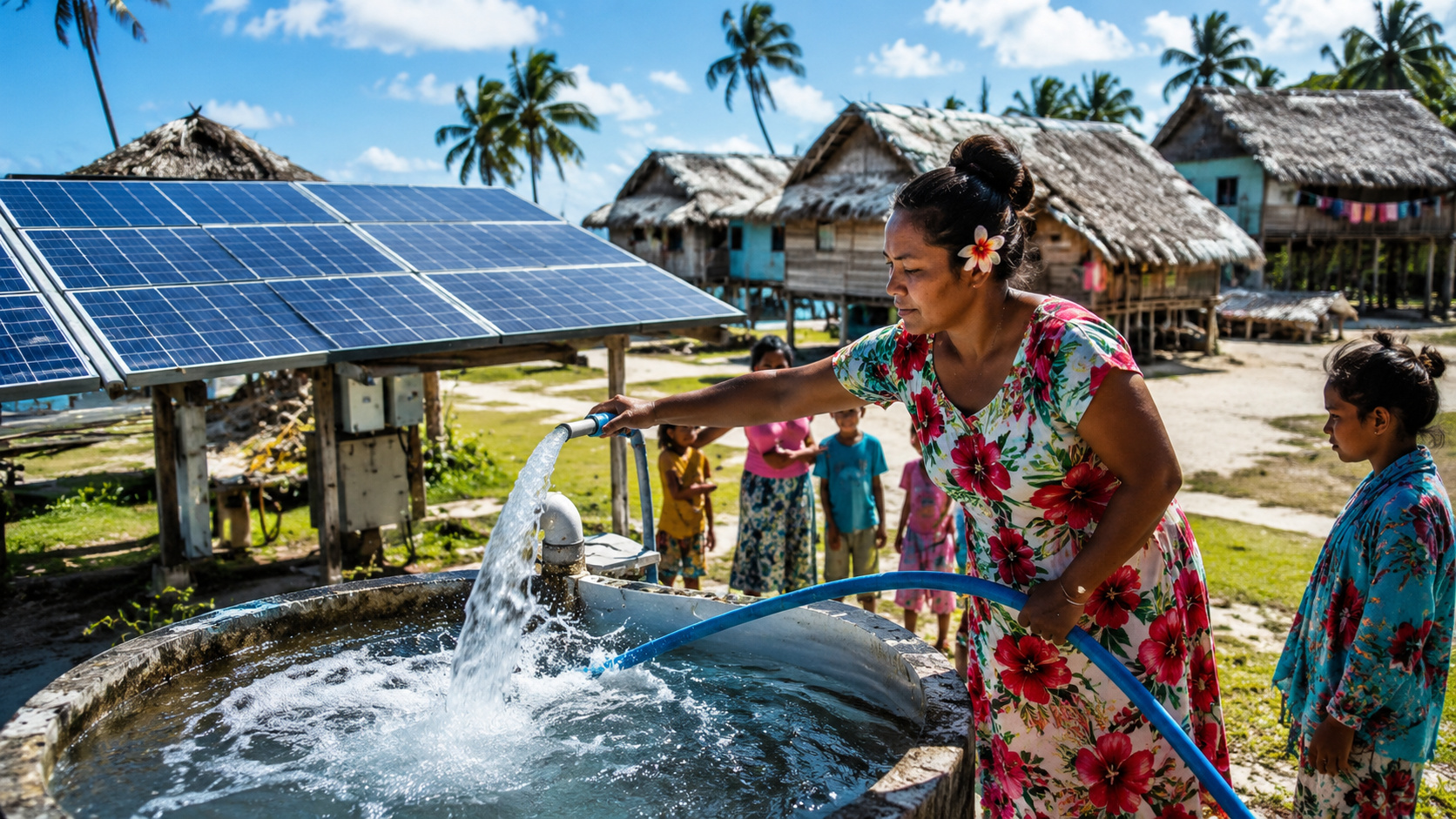
More than 1,000 residents of a remote island in Kiribati now have clean water and electricity with solar systems operated by the community itself.
-
Ceará brings together 7 giants and R$ 66 billion to transform Pecém into the largest green hydrogen hub in Brazil, with final decisions expected by the end of 2026.

According to the Japan Organization for New Energy and Industrial Technology Development (ODNETIJ), the testing phase of a prototype of a gigantic offshore turbine has been successfully completed. Named Kairyu, which translates to “ocean current,” the equipment promises to be one of the best alternatives in transforming energy production for the rest of the world.
Watch The Video Below And Check Out The Giant Offshore Turbine That Promises To Revolutionize Renewable Energy Sources Worldwide
Ocean Currents, Seems To Be Pioneering And Considered One Of The Most Powerful Natural Energy Sources That Is Still Untapped!
With the baptismal name of Kairu (which simply translates the Japanese meaning to ocean currents), it seems to be pioneering and is considered one of the most powerful natural sources that is still “untouched.” They are now exploring the constant flow of ocean currents permanently. And according to ODNETIJ, the most complex part is designing a generator that can withstand the strong currents near the coast of Japan.
Through a statement, the company NEDO, in collaboration with HIH Corporation, demonstrated that its prototype was sufficient to withstand the first three years operating under real conditions. This generator managed to produce 100 kilowatts of energy during the testing period. The company then launched an even bigger project. In this new project, they want to transform the turbine into a giant structure weighing more than 300 tons, with a capacity to generate 2 MW.
The schedule of the development organization and the companies involved in this project is for everything to be ready in seven and a half years, by early 2030. The prototype is long, accompanied by a pair of similarly sized cylinders.
These cylinders have a power generation system connected to an 11-meter-long turbine. The device is anchored to the seabed, but floating about 50 meters below the surface. The anchor cable also serves to transport the generated electricity to the mainland. The device can be moved, lifted, or lowered to find the most efficient current orientation for electricity generation.
The force of the water spins the turbine blades, positioning it in the opposite direction, which, along with a series of position sensors, keeps the device relatively stable despite the dramatic movements of the water in the area.
Super Turbine Will Be Placed In An Ocean Current That Has A Speed Of Up To 1.5 Meters Per Second.
Once completed, this new super turbine will be placed in an ocean current known as Kuroshio, which has a speed of up to 1.5 meters per second.
The companies estimate that if all the energy from the present ocean current could be harnessed by generators similar to Kairyu, it could generate about 200 gigawatts of electricity, roughly 60% of what Japan currently consumes.
Previous attempts to extract electricity from tides, waves, and currents of open ocean have ended in failure, according to information provided by the organization. Additionally, the high costs of constructing a structure of this type and its placement in open sea are significant obstacles. Not to mention the environmental issues it may generate and the dangers posed by the proximity of coastal areas to the power grid.
In parallel, in Japan, the characteristics of the currents are another problem. They tend to be stronger near the surface, precisely where the force of typhoons, which typically hit the country every year, is most felt, and this can affect the turbine and be a hindrance.