





 Portuguese
  English
  Spanish
  5 min of reading
  0 comments


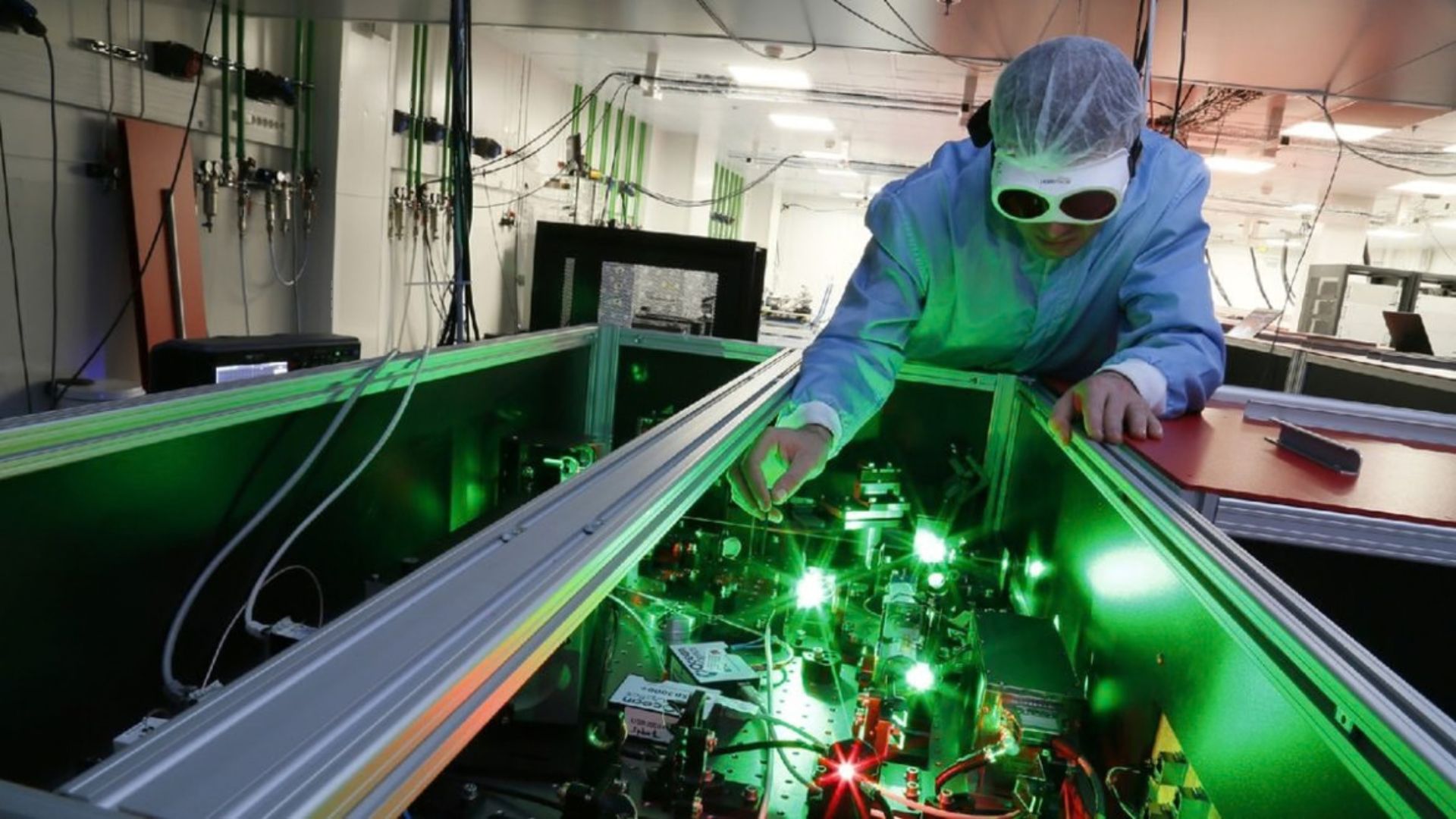
Romanian Center Expands Operation of One of Europe’s Most Ambitious Scientific Infrastructures, Combining 10-Petawatt Lasers Already in Operation with the Final Phase of a Gamma Beam System Designed for High-Precision Experiments in Nuclear Physics, Materials, Medicine, and Space Technology.
Romania has taken the ELI-NP center in Măgurele, located in the metropolitan area of Bucharest, to a new stage by launching the final phase of the implementation of the facility’s gamma beam system, after putting into operation a set of 10 petawatts lasers that the complex itself classifies as a global reference.
The launch meeting took place on February 18 and 19, 2026 and marked, according to the institute, the transition from the design and contracting phase to the effective execution of this second major scientific machine on site.
ELI-NP Enters a New Phase with Gamma Beam System
According to the official statement from ELI-NP, the meeting brought together the National Authority for Research of Romania, the institute’s management, scientific and industrial partners from Germany, as well as representatives from the German Federal Ministry of Research, Technology, and Space and the country’s embassy in Bucharest.
-
Oil leaves behind water that is almost impossible to use, but solar technology in the USA promises to clean this residue before it is returned underground.

-
Japanese ship that “flies” over the sea draws attention by lifting the hull with underwater wings, using a turbine engine, and crossing routes to islands at high speed, reducing long trips and providing passengers with an experience similar to that of an airplane.
-
The weather may not be as perfect as it seemed: scientists identify a microscopic anomaly in fundamental structures of the Universe, and the discovery on extreme scales has a direct impact on theories about gravity and quantum physics.

-
London Museum names a new species in May in honor of David Attenborough on the 100th birthday of the British naturalist.





The text also highlights the participation of companies Research Instruments GmbH, AMPHOS GmbH, and LICOS Munich, identified as key players in the implementation of the gamma beam system.
This advancement occurs on a foundation that has already been consolidated in recent years at the same scientific campus, where ELI-NP claims to operate the world’s first 10 PW dual-arm system in the High Power Laser System, known by the acronym HPLS.
In a statement published in January 2025, the institution also reported that, throughout 2024, it delivered 67 weeks of beam to users, with periods distributed among modes of 100 terawatts, 1 petawatt, and 10 petawatts.
10-Petawatt Laser Sets 24-Hour Firing Record

The most cited milestone of this operation occurred on November 1, 2024, the date when the center recorded 274 shots in a single day at the 10 petawatt output to the experimental area E6, a number officially disclosed on January 8, 2025.
According to ELI-NP, the average in the previous eight weeks had been 127 daily shots in this same configuration, in experiments related to electron acceleration, Compton backscattering, and muon production.
The same communication states that the pulses had a duration close to 23 femtoseconds and that the accumulated peak power delivered to the experiment on that day reached 2.3 exawatts, summing the multi-PW pulses sent to the experimental station.
These numbers help explain why the Romanian center is now considered within the European ELI network as one of the most advanced environments for studies with ultrashort and ultraintense light.
How the New Gamma Beam Designed for Up to 19.5 MeV Works
The second front of the project now accelerating is the Gamma Beam Source, described by the responsible department as a system dedicated to providing gamma rays for scientific users, with energy continuously adjustable between 1 MeV and 19.5 MeV.
In the specifications published by ELI-NP, the beam was designed to operate with a relative bandwidth better than 0.5%, linear polarization above 95%, and spectral density above 5 x 10³ photons per second per electron-volt.
According to the technical description of the center, this source will be based on a linear accelerator and a high-finesse optical cavity, an arrangement designed to produce gamma rays through inverse Compton scattering from the interaction between laser light and relativistic electron bunches.
ELI-NP further informs that the electronic system should operate in the range of 234 MeV to 742 MeV, a condition necessary to enable continuous variation of photon energy within the range planned for experiments.
Technical Steps Show Continuous Advancement of Implementation
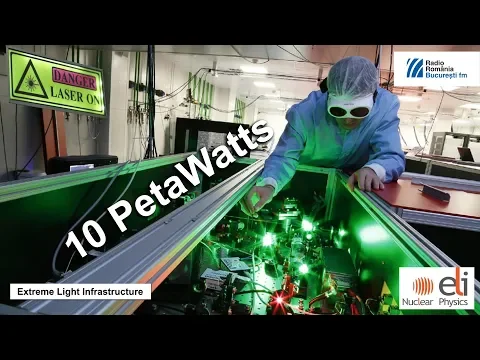
The new phase was not presented as an isolated movement nor limited to the institutional plan, as the department’s gamma systems page lists a recent sequence of technical deliveries linked to the machine’s deployment.
Among the most recent milestones are the commissioning of high-power radiofrequency stations from June to December 2025, the successful testing of the photocathode laser over the same period, the implementation of the radiofrequency laboratory in September 2025, and the installation of module 5 of the LINAC in January 2026.
This chain indicates that the announcement made in February 2026 was not just an administrative update, but a transition to a phase supported by components already delivered and by progressively operational infrastructure.
In parallel, the institute continues to present the gamma beam as a facility intended to serve the scientific community, reinforcing ELI-NP’s original design as shared-use infrastructure and not merely as a technological showcase.
Scientific Applications Range from Nuclear Physics to Medicine
In the institutional presentation of the complex, ELI-NP states that the combination of high-power lasers and adjustable gamma source was planned to support research in fundamental physics, new nuclear physics, and astrophysics, along with applications in materials science, nuclear material management, and life sciences.
In another official document, the center adds lines of work related to medical imaging, hadron therapy, production of radioisotopes, space technology, industrial imaging, and fusion energy, expanding the potential reach of the installation.
This breadth helps explain why ELI-NP occupies a unique position within the European Extreme Light Infrastructure project, a pan-European initiative structured to bring together large equipment dedicated to laser science across different countries.
In a technical article from the consortium itself, ELI is described as a distributed research infrastructure on a European scale, while ELI-NP appears as the Romanian pillar focused on nuclear photonics and the integration of extreme laser beams and high-precision gamma radiation.
Măgurele Reinforces Romania’s Weight in European Scientific Infrastructure
With the final implementation of the gamma system underway and with the 2 x 10 petawatts laser already accumulating operational milestones, Măgurele reinforces its presence on the European map of major scientific infrastructures focused on extreme radiation and matter fields.
The relevance of the center thus relies less on the symbolic impact of hosting a record-setting machine and more on its ability to translate this power into experimental routine, with regular operation, delivery to users, and coordinated expansion of installed platforms.




-

-

-

-

8 people reacted to this.