Portuguese
  Spanish


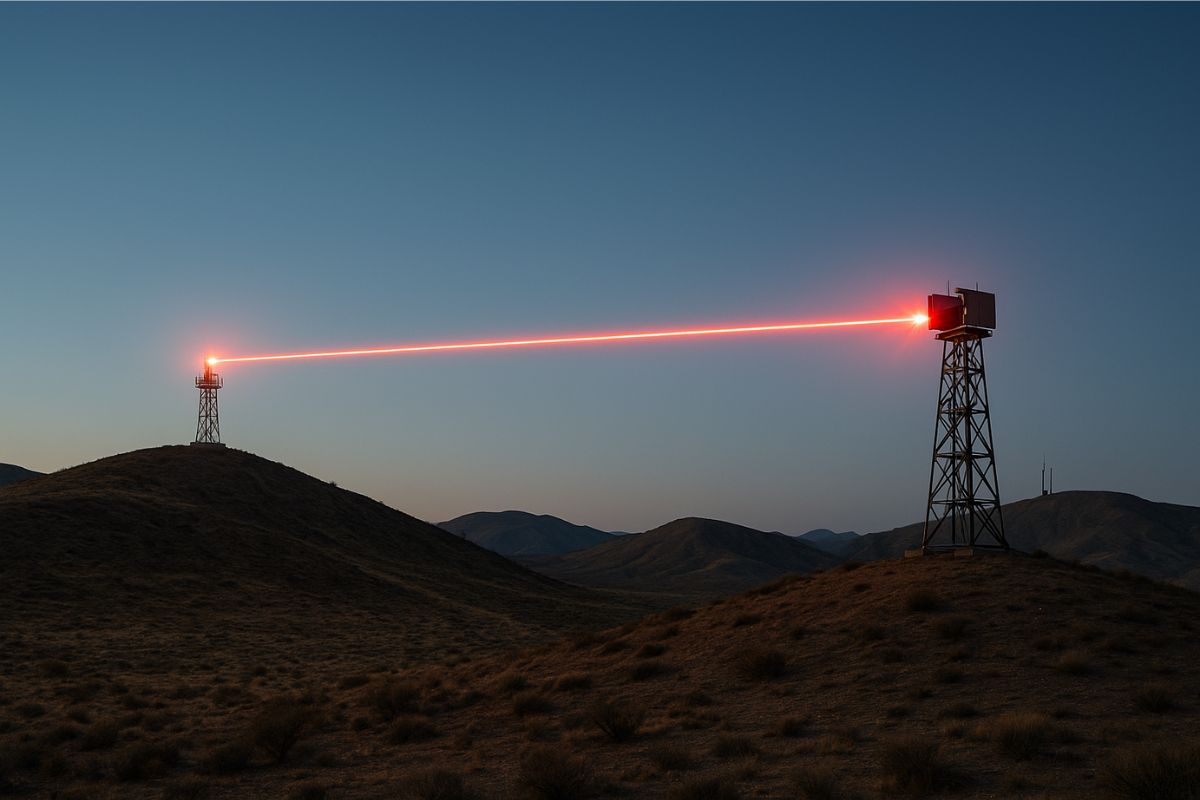

A Revolutionary System Transmits Energy via Laser Over 8.6 Km and Can Power Drones and Entire Cities Without Wires or Fuels
In the middle of the Nevada desert in the United States, a silent experiment marked a decisive step towards a future where electricity can travel through the air without the need for wires, high-voltage towers, or fossil fuels. For just 30 seconds, over 800 watts of electrical energy were sent a distance of 8.6 kilometers via a laser beam, breaking the previous world record by 248%. The initiative, led by DARPA — the research agency of the U.S. Department of Defense — not only revives the century-old vision of Nikola Tesla, but also envisions a new logic for global energy distribution.
The demonstration is part of the POWER program, an acronym for Persistent Optical Wireless Energy Transmission, and brought to light a scenario that until recently seemed exclusive to science fiction: a power grid without physical infrastructure, capable of powering equipment, vehicles, and even entire cities with surgical precision and total mobility.
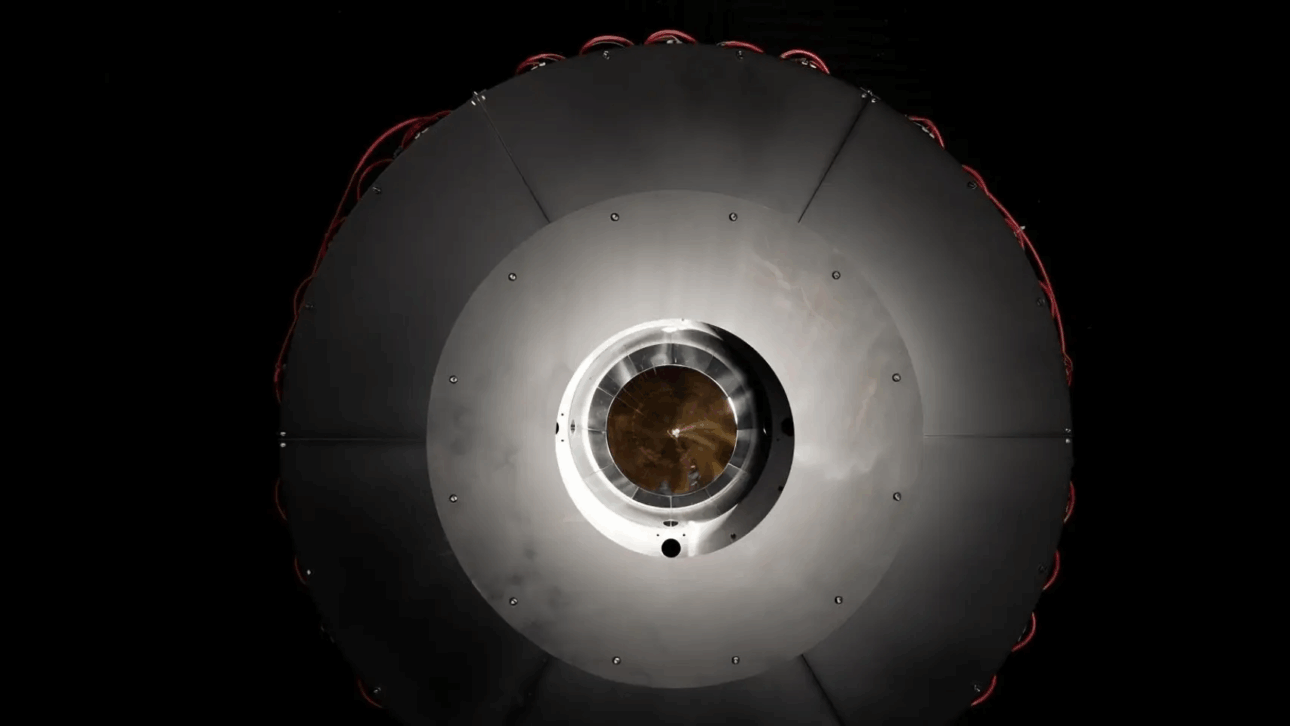
The proof of concept took place between two remote hills, and the success of the test is not only in the distance but also in the stability and control of the operation. The receiver, with dimensions similar to an office desk, was developed in just three months by the startup Teravec Technologies, with technical support from Packet Digital and the Rochester Institute of Technology. Its operation is based on a parabolic mirror that redirects the laser to ultra-high-performance solar cells, converting light into electrical energy with over 20% efficiency — an impressive figure given the degree of difficulty imposed by the environment.
-
AI-generated fake doctors deceive elderly in Brazil, health videos go viral with nearly 300,000 views, turning disease fear into a global audience and money machine.

-
Innovative Thermal Battery in Brazil Can Store Renewable Energy for Weeks, Offering Cheap Electricity and Winter Heating

-
High-End Imported Vacuum Targets Pet Hair, Deep Cleaning, and Odors, as Shark Model Gains Popularity in Urban Brazilian Homes with Carpets and Pets

-
Portugal Develops Graphene Coating to Make F-16s Nearly Invisible on Radar, Aiming to Use It for Military Drones and Aircraft



How to Transform Laser into Electricity: Precision Engineering
The precision of the receiver is one of the key points of the operation. The front aperture of the equipment is extremely small, preventing light from dispersing and ensuring that almost all the light energy reaches the photovoltaic cells. One of the technical differentiators of the project is precisely this ability to keep the laser beam “glued” to the target, even in adverse conditions. During the tests, the beam had to pass through the densest part of the Earth’s atmosphere — which complicates propagation and requires extreme stability — yet it maintained performance within the established parameters.
Unlike Tesla’s ideas, which relied on radiofrequency towers to transmit energy, the choice of optical laser is due to its greater precision and lower dispersion. Additionally, optical beams are less susceptible to external interception, making them ideal for military and strategic applications.
Moreover, part of the energy generated was used in a nearly whimsical moment: making popcorn during the transmission, in a scene inspired by the film Real Genius, a cult classic from the 80s. Although symbolic, the choice had the effect of humanizing a technology still seen as distant from everyday life.
Beyond the Testing Ground: A Global and Military Plan
The POWER project is not an end in itself, but a part of a much larger machine. According to estimates from the Pentagon itself, about 70% of the cargo transported by U.S. armed forces in conflict zones consists of fuel and batteries. Replacing these supplies with wireless energy transmission would mean fewer convoys, lower logistical risk, and greater autonomy in the battlefield.
That’s why the program is advancing on three simultaneous fronts:
- Development of advanced components like deformable mirrors and ultra-efficient solar cells;
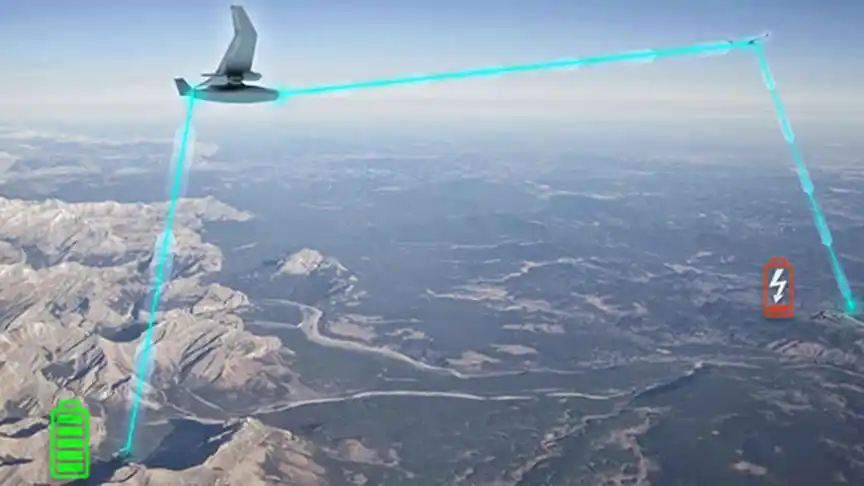
- Tests with stratospheric drones that exchange energy while in flight;
- And a large-scale multi-nodal demonstration planned for 2027, where it’s expected to achieve the transmission of 10,000 watts (10 kW) over a distance of 200 km, using intermediate relays.
Drones like the MQ-9 Reaper, for example, need to land every 28 hours for refueling. With laser-powered energy transmission, these platforms could operate almost indefinitely, completely changing the concept of surveillance and airborne presence.
Other applications currently under review involve the U.S. Navy, which is considering using the technology to power sonar buoys, warships, and mobile naval infrastructures. Meanwhile, NASA is studying the integration of the technology into orbital solar power plants, capable of capturing energy 24 hours a day, without atmospheric interference, and sending it directly to Earth.
The civil impact is no less significant: in cases of earthquakes, floods, or wildfires — situations where the traditional power grid tends to collapse — drones equipped with relays could restore supply in critical areas within minutes, offering a quick and precise response.
The Technical Challenges and the Path to 2027
Although promising, the technology still has significant obstacles to overcome. To transmit the desired 10 kW, the lasers will need to operate at powers far exceeding those used in the current experiment, which raises serious concerns regarding ocular and dermal safety — accidental exposure could cause permanent injuries.
Another bottleneck is energy efficiency. Even with the expected advancements in photovoltaic cells, which could reach 50% conversion, there would still be substantial energy loss at each retransmission. This means that each relay consumes part of the energy before passing it on, limiting scalability over long distances.
Furthermore, there is the atmospheric factor: pollution, humidity, clouds, or storms can interfere with beam stability. Therefore, the feasibility of the technology on a large scale will require complementary solutions, such as artificial intelligence for trajectory correction, protection against weather interference, and new civil safety protocols.
Nevertheless, DARPA claims that the demonstration has broken paradigms. “This experience is already inspiring industry to rethink what was once considered impossible,” said Paul Jaffe, coordinator of POWER, in an interview with the press.
To achieve its goals within the timeline, the agency is seeking partnerships with private companies and global research centers, creating an innovation ecosystem that allows for the acceleration of the technology’s transition from laboratories to real applications.