Portuguese
  Spanish


The discovery was described in a study published in the journal Nature Geoscience and suggests that polymetallic nodules generate oxygen through electrolysis of seawater, without photosynthesis. Other scientists urge caution and remind that the study is limited and still needs independent confirmation.
The study that shook a consensus in biology was published in 2024 in the scientific journal Nature Geoscience, led by marine ecologist Andrew Sweetman from the Scottish Association for Marine Science, SAMS. The team detected the production of molecular oxygen in the total darkness of the Pacific Ocean floor, in an abyssal plain about 4,000 meters deep, naming the phenomenon dark oxygen, something that contradicts the established idea that practically all the planet’s oxygen originates from photosynthesis, which depends on sunlight.
The discovery stemmed from a suspicion that lasted a decade. According to Sweetman’s account reproduced by the site Inovação Tecnológica, the team thought for years that the sensors were defective because all previous studies on the seabed only saw oxygen being consumed, not produced, and only after changing the equipment, adding a second type of sensor with a different technique, and repeating the measurements over ten years did the researchers accept that the strange readings were real.
What are the polymetallic nodules that function like batteries
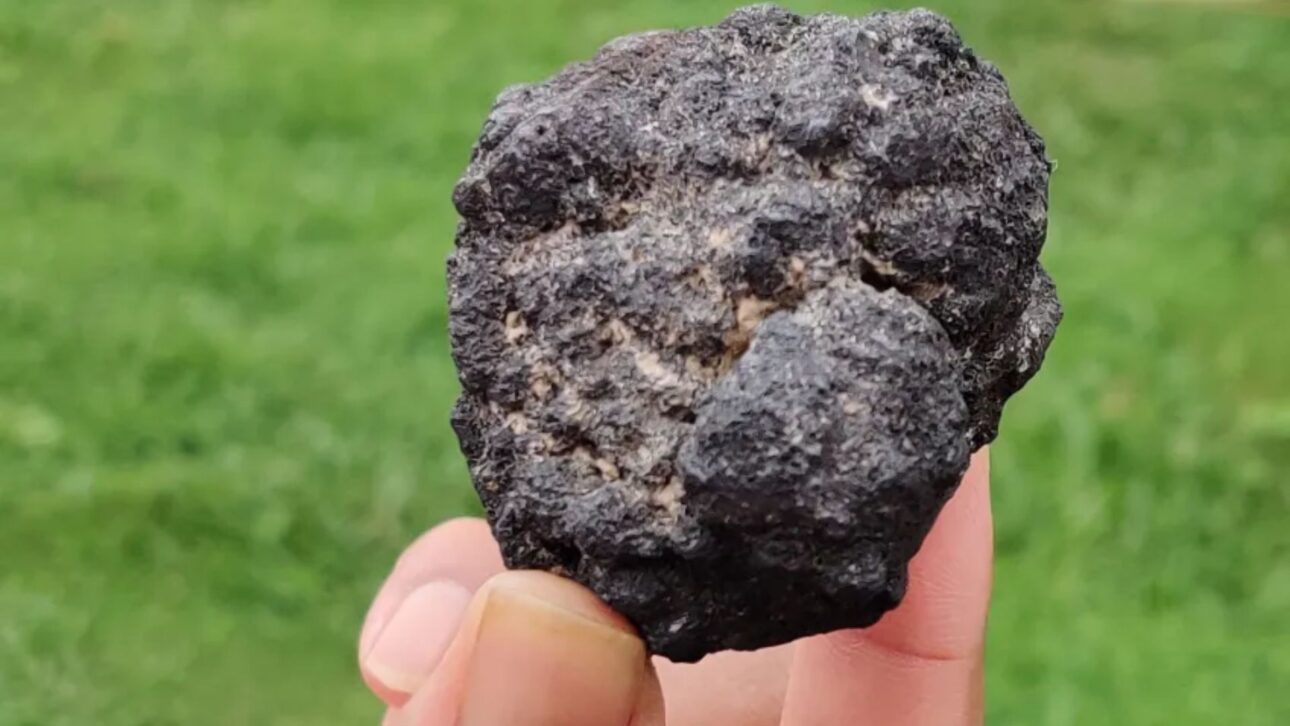
Called polymetallic nodules, they form over millions of years when metals precipitate from the water around fragments like shells, squid beaks, and shark teeth, growing a few millimeters every million years, and are composed mainly of manganese oxides enriched with metals like nickel, iron, copper, and cobalt, according to the study reported by CNN Brazil and Gazeta de São Paulo.
-
Crab Trapped in Plastic Bottle for 62 Days Near Okinawa Highlights Little-Known Impact of Marine Pollution on Small Animals

-
James Webb Telescope Uncovers Unexpected Clues on Mysterious Moon, Potentially Redefining Planetary Origins

-
$1.5 Billion Sleipnir Vessel Transforms Ocean into Floating Construction Site with 12 Hybrid Engines and Capacity to Lift 20,000 Tons

-
23 Years After Tragedy, Brazil’s Alcântara Space Center to Launch New Suborbital Rocket in 2026 with South Korean SEBIT Project Targeting Near-Space Tests


The proposed explanation for dark oxygen lies in the electricity of these stones.
When analyzing the nodules, the team recorded voltages of up to 0.95 volts on the surface of a single unit, and like batteries connected in series, clusters can add up to much more, according to the site Inovação Tecnológica.
It takes about 1.5 volts, the same as a common AA battery, to split seawater and release oxygen in a process called electrolysis, which led co-author Franz Geiger to describe the nodules as a natural geobattery.
Why the discovery affects the origin of life on Earth
If the production of oxygen without light is confirmed and is relevant on a large scale, part of the history of life on the planet may need revision.
According to Professor Rafael Lourenço, in a comment to Jornal da USP, the discovery raises the possibility that polymetallic nodules produced oxygen long before the emergence of organisms capable of photosynthesis, such as cyanobacteria, which appeared about 3 billion years ago and are considered the main contributors to filling the atmosphere with oxygen.
This is where the obligatory caveat comes in, and the scientists themselves make it.
Craig Smith, emeritus professor of oceanography at the University of Hawaii who did not participate in the study, classified the geobattery hypothesis as a reasonable explanation but warned, in a message cited by CNN Brasil, that there may be alternative explanations and that the regional importance of the phenomenon cannot be assessed given the limited nature of the research.
In science, a surprising result is the beginning of the debate, not the end.
The billion-dollar conflict between dark oxygen and underwater mining


The detail that turns a scientific curiosity into an economic dispute is where all this happens.
Dark oxygen was identified in the Clarion Clipperton Zone, a vast abyssal plain between Hawaii and Mexico, and it was precisely while assessing the biodiversity of an area designated for mining that Sweetman made the unexpected observation.
The United States Geological Survey estimates that there are 21.1 billion dry tons of nodules in the region, containing, according to this estimate, more critical metals than all the terrestrial reserves in the world combined.
These are exactly the metals the world is competing for to manufacture batteries.
Cobalt, nickel, copper, lithium, and manganese fuel the lithium-ion battery industry, and companies rush to extract the nodules from the seabed, an activity regulated by the International Seabed Authority under the United Nations Convention on the Law of the Sea.
The question that the study puts on the table is straightforward: if the stones that are to be mined help produce oxygen in an ecosystem that we have barely begun to understand, what is the environmental cost of removing them?
A burning question at the bottom of the ocean
The dark oxygen brings together the ingredients that fascinate and divide: a finding that contradicts the textbook, a possible clue about how life began, and a billion-dollar economic decision on whether to mine or preserve the abyss.
While other laboratories try to replicate Sweetman’s measurements, the Clarion Clipperton Zone becomes the stage where basic science and the race for metals meet face to face.
And you, do you think seabed mining should be halted until we better understand the dark oxygen, or that the world cannot wait for battery metals? Leave your opinion in the comments and join the conversation, always with respect for different opinions.