





 Portuguese
  English
  Spanish
  5 min of reading
  0 comments


Farmer Reveals in Detail the Monthly and Annual Profit of 10 Dairy Cows, Producing 200 Liters Per Day, with Costs, Revenue, and Initial Investment Calculated Step by Step
In the field, one of the biggest questions is how much is actually left at the end of the month with milk production.
The farmer Wesley Kennedy, on his YouTube channel, shared his story with 10 dairy cows.
The video provides a clear and straightforward answer. The calculation was based on a small property, with self-management and detailed costs.
-
A robotic hand uses touch and vision to pick ripe fruits with nearly 100% accuracy. Researchers have built a flexible robotic claw that detects the ripeness point and gently picks fruits.

-
From 30 cooperators to an agro-industry that brings together 390 families, from the agrarian reform in Paraíba, embarking on a historic leap, the first goat milk powder industry from family farming in the Northeast, a R$ 3.75 million project to tackle the drought in the Semi-Arid region.
-
Mother and daughter face grief in the countryside, keep alive the dream started by five generations of beekeepers, and transform the rare white honey from Campos de Cima da Serra into a story of family succession, resilience, and work among the bees in the interior of Rio Grande do Sul.

-
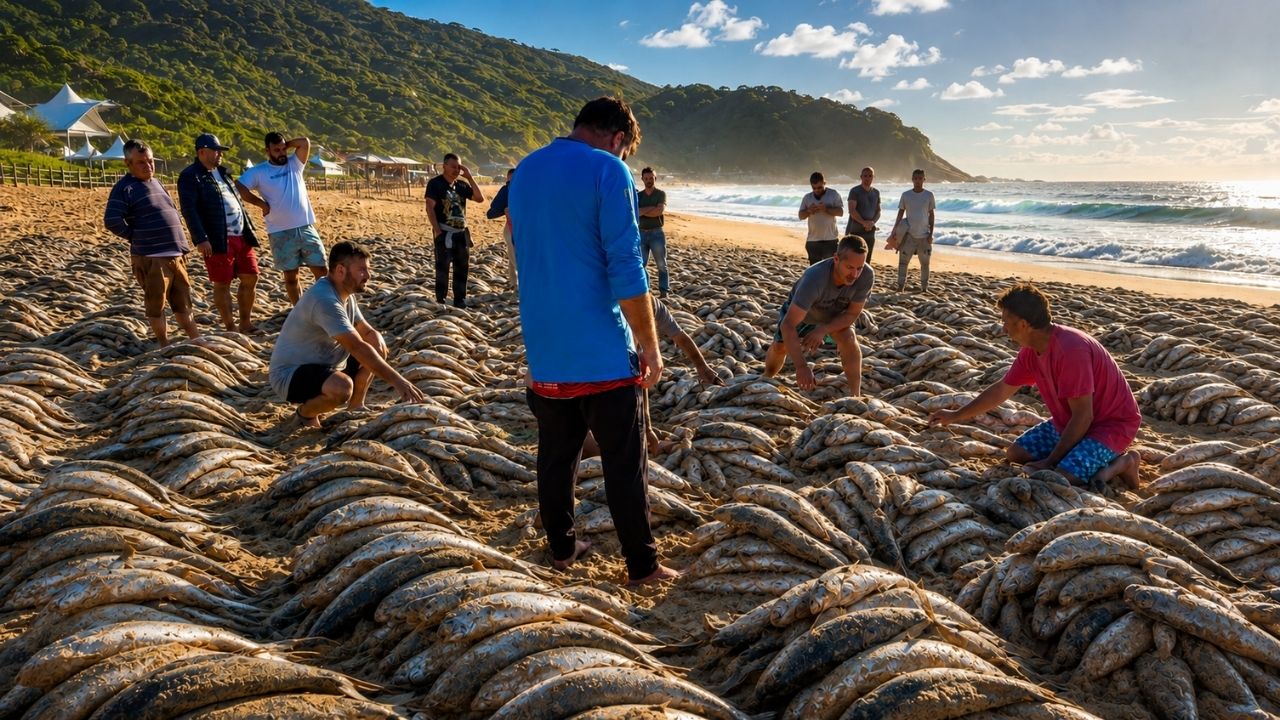
Federal government backtracked after protests in SC: suspended mullet fishing but released an additional 400 tons, reigniting the hope of fishermen who saw schools pass by without being able to work again while waiting to return to the sea safely.


The base used was simple: 10 cows, each producing an average of 20 liters per day. The total reached 200 liters daily, which were sold for R$ 2.85 per liter. But before thinking about revenue, it is necessary to consider all the expenses of the activity.
The First Cost: Corn Silage
Corn silage appears as the main source of feed. Even with two hectares of pasture available, the cattle are heavily dependent on the supply in the trough. This practice is constant in the property and already consolidated in the management.
Each cow that produces 20 liters of milk consumes about 25 kilograms of silage per day. The production cost of this feed, including fertilizers, seeds, and tractor service, amounted to R$ 0.25 per kilogram.
Therefore, just with silage, each cow generates a daily cost of R$ 6.25. Multiplying by 10 animals, the total comes to R$ 62.50 per day. In a month, the expense with silage approaches R$ 1,875.
It’s worth noting that this calculation considers the self-production. If it were necessary to purchase the silage, the cost would double and drastically reduce the profit margin.
The Second Cost: Balanced Feed
If silage weighs on the budget, feed is even more significant. The property adopted rehydrated corn as a cost-saving strategy.
This practice improves the utilization of the grain and maintains the proportion of 1 kilogram of feed for every 3 liters of milk produced.
Thus, each cow consumes approximately 7 kilograms of feed per day. The average cost was calculated at R$ 2.22 per kilogram.
This generates R$ 15.40 per cow, or R$ 154 for the group of ten cows daily.
At the end of 30 days, the expense with feed reaches R$ 4,620.
Therefore, it is the largest expense of the activity. Even with self-production of some ingredients, the impact of this item remains high.
Inevitably Additional Costs
Besides feeding, other costs need to be accounted for. Labor is one of them. Even if the family handles the milking and daily care, it is necessary to consider the value of the work.
In the region, the salary for a professional in the sector reaches R$ 2,800 per month. There are cases where the remuneration exceeds R$ 3,500 due to the scarcity of qualified labor in the field.
Another point is the expenses with medication, iodine, and maintenance. These additional costs were estimated at R$ 500 per month.
Even if they seem small, they make a difference in closing the account.
The Total Production Cost
Adding silage, feed, labor, and extra costs, the final production value with ten cows reached R$ 9,795 per month. This represents almost R$ 1,000 of monthly expense per animal.
This number provides a clear view: it’s not enough to just look at the number of liters produced. Without detailed calculation, many believe that the profit is greater than it actually is.
Gross Milk Revenue
With the production of 200 liters of milk per day, sold at R$ 2.85 per liter, the gross revenue reaches R$ 17,100 per month. This amount may seem high at first glance but needs to be directly compared to the costs.
Therefore, after deducting R$ 9,795 in expenses, the monthly net profit stood at R$ 7,305. This is the amount that truly remains in the producer’s pocket.
Moreover, the calculation does not include the sale of calves. This extra income can increase annual revenue and make the business even more advantageous.
Necessary Initial Investment
To achieve this monthly income, it is necessary to consider the initial investment. The purchase price of the ten quality dairy cows is around R$ 80,000.
Therefore, in just over a year, the producer recoups the invested capital solely from the profits of the activity.
Of course, this depends on proper management, the quality of the animals, and consistency in production.
The Reality of Labor
One point emphasized was the difficulty in finding professionals for work in the field. Today, those who rely exclusively on employees can face serious challenges.
Thus, the producer highlighted that family involvement is essential. They ensure daily operations and prevent labor costs from exceeding budget limits.
The Most Profitable Activity in Small Areas
In the producer’s assessment, dairy farming is still the most profitable activity for those with small properties. Although it requires intense dedication and discipline, the results appear quickly when management is correct.
Furthermore, the comparison with other agricultural activities shows that few offer such a quick return. The purchase of 10 cows can be paid off in about a year of stable production, reinforcing the attractiveness of the business.
Numbers That Show the Reality
| Item | Value (R$) |
|---|---|
| Corn Silage | 1,875 |
| Balanced Feed | 4,620 |
| Labor | 2,800 |
| Medicines/Maintenance | 500 |
| Total Cost | 9,795 |
| Gross Revenue | 17,100 |
| Net Profit | 7,305 |
The video brought the bare truth of small-scale dairy farming. Clearly, it showed that 10 cows producing 200 liters of milk per day can generate a net profit of over R$ 7,000 per month.
This amount does not come without effort. It requires self-production of feed, strict cost control, and much dedication from the family. But, with organization, the activity proves to be viable and profitable.
In the end, the message is direct: yes, it can be profitable, but only for those who truly immerse themselves in the work of the field.





Be the first to react!