






 Portuguese
  Spanish


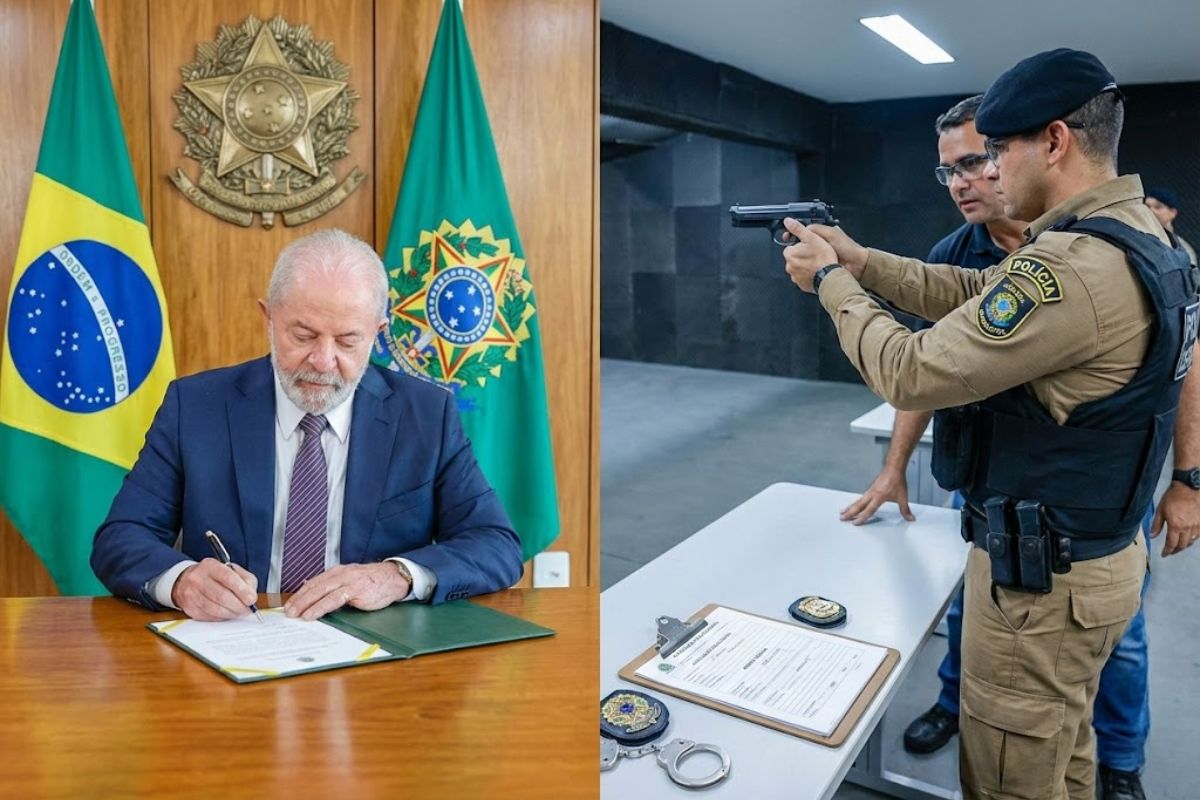

New Law Sanctioned by Lula, Published in the Official Gazette on Tuesday, 23, Expands Gun Carrying for Legislative Police of State Assemblies and the DF Chamber, but Preserves Psychological Examination and Technical Test as Mandatory Conditions to Act Armed in Legislative Buildings in the Country.
President Luiz Inácio Lula da Silva sanctioned the law that authorizes the carrying of firearms for legislative police of state assemblies and the Legislative Chamber of the Federal District, in a text published in the Official Gazette on Tuesday (23). The rule amends the Disarmament Statute of 2003 and extends the carrying authorization already applied to the legislative police of the Chamber of Deputies and the Federal Senate.
Before reaching the sanction, the law was approved by the Chamber of Deputies’ Constitution and Justice and Citizenship Committee at the end of September, after previously passing through the Senate. The project was merely awaiting the presidential decision to come into effect, which occurred with the official publication on this Tuesday (23).
What the Law Changes for Legislative Police
With the sanction, the carrying of firearms now applies to all legislative police in the country, and not just to the police of the Chamber of Deputies and the Senate, who already had this authorization.
-
Seniors Over 60 Can Travel for Free Across Brazil: Elderly Statute Ensures Two Free Bus Seats and 50% Discount When Full for Low-Income Passengers

-
Detran RJ starts requiring a toxicological test for those obtaining their first driver’s license in the car and motorcycle category starting June 29; see who will be affected.

-
Florida takes TikTok to court and accuses the Chinese giant ByteDance of ignoring the law that bars minors under 14, while parents and authorities demand more protection for children on social networks.
-
Chamber approves constitutional amendment reducing the age of criminal responsibility from 18 to 16 years; what now?



The law incorporates the legislative police of state assemblies and the Legislative Chamber of the DF into the list of officials who can act armed in the protection of legislative structures.
In practice, this means that the security teams of state and federal legislative houses will operate under the same carrying authorization standard, aligned with what is already in effect in the National Congress.
The law organizes this framing within the Disarmament Statute, making it explicit that it is a controlled expansion of carrying rights for a specific group of public agents.
Direct Link with the Disarmament Statute
The new law amends provisions of the Disarmament Statute of 2003, inserting the legislative police of state assemblies and the DF Chamber among the categories eligible for carrying firearms.
The inclusion occurs specifically, without revoking the overall structure of control over armaments provided in the current legislation.
At the same time, the presidential sanction makes it clear that the expansion of carrying does not represent unrestricted release, but rather an adaptation of the statute to encompass a group that directly acts in the security of legislative buildings.
Thus, the law maintains the focus on control and responsibility, even while opening up space for more professionals to carry weapons.
Vetoes Maintain Psychological Examination and Technical Test
Although he sanctioned the law, Lula vetoed parts of the text approved by the Chamber that exempted legislative police from proving integrity, technical capacity, and psychological fitness for handling firearms, requirements already provided for in the Disarmament Statute.
With these vetoes, the psychological examination and technical test remain mandatory for these officials to carry weapons, as occurs with other categories that have institutional authorization.
The law, therefore, expands the scope of carrying but preserves the requirement for prior evaluation, maintaining the control filters defined in the legislation on firearms.
Processing of the Law in Congress until Sanction
The bill that resulted in the new norm first went through the Senate, where it was approved, and then proceeded to analysis by the Chamber of Deputies.
In the House, the proposal was examined and approved by the Constitution and Justice and Citizenship Committee at the end of September, a stage where the text to be sent to the Executive was consolidated.
After this phase, the project was sent to the Presidency of the Republic, which could fully sanction, partially sanction, or fully veto the matter.
Lula’s decision was to sanction the law, but with specific vetoes, specifically regarding the provisions that eliminated the requirement for proving integrity, technical capacity, and psychological fitness for carrying firearms for these legislative police.
Immediate Impacts of the New Law in Legislative Houses
With the publication of the law in the Official Gazette on Tuesday (23), the authorization to carry firearms for legislative police of state assemblies and the DF Chamber takes immediate effect within the federal framework.
From this sanction, the bodies responsible for legislative security can adjust internal norms and procedures to the new rules.
At the same time, the vetoes that maintain the requirements for psychological examination and technical capability reinforce that carrying will continue to be conditioned on the fulfillment of evaluation stages, preventing the expansion of the right to carry from being interpreted as a dispensation of control.
What do you think, should the law have maintained even stricter rules or do you consider the requirements for psychological examination and technical test sufficient for these legislative police to carry firearms?


