Portuguese
  Spanish


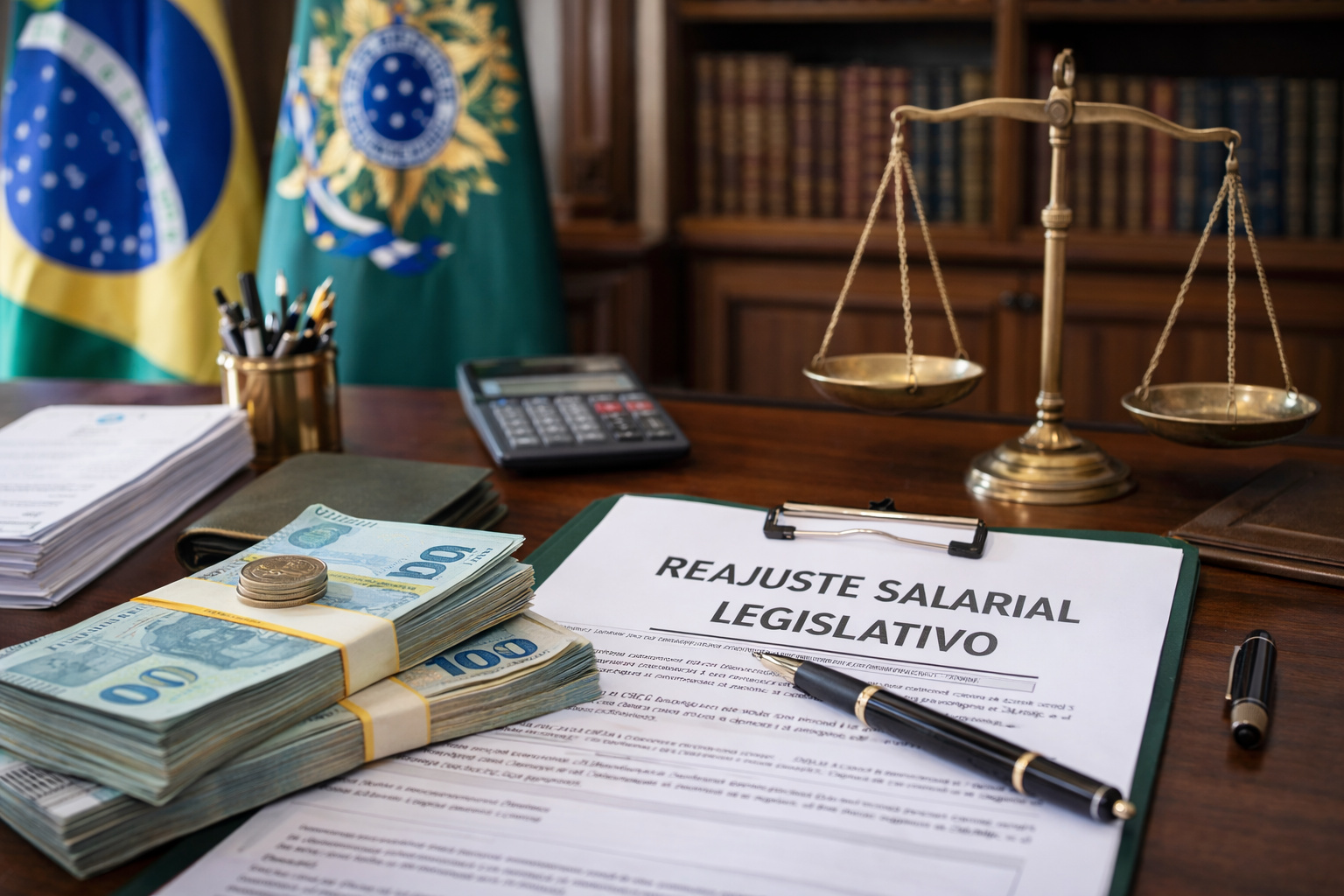

President Confirms Salary Increase for Senate, Chamber, and TCU, But Bars Provisions That Could Raise Salaries Above R$ 46,366.19
President Luiz Inácio Lula da Silva (PT) sanctioned the salary adjustment for Legislative branch employees and vetoed provisions that could break the constitutional ceiling of public service. Laws No. 15,349, 15,350, and 15,351, published in 2025, define the increases intended for employees of the Chamber of Deputies, the Federal Senate, and the Federal Court of Accounts (TCU). In addition, as reported by the Palácio do Planalto, the government maintained the salary recomposition planned for 2026 in the three careers.
Adjustment Maintained for 2026 in the Three Careers
The government preserved the provisions that guarantee salary updates for the next fiscal year. Thus, the Senate, Chamber, and TCU will have recomposition in 2026. At the same time, Lula vetoed the sections that authorized staggered increases until 2029. According to the Executive, the proposal contravened Article 21, Section IV, Item “d” of the Fiscal Responsibility Law, which prohibits the creation of mandatory expenses in the last two quadrimesters of the term without full execution within the current period.
ARTICLE CONTINUES BELOWSee also
Brazil to Issue “Panda Bonds” in China, Aiming to Raise Up to 5 Billion Yuan at Lower Interest Rates Than Dollar Debt
NATO Faces Internal Tensions as U.S. Pushes for Increased Defense Spending, Targeting 5% of GDP by 2035, with Warnings for Countries Near 2% Level

Brazil to Introduce B16 Diesel with Increased Soybean Oil Content for Trucks by 2026
Brazil’s July Bolsa Família Payments May Include Extra $150 and $50 for Families with Children, Pregnant Women, and Updated CadÚnico Registration


Compensation and Leave Could Raise Salaries to R$ 77 Thousand
The original text, presented by the Board of the Chamber of Deputies, created a compensation linked to the accumulation of extraordinary activities. The proposal granted one day of leave for every three additional days worked. Moreover, it allowed converting the leave into cash payment. As a result, in certain situations, the salaries of senior employees could reach around R$ 77 thousand. However, the constitutional ceiling set at R$ 46,366.19, the amount equivalent to the salary of a minister of the Supreme Federal Court (STF), establishes the maximum limit in public service. Therefore, Lula removed these provisions from the final text.
Retroactive Payments and Pension Rules Also Excluded
The government also excluded sections that authorized retroactive payments of ongoing expenses. According to the Palácio do Planalto, this provision contravened Article 169, § 1, Section II of the Federal Constitution. In addition, the Executive removed rules that mandated semiannual calculations for retirement and pensions, as they did not align with Constitutional Amendment No. 103/2019, which is responsible for the pension reform.
Decision Reinforces Fiscal Responsibility and Constitutional Limits
With the partial sanction, Lula ensured the adjustment for 2026 and eliminated mechanisms that could generate supersalaries above the ceiling for public employees. According to an official statement released in 2025, the government highlighted its commitment to fiscal responsibility, respect for the Constitution, and strict compliance with the salary limit in public service. Given this scenario, the debate over salary adjustment, constitutional ceiling, and fiscal balance gains new momentum in the country.
After all, how should Brazil balance the appreciation of public servants with the strict compliance with fiscal rules and the constitutional ceiling?