






 Portuguese
  Spanish
  5 min of reading
  0 comments


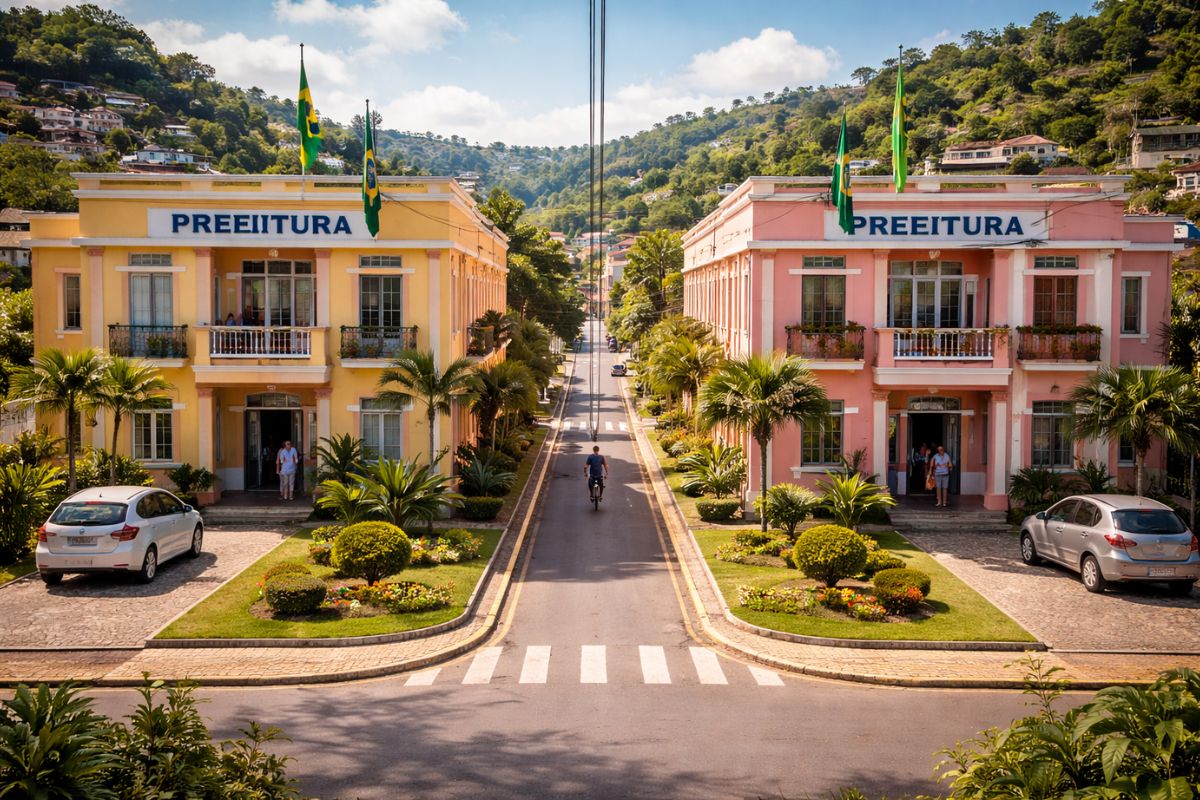
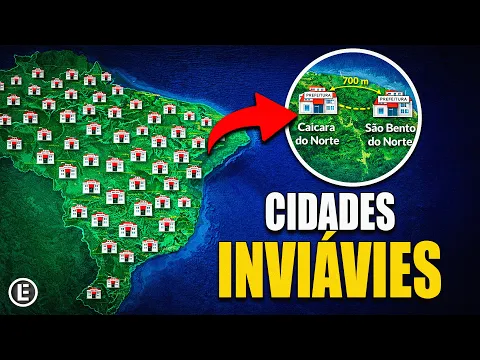
Of the 5,570 municipalities in Brazil, 3,900 do not generate enough revenue to maintain city halls, city councils, and secretariats, spending 4.2% of the national GDP only on the administrative machine, while cities like Caiçara do Norte and São Bento do Norte operate 700 meters apart with complete structures for less than 10,000 residents.
The country supports 5,570 municipalities, and the absolute majority of them depend on money they did not collect to exist. Recent data shows that transfers from the federal government and state governments already account for 70% of the current revenue of Brazilian cities, a percentage that was around 50% in 2002 and has been growing every year. Small municipalities, with fewer than 50,000 residents, accumulated a joint deficit of R$ 5.8 billion in the last fiscal year. A survey by IBGE indicates that 2,466 cities, about 44% of the total, have fewer than 10,000 inhabitants. Caiçara do Norte and São Bento do Norte, in Rio Grande do Norte, with city halls 700 meters apart and a combined population of less than 10,000 people, summarize the problem on a scale that would fit in a single neighborhood of any capital.
The cost of this structure is heavy. The payroll of municipal employees consumes 4.2% of the national GDP, an amount that is almost half of the 9.63% that the country allocates to health, education, and sanitation combined. The total number of councilors and advisors spread across the territory exceeds 580,000 people, and when including the municipal executive, the number exceeds 730,000 employees maintained by the public machine. These are expenses that are repeated in each of the 5,570 municipalities, regardless of whether there is economic activity to justify them.
The origin of the excess: how the Constitution opened the gate for new municipalities

Before 1988, emancipating a district required meeting fixed federal requirements: a population of over 10,000 residents, at least one-tenth of them registered as voters, revenue corresponding to five thousandths of the state’s tax revenue, and at least two hundred residences in the intended urban nucleus. The new Constitution eliminated these thresholds and delegated to the states the power to define their own criteria, requiring only a technical study and public consultation. The result was a wave of emancipations: between 1988 and 1996, the country gained approximately 1,400 new cities, and states like Acre began to accept districts with only 1,500 residents.
-
FIRJAN’s mega plan of R$ 526.3 billion for Rio de Janeiro aims to revive Brazil’s largest industry, with two-thirds of the investments going to oil and gas.

-
China signals an increase in beef imports, Brazil has already consumed 70% of the 1.106 million ton quota and seeks to renegotiate the tariff that jumps from 12% to 55%, while demand from the US also skyrockets.
-
Food inflation rose 302% in 20 years in Brazil, but the supermarket changed: purchasing power yielded 87% more mortadella and 31% less fruit, and ultra-processed foods took over the cart.
-
Petrobras sells the first batch of 3,800 m³ of aviation fuel made with certified soy, capable of reducing emissions by up to 70%, in an unprecedented project that anticipates the aviation sector’s requirements expected for 2027.



The ease of creation contrasted with the difficulty of maintenance. Each new municipality assumed constitutional obligations in health, education, social assistance, and infrastructure, but without the requirement to generate its own revenue to support them, inflating the burden of municipalities on GDP without a corresponding provision of services. The Constitution compensated for the imbalance with the Municipal Participation Fund, which distributes shares of Income Tax and IPI. The mechanism ensured survival but created dependency: cities that were born without an economic base never developed one, because the money arrived regardless.
The flypaper effect: why money that comes from outside is spent more easily

Economists use the term “flypaper effect” to describe what happens when transferred resources are spent with less scrutiny than locally collected ones. The manager who receives transfers does not bear the political wear of having collected that tax, and the local population does not perceive the direct cost of the expenditure because it did not come out of their pockets. This dynamic fuels expenses that would be unacceptable if the mayor had to justify every penny to the taxpayer who paid.
In a 25-kilometer radius around the two cities separated by 700 meters in Rio Grande do Norte, there are three more municipalities. The five, combined, barely exceed 20,000 residents, but accumulate more than a hundred public departments among secretariats, chambers, and offices. Each with its own payroll, budget, and commissioned positions, generating a cost that weighs on GDP without the municipalities being able to generate local revenue to offset it. The model repeats itself throughout the country, with extreme examples like Serra da Saudade (MG), with about 800 residents, Borá (SP), with 837, and Araguainha (MT), with 935, all maintaining full municipalities, city councils, and secretariats.
Why no one merges municipalities that cannot sustain themselves

The barrier is political. Mayors, councilors, secretaries, and appointees from small towns have a direct interest in maintaining the status of independent municipalities, because merging city halls means eliminating positions and, with them, control over budgets and appointments. In places with only a few thousand residents, where a good part of the electorate holds positions within the public machine, proposing a merger is equivalent to declaring political war against the base that supports the mandate. The own revenue of these towns is so low that local councilors know: without transfers, none of these city halls would survive a single week.
Congress has a bill (PLP 137/2015) that tightens the rules, requiring population thresholds of 6,000 residents in the North and Midwest, 12,000 for the Northeast, and 20,000 for the South and Southeast, in addition to proof of local revenue. But the text has been shelved for over ten years, and every attempt to advance meets resistance. In 2014, a project that proposed the creation of two hundred new cities at once was blocked. Meanwhile, over 460 districts in 17 states are pressing to emancipate, with the strongest movement precisely where dependence on transfers is already greater.
The alternatives that exist but no one implements
One of the most discussed proposals is the regionalization of services: instead of each municipality maintaining its own health and education system, neighboring towns would share structures through consortia. The legal instrument already exists, but adherence remains low because it depends on local political will, a scarce resource among managers who treat each department as a bargaining chip for electoral exchange. In 2019, the federal government even included in the Federative Pact the incorporation of cities with less than 5,000 residents and local revenue lower than 10% of the total budget, a measure that would affect 1,254 municipalities whose own revenue is irrelevant, but the proposal was abandoned.
The demographic risk exacerbates the situation. Cities that were born at the minimum limit of residents in the 1990s and never created an economic base tend to lose population, as residents migrate to larger centers in search of jobs and services. An unviable city with 10,000 inhabitants becomes even more unviable with 6,000, but the administrative structure remains intact and the burden on the national GDP does not decrease. Only 7% of municipalities show good educational performance, and only 6% provide satisfactory public health. While the numbers do not change, Caiçara do Norte and São Bento do Norte remain separated by 700 meters and by two payrolls, and the rest of the country continues to finance the bill.
And you, do you think your city needs all the administrative structure it maintains? Do you know neighboring municipalities that could merge without harm to the population? Leave your opinion in the comments.





Be the first to react!