






 Portuguese
  Spanish
  5 min of reading
  0 comments


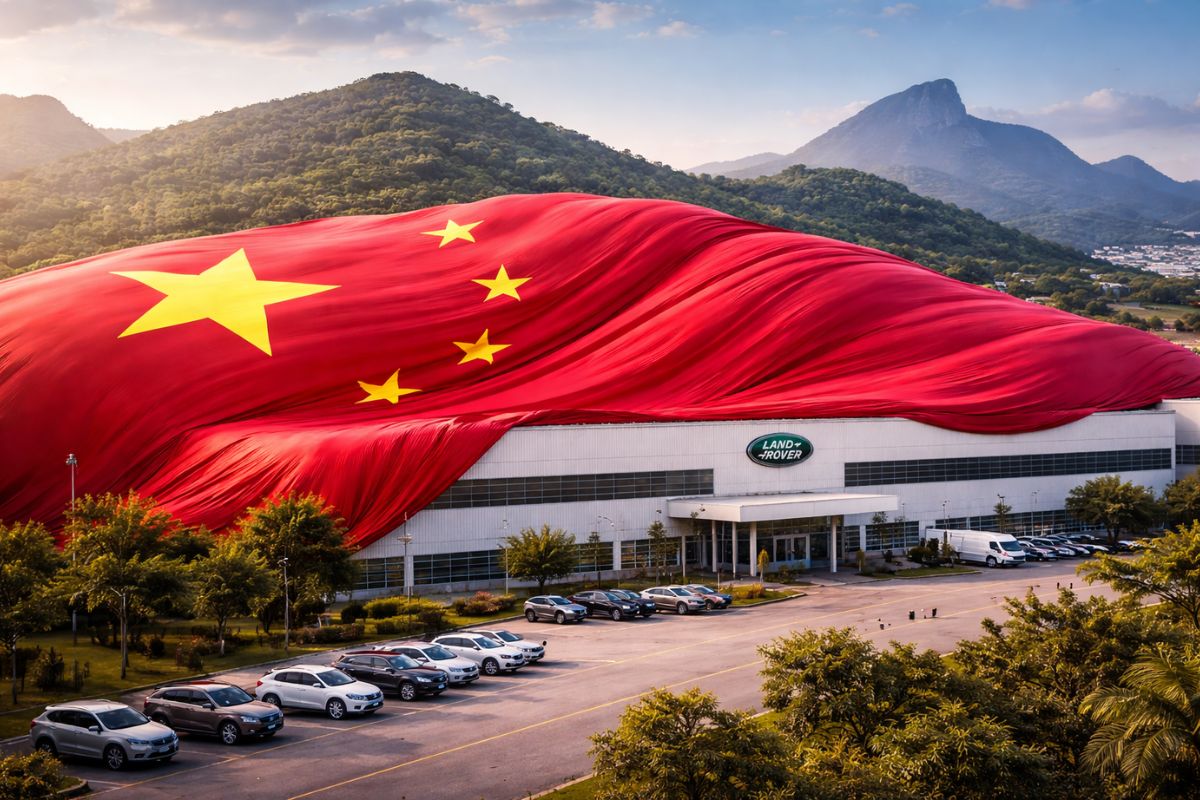
The factory that Jaguar Land Rover operates in Itatiaia (RJ), inaugurated in 2016 with an investment of over R$ 1 billion, will be taken over by Omoda Jaecoo of the Chery group, which plans to triple the capacity from 24 thousand to nearly 100 thousand vehicles annually while the British end local production by July.
The Chinese group Chery has decided that its Omoda Jaecoo brand will occupy the factory that Jaguar Land Rover built in Itatiaia, Rio de Janeiro, an industrial complex that received over R$ 1 billion in investments and represented the first plant of the British outside the United Kingdom. The decision marks a symbolic change of command in the Brazilian automotive sector: where luxury English SUVs were once assembled, Chinese vehicles will now be produced in volumes up to four times greater. JLR continues to sell Discovery Sport and Evoque until stock runs out, with the production line operating at most until July, and from then on the space will be entirely for the Chinese.
The change reflects distinct movements of each company. Jaguar Land Rover has shifted its strategy to the ultra-luxury segment, and maintaining a factory in Brazil no longer made sense given the reduced demand, with fewer than 800 units combined of the two models in 2025. Chery, on the other hand, had already confirmed plans to assemble Omoda Jaecoo vehicles on Brazilian soil, and the Itatiaia plant emerged as a ready solution, with modern infrastructure and a strategic location to also serve the neighboring markets in Latin America.
Why Jaguar Land Rover decided to hand over the factory

The Itatiaia plant was inaugurated in 2016 as a milestone of JLR’s presence outside Europe, being the only manufacturing unit of the brand in all of Latin America to this day. With a capacity to produce up to 24 thousand vehicles per year, the factory assembled the Discovery Sport and the Range Rover Evoque, two models that sustained the Brazilian operation for nearly a decade. The problem is that demand never came close to justifying the installed potential.
-
FIRJAN’s mega plan of R$ 526.3 billion for Rio de Janeiro aims to revive Brazil’s largest industry, with two-thirds of the investments going to oil and gas.

-
China signals an increase in beef imports, Brazil has already consumed 70% of the 1.106 million ton quota and seeks to renegotiate the tariff that jumps from 12% to 55%, while demand from the US also skyrockets.
-
Food inflation rose 302% in 20 years in Brazil, but the supermarket changed: purchasing power yielded 87% more mortadella and 31% less fruit, and ultra-processed foods took over the cart.
-
Petrobras sells the first batch of 3,800 m³ of aviation fuel made with certified soy, capable of reducing emissions by up to 70%, in an unprecedented project that anticipates the aviation sector’s requirements expected for 2027.


The sales numbers in 2025 expose the fragility: the Discovery Sport recorded 425 units sold, and the Evoque reached 332, insignificant volumes in a market that moves millions of automobiles per year. Even considering that the factory also supplied other countries in Latin America, the volume did not cover the costs of keeping a modern plant operational. With the decision to reposition the brand in the ultraluxury segment, JLR opted to cease local production and direct the resources from the sale of the factory to this new strategic focus.
How Chery Conquered the Factory That Was Once JLR
The Chinese group had already been negotiating the installation of a production line for Omoda Jaecoo in Brazil, and the first option was the deactivated CAOA plant in Jacareí, São Paulo. Discussions with CAOA, which has owned half of the old facilities since 2017, did not progress, and the Itatiaia factory emerged as a more advantageous alternative. JLR received proposals and preferred to negotiate with the Chinese, who are already partners of the British brand in various operations around the world.
Chery and JLR maintain global collaboration that includes the recent announcement of the production of the new Freelander in Chinese territory. With the commitment term practically signed, it remains to define which will be the first model produced at the Itatiaia factory under the Omoda Jaecoo banner. The most likely candidate is the Omoda 4, a compact crossover equipped with a 1.0 turboflex engine and a hybrid version of the HEV type, which does not require external charging, a model that promises to shake up the entry-level segment of the Brazilian market.
The Transformation of the Factory: From 24 Thousand to Almost 100 Thousand Vehicles Per Year
Chery’s plan for the Itatiaia factory is ambitious. The current capacity of 24 thousand annual units will be tripled to something close to 100 thousand vehicles, with space for 87 thousand already guaranteed in the projected configuration. The expansion will require a multiplication of physical space and adaptation of the assembly lines to accommodate models completely different from those that previously came out of there, as the architecture of Chinese vehicles differs significantly from the platform used by JLR.
The new production base will not only serve the Brazilian market. The factory in Itatiaia was designed to function as an export hub, serving neighboring countries and occupying the position that Latin America represents in Chery’s global expansion plan. The fact that the infrastructure already exists, with over R$ 1 billion invested by Jaguar Land Rover, reduces the time and cost of implementation for the Chinese, who inherit a ready plant and only need to adapt it to their portfolio.
What Changes in the Brazilian Automotive Market with This Change of Command
The arrival of Omoda Jaecoo at the Itatiaia factory is part of a broader movement of Chinese penetration in the national automotive sector. Chery is already operating in Brazil with other brands and models, and the celebration of one year of commercial operations of Omoda Jaecoo in the country, with over 10,000 units sold, showed that the demand exists. The recent launch of a plug-in hybrid SUV priced below R$ 200,000, exclusive to the local market, reinforces the company’s bet on the fastest-growing segment in Brazil.
For the consumer, local production means potential for more competitive prices. Vehicles assembled in a Brazilian factory avoid import costs and benefit from tax incentives, which can make models like the Omoda 4 even more aggressive in the competition for buyers. The exit of Jaguar Land Rover and the entry of Chery in the same factory symbolize a turning point: British luxury has given way to Chinese volume, and the Brazilian market will be the first to feel the effects of this transition when the first units begin to roll out of the Itatiaia line.
And you, do you think that the switch from a luxury brand to a Chinese one in the same factory is good or bad for the Brazilian consumer? Does the Omoda 4 have the potential to compete with the already established compacts? Leave your opinion in the comments.








-

-

-

-

13 people reacted to this.