Portuguese
  Spanish


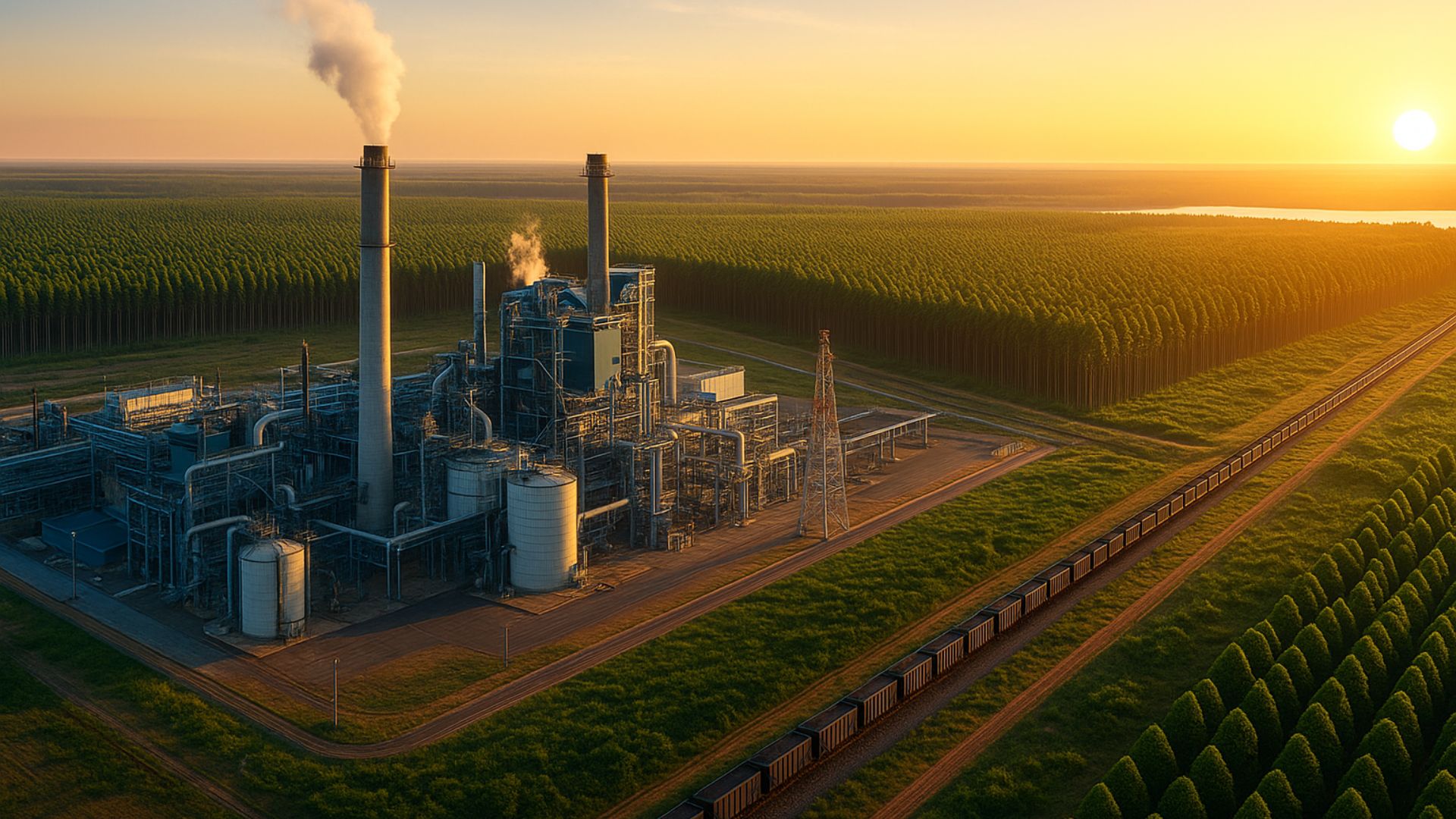


Billion-Dollar Project in Mato Grosso do Sul Advances with Pulp Mill in Single Phase, Long-Distance Train to Santos and Own Clean Energy Generation. Exports Reach Three Continents with Record Annual Volume and Automated Industrial Operation.
The Chilean Arauco is building in Inocência (MS) what will be the largest pulp mill in the world built in a single phase, with an investment of US$ 4.6 billion.
Named Project Sucuriú, the venture marks the company’s debut in pulp production in Brazil and promises to transform the region into one of the world’s main commodity hubs.
With operations expected to begin by the end of 2027, the unit will have a capacity of 3.5 million tons of market pulp per year, of which 95% to 98% will be destined for export.
-
Brazil’s Most Expensive Toll Rises to R$ 40.60 on Route from São Paulo to the Coast, Nearly Matching Bus Fare to Santos

-
As Brazil Expands Social Welfare, Survey Reveals 40% Blame Poverty on Laziness, While 58% Cite Lack of Opportunities

-
China Tightens Control on Antimony, Driving Prices from $22,000 to Nearly $40,000 per Ton as U.S. Rushes to Bolster Strategic Reserves

-
BlackRock Freezes $1 Billion in Brazilian Renewable Energy, Impacting 1.5 GW of Planned Projects and Highlighting Investor Concerns Over Infrastructure Bottlenecks Cutting Up to 25% of Solar and Wind Generation


The product will be sent to markets in China, Europe, and North America.
Logistical Challenge of 1,050 Kilometers
The company’s main challenge until the inauguration will be to ensure transport infrastructure capable of moving 9,600 tons per day from the mill to the Port of Santos (SP), over a distance of 1,050 kilometers.
The strategy involves prioritizing rail transport, with trains of 100 cars specially designed to carry bales of bleached short-fiber eucalyptus pulp.
Alternatives using waterway and roadway modes are also under study.
International shipments will be made on break bulk ships, specially designed for pulp, with a capacity of 50,000 to 80,000 tons per trip.
Leading the planning and implementation of this structure is Alberto Pagano, logistics director at Arauco in Brazil, a professional with experience at Bracell, Fibria, and Votorantim Celulose e Papel.
Industrial Complex and Energy Self-Sufficiency
The Project Sucuriú occupies an area of 3,500 hectares, 50 kilometers from the center of Inocência and along the banks of the Sucuriú River, and relies on Industry 4.0 technologies — with digital control systems, training simulators, and total integration between production and quality stages.
The plant will operate in a closed energy cycle, with a generation capacity exceeding 400 megawatts (MW), of which 200 MW will be allocated for internal consumption.
The surplus — sufficient to supply a city of over 800,000 inhabitants — will be injected into the national energy system.
Jobs and Regional Impact
During construction, Arauco expects to create 14,000 direct and indirect job opportunities.
After operations begin, the project will maintain about 6,000 permanent jobs in the industrial, forestry, and logistics sectors.
The company has 400,000 hectares of planted eucalyptus forests to supply the unit.
According to the company, all project phases follow environmental monitoring protocols, with mapping of native species and priority areas for conservation.
Arauco states that Sucuriú represents the largest investment in the company’s history and reinforces its position among the global leaders in pulp, wood products, and bioenergy.
Transformation in the Heart of the Country
In addition to increasing the Chilean presence in the Brazilian forestry sector, the venture is expected to boost the regional economy, generating increases in income, tax revenue, and attraction of new investments in infrastructure, transport, and energy.
For the government of Mato Grosso do Sul, the project consolidates the state as one of the main global pulp hubs, alongside Três Lagoas, where units of Suzano and Eldorado Brasil already operate.
With the Project Sucuriú, Brazil is set to reinforce its position as the second largest global exporter of pulp, trailing only Canada, with competitive advantages in cost, forest productivity, and sustainability.