






 Portuguese
  Spanish


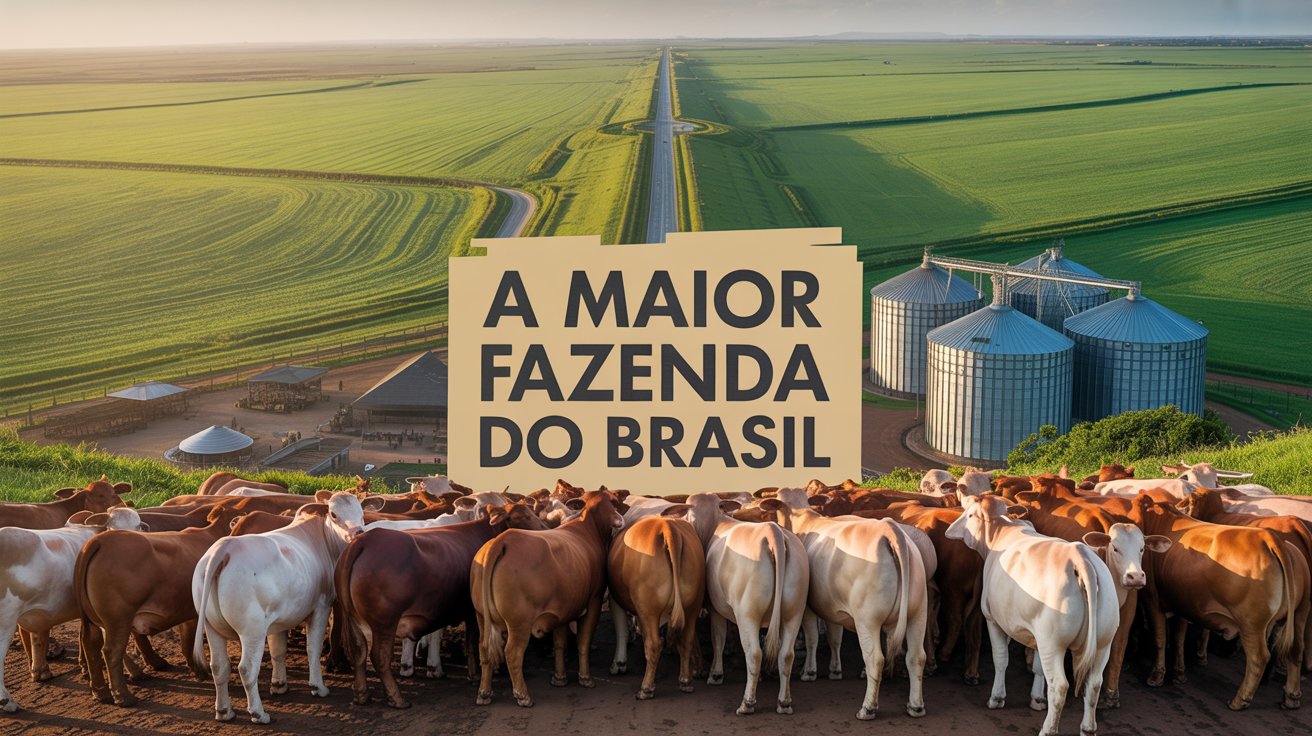


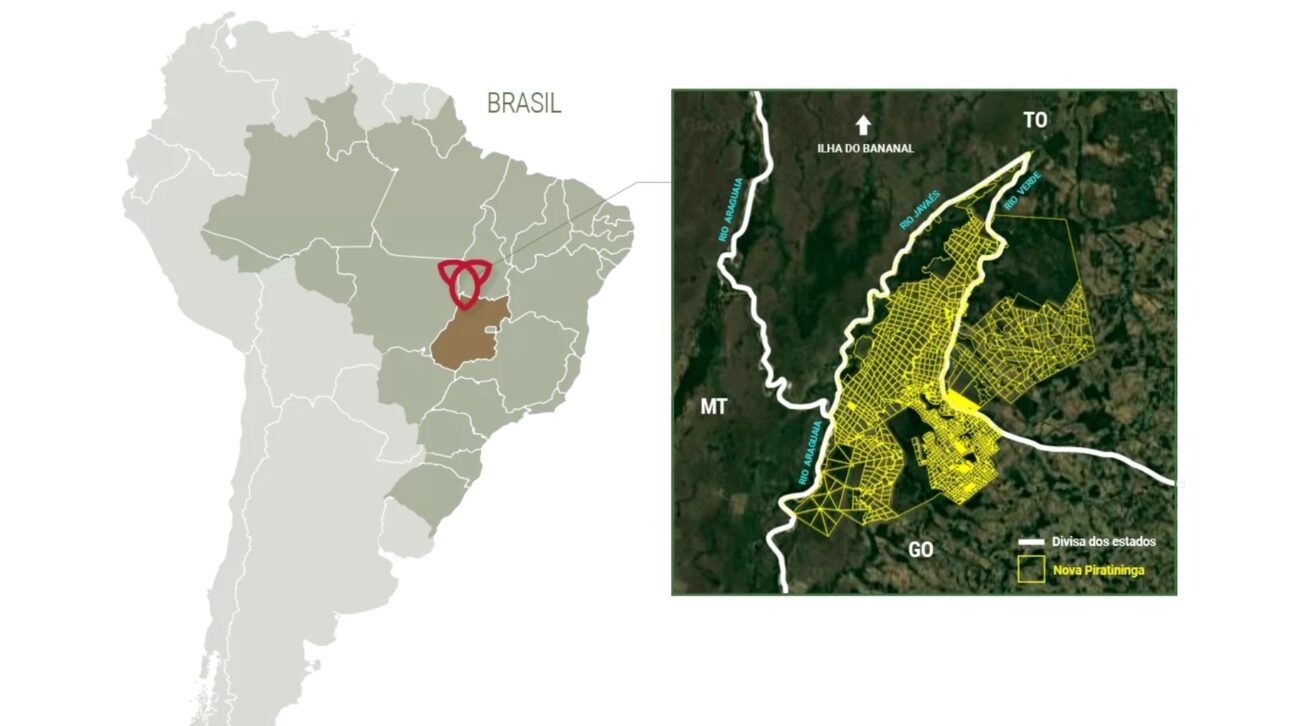
With almost 200 thousand hectares on the border between Goiás and Tocantins, Fazenda Nova Piratininga combines complete cycle cattle ranching, large-scale agriculture, and robust infrastructure, bringing together cutting-edge technology and sustainable practices in a single operation.
Located on the border between Goiás and Tocantins, Fazenda Nova Piratininga operates on an industrial scale and is regarded in the sector as the largest complete cycle farm in Brazil.
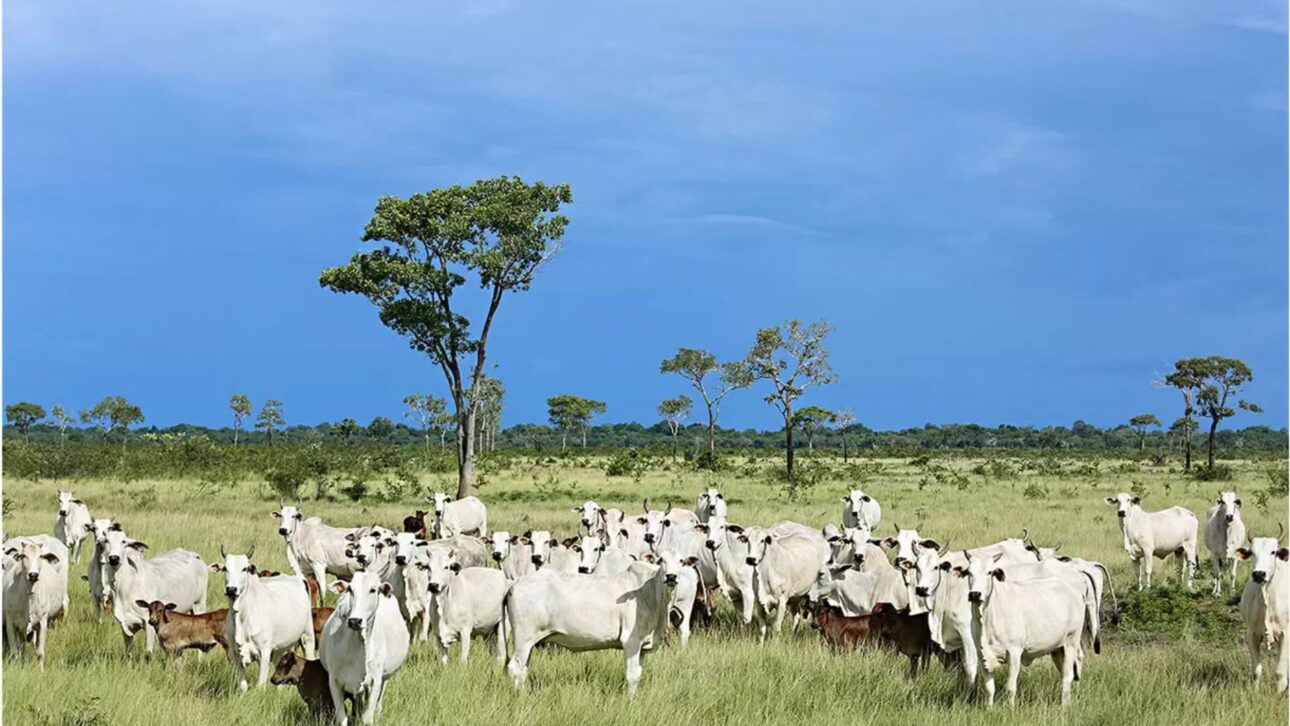
In an area close to 200 thousand hectares, the property maintains a herd of about 120 thousand cattle, of which 60 thousand breeding females are of reproductive age.
The infrastructure includes nearly 1,000 kilometers of internal roads, a landing strip, and water reservoirs with a declared capacity of 10.6 billion liters, in addition to commercial soybean and corn crops.
-
Study of Brazil’s Tietê River Finds 25 Pesticides in Water, Including Cancer-Linked Substance Near Source

-
Young Entrepreneur Expands from 50 to 1,400 Chickens, Proving “Happy Hens” Can Be a Viable Business
-
Small Farm in Brazil’s Minas Gerais Produces 403 Liters of Milk Daily, Sets Benchmark for Rural Producers
-
Man Revives 1930s Abandoned Trout Farm, Learns from Scratch, and Earns $1.1 Million Annually Selling Fish to Michelin-Starred Restaurants


Reproductive Technology and Cutting-edge Management
Nova Piratininga has established itself as a reference in cattle reproduction by adopting, on a large scale, fixed-time artificial insemination (IATF).
The program is presented by technical vehicles as one of the largest in the country, with tens of thousands of protocols per season, and integrates rigorous selection of females, shortening the breeding season, and the use of Nelore and Angus genetics to add carcass gain and precocity.
The stated objective is to increase efficiency and standardization of batches in the breeding, rearing, and fattening cycle, reducing the seasonality of births.
According to specialized reports, the farm has achieved high pregnancy rates in IATF, a strategy that aligns with the national trend of advancing the method.
In 2024, for example, the use of IATF continued to expand in Brazil, with average pregnancy rates above 50% in sector surveys — a level considered good by research institutions.
This context helps explain the performance reported in Nova Piratininga’s herd.
Agriculture Expansion and Grain Autonomy
In addition to cattle ranching, the property has intensified precision agriculture to support herd growth.
In soybeans, the planted area, which was 3 thousand hectares in the 2019/2020 harvest, doubled in 2020/2021 and is expected to reach 50 thousand hectares with the expansion of cultivation and gains in internal logistics.
For corn, the stated goal is self-sufficiency for feed and forage, with production of grains, silage, and hay to survive the dry season without performance loss.
Part of this progress is due to investments in machinery, storage, and training.
While cattle ranching requires a steady supply of fiber and energy, the crops have been organized to synchronize harvesting, storage, and distribution, reducing external purchase costs and dependence on more volatile markets.
In critical periods, the combination of a planned diet and automated logistics supports the 120 thousand animals with predictability.
Internal Transportation and Services for Those Living on the Farm
To manage daily operations, Nova Piratininga has about 970 kilometers of internal roads, a network that provides access to retreats, pens, grazing areas, and agricultural plots.
A landing strip facilitates technical and executive movements.
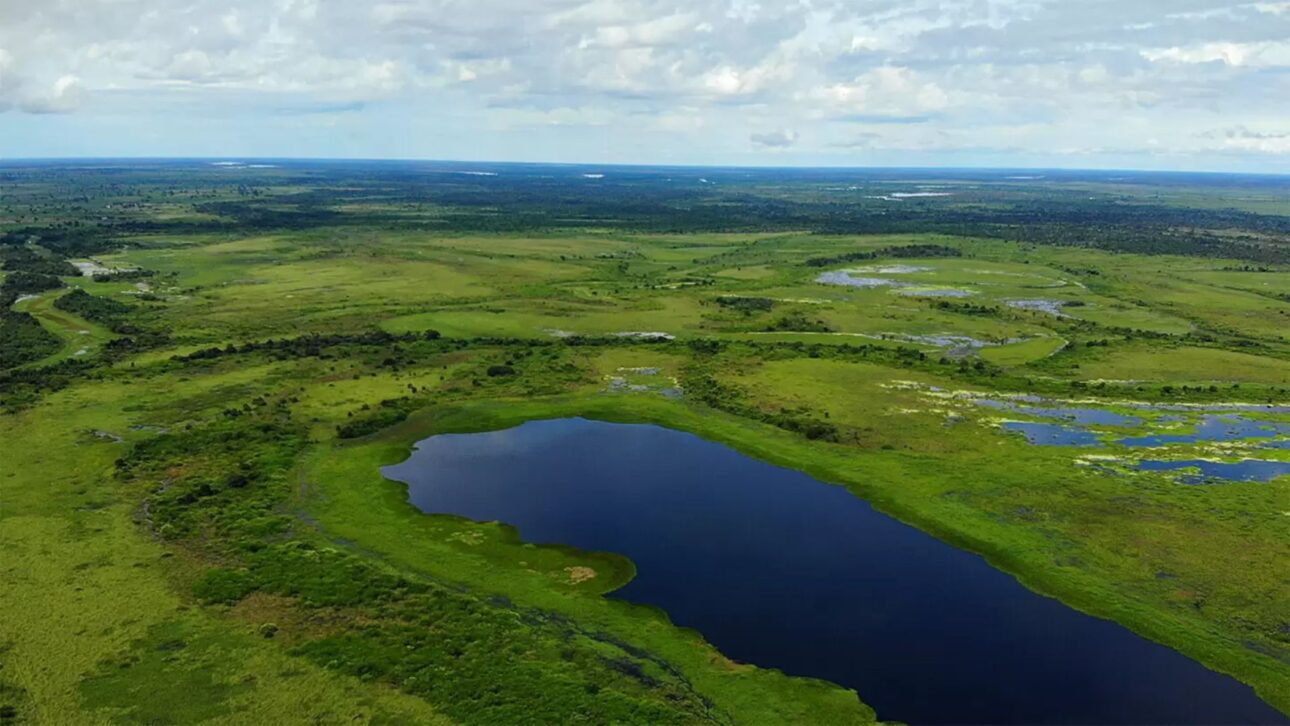
In the water area, public reports mention reservoirs totaling 10.6 billion liters, a figure that supports spot irrigation, drinking troughs, and productive security in drier years.
This structure is accompanied by a village with more than 600 residents, with school, workshops, and health services to serve employees and their families.
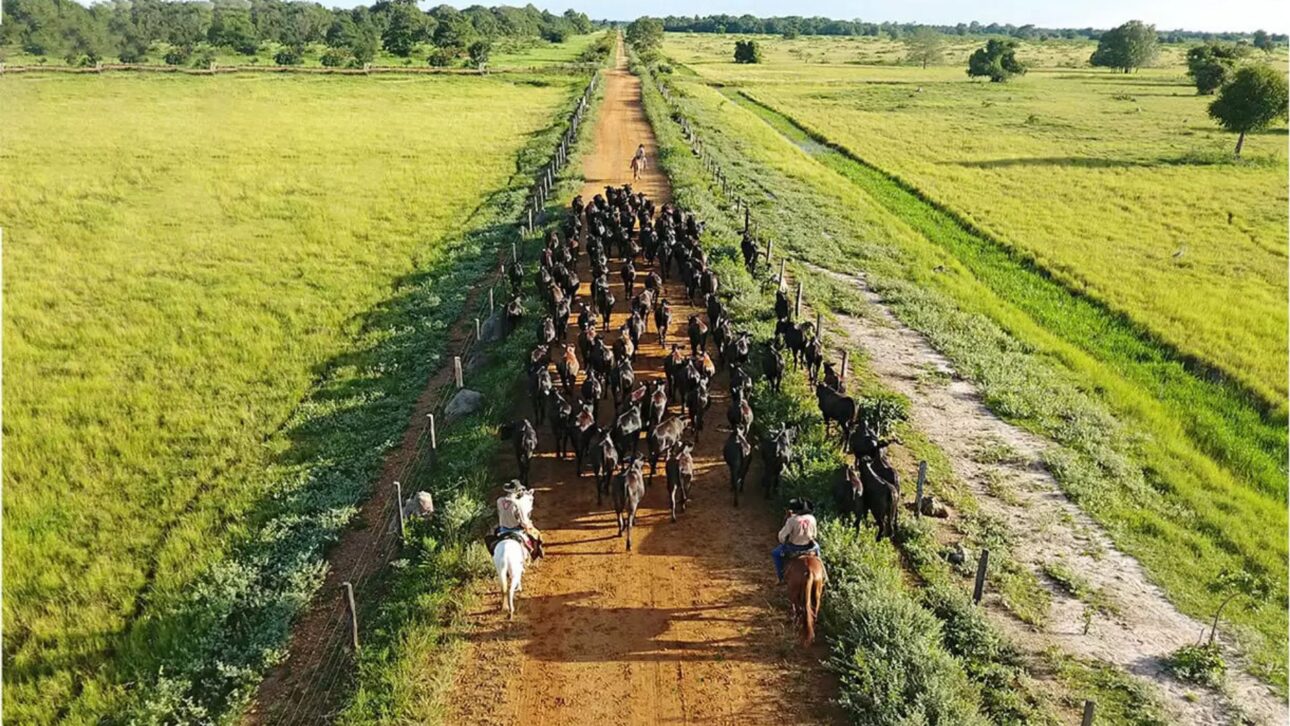
The logistics also reflect in the transport of cattle between breeding, rearing, and finishing sectors.
Internal routes, management schedules, and weighing windows have been standardized to minimize animal stress and optimize conversion.
In recent technical content, the farm describes the segmentation of areas by function — from the nursery for future breeding females to the confinement — as a key element to maintain batch cadence and supply to the slaughterhouses.
Sustainability and Integrated Land Use
Environmental management appears as a pillar of the project, with APPs and legal reserve preserved and crop-livestock integration practices to improve soil and pastures.
Reports from the site itself and agricultural media highlight the use of precision agriculture, soil correction, and rotational management to reduce gas emissions per product unit, as well as facilitate recovery of areas between crops.
The integrated design seeks to combine productivity gains with conservation of water resources.
Academic studies that analyzed the area also recorded the dimension of the internal road network, the presence of reservoirs, and the existence of a resident community.
Although they adopt specific methodological cuts, these works corroborate the unique scale of the operation and the multifunctional character of the agricultural landscape.

Dimensions and Status of “Largest”
It’s important to note that the title of “largest” varies according to the criteria. In technical channels and in the sector press, Nova Piratininga is frequently classified as the largest complete cycle farm in the country, referring to the model that integrates breeding, rearing, and fattening in a single operation, with a herd of 120 thousand head and a declared area of around 200 thousand hectares.
In other publications, mentions appear of 135 thousand hectares recorded in a single registry or more than 200 thousand hectares operational, which explains the differences between sources when comparing total area, usable area, and administrative modules.
Still, all converge to the same idea: it is an exceptionally large agricultural enterprise on the GO-TO border.
In summary, the combination of scale, reproductive technology, proprietary agriculture, and an urban structure within the farm helps to understand why Nova Piratininga has become an emblematic case of contemporary Brazilian agribusiness.
Given this arrangement, what other indicators — beyond area, herd, and productivity — should weigh in defining what is, in fact, the “largest” farm in Brazil?






A maior fazenda do Brasil é a Santa Barbara, do Banco Oportunity de Daniel Dantas, no Pará, com 410.000 hectares..
Interessante saber que vocês estão discutindo políticas de natureza jurídica sociais e esquecem que o nosso país está sendo boicotado o afegãos estão morrendo de fome aqui no Brasil sempre sobrou terras pra todos nós basta plantar e cuidar não importa se é do governo ou da União vocês não entendem nada de política e crítica um cidadão que a maioria dos brasileiros votariam de novo resumindo quem são os analfabetos fica a pergunta 👍?
O que mais importa não foi falado, quanto do lucro fica no país por normalmente estes grades empreendimentos tudo mandado para fora do país.
O lucro o dono faz o que bem quiser. Vai caçar cobra.
Se exporta paga imposto, tem uma vila com 600 funcionários e família, se importar paga imposto, do lucro paga imposto de renda. E vc na tua fazenda quanto do lucro deixa no país. Vc disse normalmente e não ilegalmente. Explica tua dúvida
Muito dos lucros são pagos em impostos e salários, máquinarios, isumos etc… mais atualmente é melhor ter se pracaver e ter uma segurança de capital fora devido o usurpador das riquezas de quem produz querer abocanhar parte da mesma.