






 Portuguese
  Spanish


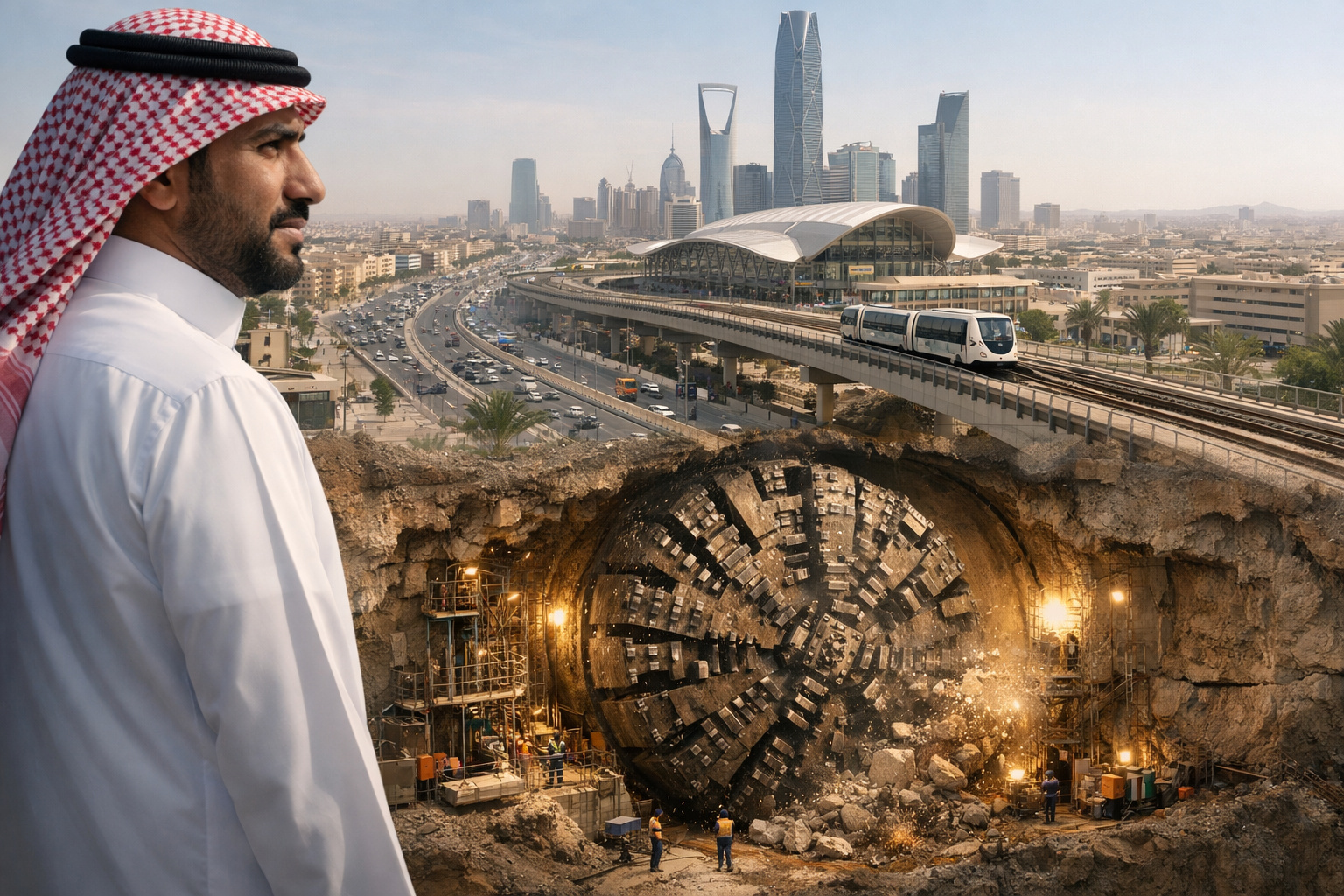


With More Than 176 Km of Tunnels Dug Under Rock and Sand, Riyadh’s Metro Redefines Subterranean Engineering in the Middle East with Deep Stations and Armored TBMs.
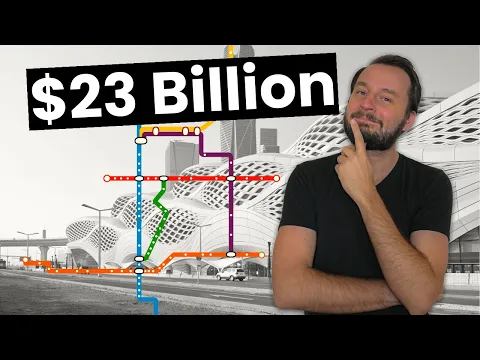
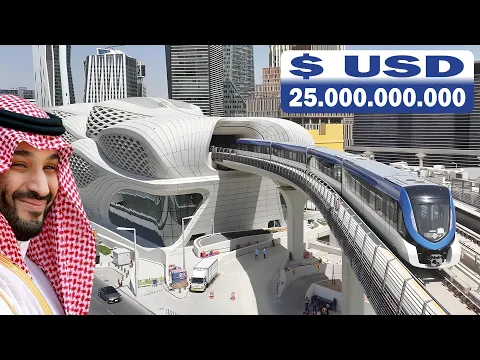
When the Saudi government announced in 2013 its intention to create a continental-scale metro system in a city without a tradition of rail transport, the project sounded bold. According to the Arriyadh Development Authority (now Royal Commission for Riyadh City) and technical reports from 2014 to 2023, the approved investment surpassed US$ 22 billion, with 176 km of lines, 6 metro corridors, and 85 stations designed to span underground, street level, and elevated viaducts. The aim was to transform the mobility of a capital dependent on cars, expanded in the desert and with recent urbanization.
The megaproject was contracted to international consortia specialized in tunneling, deep structures, rolling stock, and control systems. Companies such as Bechtel (USA), Ansaldo STS / WeBuild (Italy), Siemens (Germany), FCC (Spain), Samsung C&T (South Korea), and Alstom (France), among others, were involved in the project. The volume of engineering involved positioned Riyadh at the same level as London, Paris, and Singapore in simultaneous underground works.
How Do You Dig a Metro in a City Built on Sand and Rock?
Riyadh was born and grew over sandy deposits interspersed with limestone layers and zones of harder rock, a geological combination that poses particular challenges: unstable sandstone near the surface, potential collapses in unconsolidated areas, and residual infiltration in deep regions. To deal with this, the project used armored tunnel boring machines (TBMs)—machines 80 to 100 meters long that excavate and install tunnel lining at the same time—protected by pressurized shields and segmented concrete linings.
-
28-meter, 156-ton titans traveled 20,000 km from China to the port of Santa Catarina: Portonave received 7 fully electric megacranes, part of a R$ 210 million package, to double container handling.

-
They exchanged the idea of a large house for a 35 m² warehouse, spent US$ 12,000 on the structure, and created a tiny house in Colorado with space to live and work.

-
A newly opened terminal in the middle of the Amazon has begun transporting soy and corn through Amapá, eyeing the queue of ships that is congesting the ports in the South.

-
Goodbye to old tiles: renovation technique without construction transforms bathrooms in a few hours, eliminates debris, and reduces costs with coverings using special paints, high-resistance adhesives, and modern finishes that completely renew the space.



These TBMs were adapted to the climate and soil type. In granular areas, they operated in Earth Pressure Balance (EPB) mode, maintaining the excavation face pressurized to avoid collapses. In harder zones, they switched to cutter discs typical of alpine tunnels. Each meter advanced required extremely precise instrumentation to avoid compromising building foundations, drainage galleries, electrical lines, and the city’s old pipelines.
While road tunnels usually advance above foundations, the metro had to go beneath them. This required detailed structural mapping and controlled settlement, a technique that injects cement or grout into the ground to stabilize vulnerable regions before the tunneling machine arrives.
Stations Up to 40 Meters Deep
Riyadh’s metro is not just a mesh of tunnels. An impressive part of the engineering lies in the deep stations. According to plans released by the local authority between 2015 and 2020, some stations reach about 40 meters deep—the equivalent of a 12-story building—with shafts excavated vertically and consolidated with diaphragm walls of reinforced concrete.
These walls can be between 60 and 100 cm thick and descend dozens of meters to allow safe excavations inside. Afterward, metallic bracings, beams, intermediate slabs, and finally the definitive levels of the platforms are installed. In many cases, it was necessary to lower the water table through injector wells, a common practice in large coastal cities, but extremely delicate in a desert environment due to the low natural water replenishment.
Additionally, the stations were designed to operate in the extreme summer heat of Saudi Arabia. This implies redundant air conditioning systems, filters against dust and sand, and thermal transfer chambers between the exterior and underground. In certain stations, the underground environment functions as a thermal buffer, reducing energy consumption peaks.
Industrial Logistics: Trains, Construction Sites, and Concrete Corridors
To build 176 km of tracks in a city that was already operational, it was necessary to create a kind of “construction city” within Riyadh. Between 2014 and 2020, consortia set up temporary factories to produce concrete rings used in the lining of the tunnels (the segments or “segments”). Each TBM consumes thousands of these rings as it opens new meters of tunnel. The logistics included:
- Continuous transport of segments to the TBM;
- Return of excavated soil by conveyor belts and trucks;
- Processing centers to separate rock from sand;
- Concrete plants near access points;
- Welding hubs, rail assembly, and train testing.
These trains, supplied mainly by Siemens and Alstom, underwent years of testing on closed circuits before entering the tunnels. This included automatic signaling systems, speed control, regenerative braking, and integration with platform doors—a mechanism that reduces accidents and stabilizes the air conditioning of the stations.
Deviation of Foundations and Coexistence with the Existing City
Riyadh was not built to have a metro. Wide streets, dispersed neighborhoods, and irregular underground infrastructure posed real obstacles. At certain points, the metro had to pass under intersections and avenues with heavy traffic, necessitating the use of methods such as NATM (New Austrian Tunneling Method) and inverted excavations, where the upper cover is completed before the lower excavation so that traffic can continue to flow.
Historic buildings, shopping centers, and critical structures received millimetric monitoring to measure settlement, vibrations, and lateral displacement. If any parameter fell out of range, the consortium would stop the tunneling machine and inject stabilizing material. This type of engineering has been extensively documented in European projects, but its application in a desert environment is rare.
A System Designed for Future Millions of Passengers
The heart of the project is not only civil engineering but also urban planning. The Saudi intention, according to plans presented between 2016 and 2022, is to transform Riyadh into a more walkable city, with residential and commercial density hubs near the stations. Models project that the metro will remove hundreds of thousands of cars from the streets in the coming years, reducing emissions and traffic.
The integration is also multimodal: dedicated buses, BRT, integrated parking, bike lanes, and linear parks connect currently isolated neighborhoods. This model is similar to those in Copenhagen, Vancouver, and Barcelona, but applied on an unprecedented scale in the Middle East.
It Was Not Just a Work: It Was a Political, Economic, and Cultural Movement
Projects of this magnitude act as mirrors of societies that are changing. Riyadh’s metro aligns with the country’s economic diversification policy, reducing dependence on oil and investing in infrastructure, tourism, and technology. At the same time, it signals that desert megacities will need mass transportation to continue existing in the 21st century.
Whether due to geology, climate, urban context, or continental scale, the construction of Riyadh’s metro has created a rare milestone: a monumental underground system in a city that, just a few decades ago, was merely an isolated urban cluster in the desert. Today, the Saudi capital boasts deep tunnels, vertical stations, giant TBMs, hundreds of kilometers of tracks, and a new subterranean layer that redesigns the city without almost anyone seeing it.








Ejemplo para los políticos de occidente, que no piensan sino en el beneficio particular y no en el general
Jajaja, pero ellos no tienen un tren como el interoceanico que funciona en las vías y en tierra, tampoco otro trensito mata-jaguares. Ese tonto árabe gasta el dinero del petróleo en obras pudiendo venderlo y embolsillarse esa lana, le vamos a dar unas clases de como se hace a la mexicana.
Que bueno que arabia Saudita tenga ese super dsarrollo.porque es el resultados de tenener un sistema de govierno democrático y capitalista desta forma más sereshumamos en el mundo mejoran sus condiciones de vida
Mientras tanto los cubanos que en 1958 teníamos mucho adelantodespués vino el comunismo y estamos en 67 años de puro atraso y ni siquiera tenemos lus eléctrica agua y comida ni nuevas carretera y mucho menos sistemas de transporte rápido como el de arabia saudita
Democratico ???? Por favor agarra los libros !!!
The is IS tours in dreams in like people sçhowns fantástic in stoury dats