






 Portuguese
  Spanish



The Largest Private Electric Company in Brazil, ENEL Green Power, Announces More Projects for Renewable Energy Production and Exploration in Piauí
Good news for Piauí, new projects for renewable energy production and exploration in the state cover the cities of Ribeira do Piauí, São João do Piauí, and São Gonçalo do Gurguéia. The good news was announced yesterday afternoon (19) by the largest private electric company in Brazil, ENEL Green Power, a branch of the Enel Group.
Also Read
- French Company Total Licensed Five Oil Wells Today in the Campos Basin
- Maritime Company DOF Subsea Calls for Offshore Professionals for Crane Operator Position
- Aldélia Brazil with 30 URGENT Job Openings to Work on FPSO This Day, February 20
According to Wellington Dias, governor of the state of Piauí, the meeting was positive, as Enel announced more investments for the state and a project for worker qualification in partnership with Senai. “It is worth noting that the peak of the company’s investments will reach 2,300 jobs, with 56% from the local community,” says Wellington.
-
Robots Clean Solar Panels in Desert Power Plants Without Water, Preventing Energy Losses

-
Brazil’s Offshore Wind Energy Potential Worth $1 Trillion Stalled by Long-Delayed Agreement

-
World’s Largest Engie Solar Plant in Brazil Highlights Billion-Dollar Energy Waste Issue: Company Considers Batteries and Bitcoin Mining to Avoid Wasting Production

-
Air Products Cancels $2.9 Billion Clean Hydrogen Megaproject in Louisiana, Shuts Down Arizona Unit, Highlighting High Costs of U.S. Energy Transition


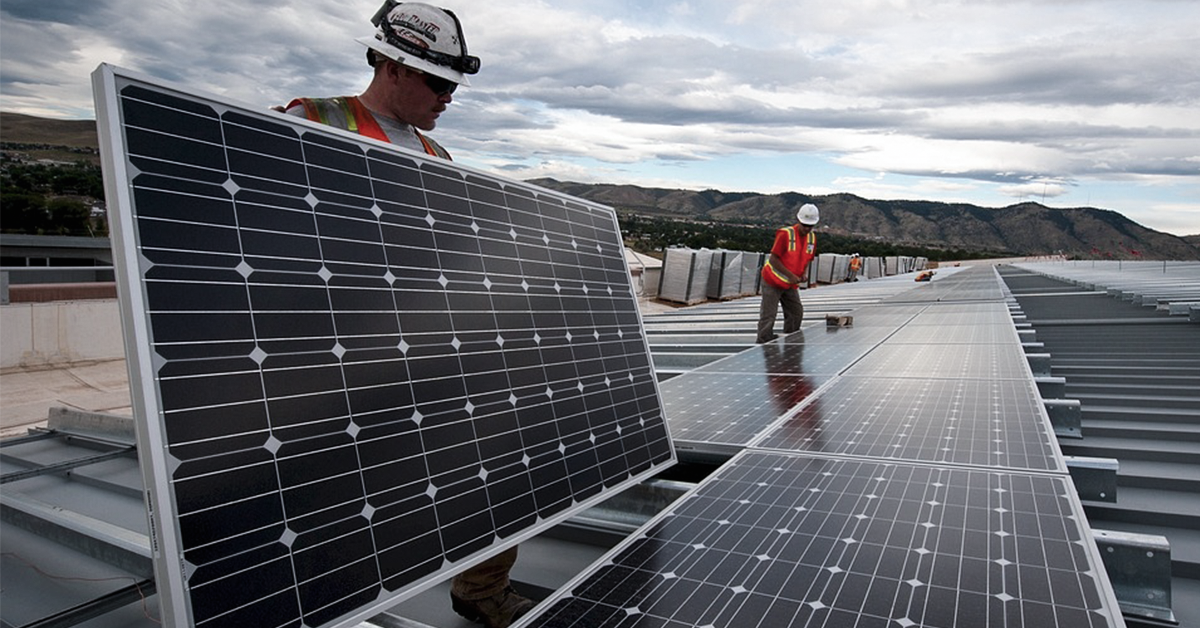
The company has already invested R$ 1.4 billion in the construction of a solar plant in São Gonçalo do Gurguéia, in Piauí. The plant was inaugurated in late 2019 and will produce 475 MW.
The facility will be expanded, and when it is fully operational, it will generate enough energy to power more than 820,000 homes. The panels capture sunlight on both sides, which increases energy generation by up to 18%.
– Brazil has advanced a lot. The auctions are competitive, the contracts are long-term, solar incidence is among the most competitive in the world, and the technological evolution and falling prices of panels have helped a lot – says Roberta Bonomi, head of Enel Green Power in Brazil.
According to government plans, solar energy will represent 8% of the country’s energy matrix in ten years.
Solar energy represents just over 1% of the country’s energy matrix. But this share will jump to 8% in ten years, according to the government’s plan. Investments to support this goal are already underway, according to experts. In large solar plants alone, R$ 9.5 billion in projects are expected by 2025.
The volume of solar energy the government hopes to include in the energy matrix – 7 gigawatts (GW) – is sufficient to supply more than 3.6 million homes.
While distributed generation waits for new rules from Aneel, the regulatory agency, and Congress, large plants advance. According to the consultancy Greener, specialized in solar energy, the R$ 9.5 billion that should be invested in new plants only considers projects already contracted in auctions. At least another R$ 10.6 billion has been invested by 2019.
– The total investments do not include the upcoming auctions that Aneel is expected to conduct. Therefore, the total by 2025 will be larger — says Márcio Takata, president of Greener.
Large solar plants took a leap in Brazil between 2014 and 2019. There are 90 in operation, especially in the Northeast region, where states like Bahia, Ceará, and Piauí stand out. But there is growth in the Southeast. Minas Gerais is the state where this source is advancing the most, followed by São Paulo.


