





 Portuguese
  English
  Spanish
 3 min of reading
  0 comments


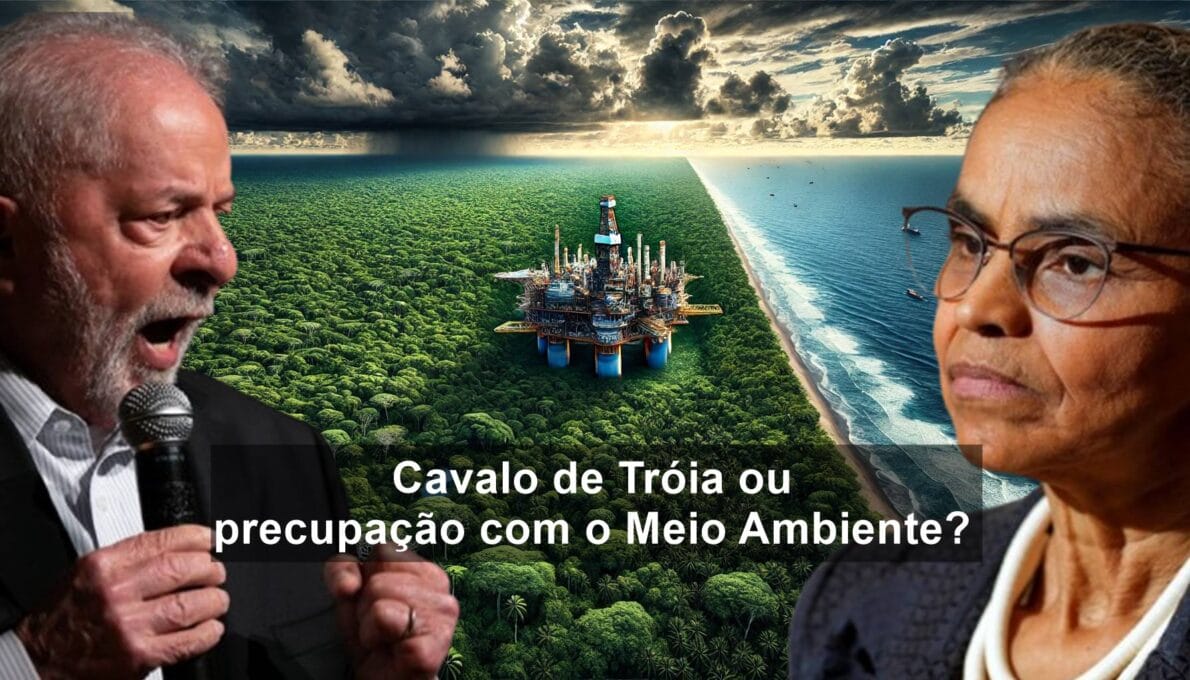
Marina Silva Has Been Called a “Trojan Horse” in Lula’s Government for Her Rigid Stance Against Oil Exploration by Petrobras in the Equatorial Margin. But After All, Does Her Position Protect the Environment or Hinder Brazil’s Economic Development?
Oil exploration in the Equatorial Margin promises great economic returns. However, Marina Silva, the Minister of the Environment, has maintained a strict posture. As a result, Petrobras faces a series of environmental requirements that prevent the project’s progress. Sylvia Anjos, Petrobras’ Exploration and Production Director, highlighted the obstacles that arise continuously. According to her, these requirements “push back” the final decision on the Equatorial Margin. For many, the situation raises a question: what really prevents development in this area?
The Role of Ibama and the “Excessive” Requirements
Ibama, influenced by Marina Silva’s viewpoint, presents rigorous and continuous requirements. Although Petrobras has a history of safety in maritime operations, it still has not obtained the exploration license. Anjos argues that the company has met numerous requests, but approval seems far from happening. And now, the question remains: how far will these requirements go? For many, Ibama presents an approach that hinders the advancement of the oil sector in Brazil, especially in the Equatorial Margin.
Greenpeace and the Accusations of Falsified Data
Greenpeace, an environmental NGO, recently displayed images of corals in the Equatorial Margin to justify its opposition to oil exploration. However, scholars, such as Professor Luís Ercílio from the University of Pará, argue that the images show inconsistencies and claim that data may have been manipulated. Furthermore, this NGO’s actions in the country raise concerns among those who see environmentalism as an obstacle to national development. After all, to what extent should an international NGO influence environmental decisions in Brazil?
-
Minas announces more than R$ 400 million in infrastructure works and projects in the Midwest, with highway revitalization, new asphalt connections, a bypass in Bambuí, and bridge duplication planned until 2030.

-
Uber puts a brake on artificial intelligence after spending the entire 2026 budget in 4 months, limits tools used by developers, and exposes the challenge for companies to prove that AI productivity pays for itself.

-
The 2014 World Cup left a million-dollar legacy in Itaquera: the Corinthians stadium more than doubled the price per square meter, attracted developers, led to thousands of residential units, and changed the neighborhood, but mobility barriers still hinder the area around the arena.
-
Brazil delivers a giant dam worth R$ 365.7 million in Rio Grande do Sul, capable of forming an artificial lake with 138 million m³ of water, equivalent to 55,300 Olympic swimming pools and an area larger than 2,500 football fields.





Marina Silva: “Trojan Horse” or Guardian of the Environment?
For many, Marina Silva’s presence in Lula’s government represents a dilemma. On one hand, she strengthens Brazil’s image as a defender of the environment. However, some critics believe her radical stance hinders the country’s economic progress. Sylvia Anjos’ comment may indicate a rupture in Petrobras’ stance, suggesting that the minister needs to reconsider her actions. In this sense, the question arises: Does Marina act in favor of Brazil or serve as a “Trojan Horse” within the government?
Development vs. Preservation: What’s at Stake?
The Equatorial Margin offers a unique opportunity for economic growth, especially for Amapá. Oil exploration could bring wealth and create jobs in regions that face limited development resources. However, Marina’s stance and Ibama’s role bring to light the difficult choice between environmental protection and economic progress. After all, does Brazil really need to yield to international pressures to decide the fate of its own natural resources?
The Future of the Equatorial Margin and Paths to Sustainable Development
The decision regarding the Equatorial Margin will not be easy. On one side, Ibama and Marina Silva remain firm in their environmental requirements. On the other side, Petrobras and sectors advocating for economic development call for government progress. Lula, therefore, needs to balance these conflicting interests to define the future of this promising area and, consequently, the future of the country itself.







-

3 people reacted to this.